
Table of Contents
Introduction: Your Path to the Vibrant Metropolis of Medicine
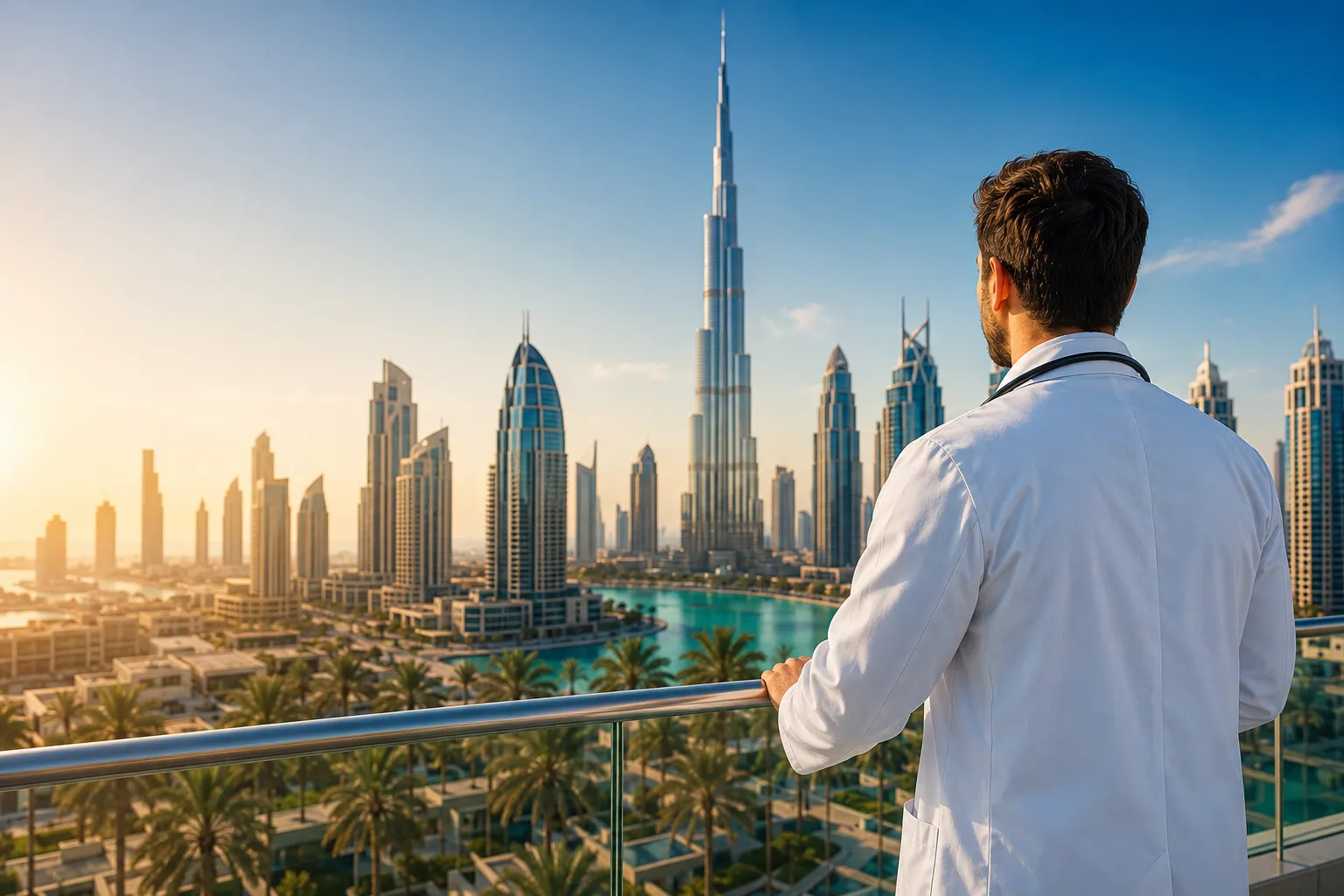
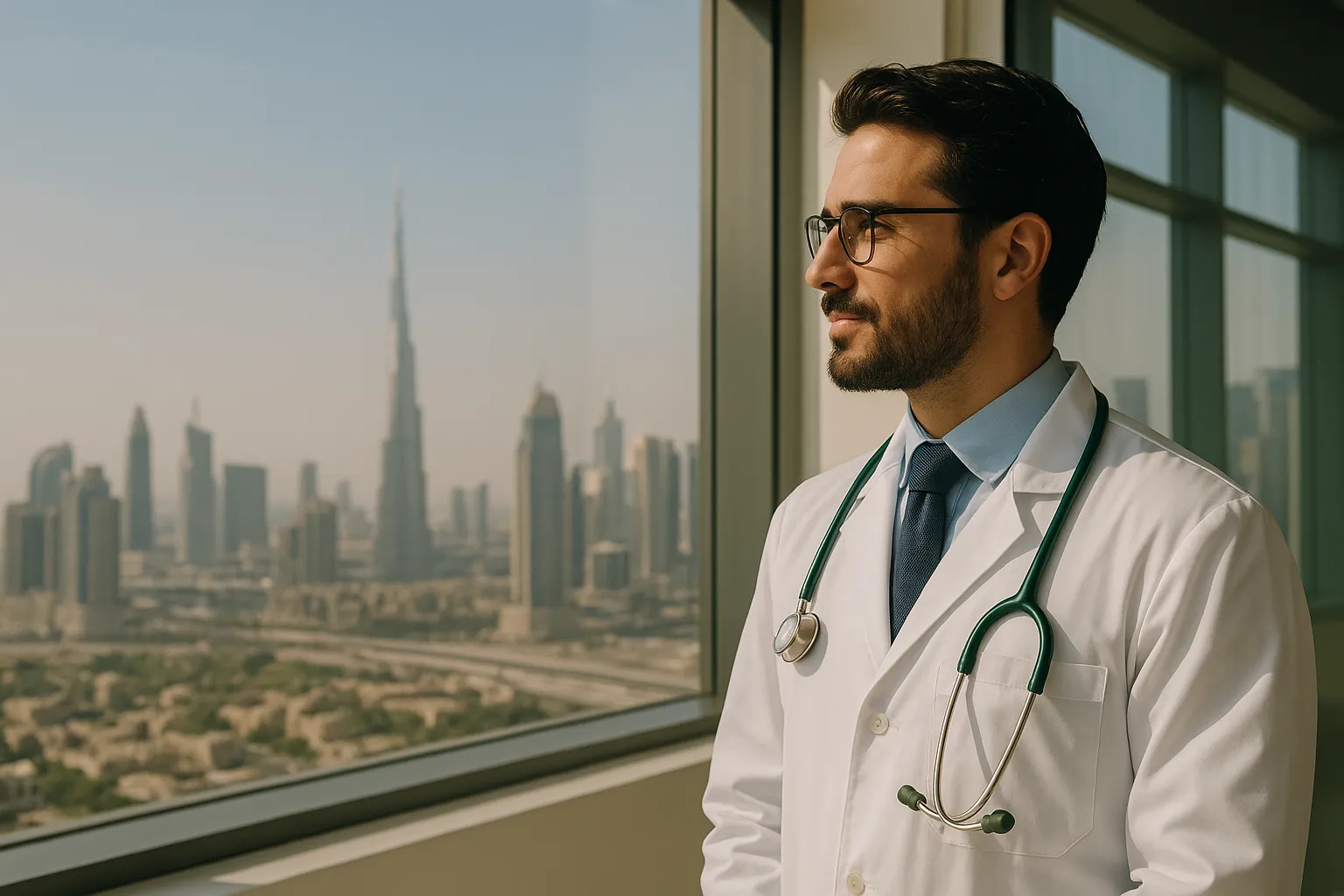
Dubai – a name that conjures images of futuristic skylines, boundless luxury and a dynamic culture. Yet beyond the glittering façades, the city is rapidly becoming a global hub for medical excellence and innovation. A growing number of highly qualified doctors from Germany, Austria and Switzerland are looking to the United Arab Emirates with great interest, drawn by the prospect of tax-free income, state-of-the-art clinics and an international environment that promises both professional growth and an exceptional quality of life.
This ultimate guide is your compass on the road to a medical career in Dubai. We look not only at the shining advantages, but also at the real challenges and the finer points of relocating and licensing. Forget the superficial portrayals on social media; we take a deep dive into the reality of everyday working life, the complexity of the licensing procedures and the true cost of living. Our aim is to give you an authentic, well-founded and unvarnished picture, based on insider knowledge and many years of experience in healthcare recruitment across the GCC region. Prepare to discover the opportunities and the reality of a medical career in Dubai from a perspective you will not find anywhere else.
Why Dubai Is Looking for Doctors from Europe: Behind the Scenes of the 2026 Healthcare Boom
Dubai’s healthcare sector is experiencing an unprecedented upswing, driven by ambitious government strategies, rapid population growth and the aim of becoming a leading destination for medical tourism. But this boom would not be possible without the backbone of highly qualified medical professionals. This is where Europe comes in, and in particular the DACH region (Germany, Austria, Switzerland), whose doctors are valued worldwide for their excellent training, precision and patient focus.
The Growing Need for Medical Expertise
The UAE, and Dubai in particular, are facing a paradoxical phenomenon: while world-class medical infrastructure is being built out, there is a significant shortage of experienced doctors who meet Western standards. This shortage of doctors is not only a consequence of population growth, but also of the desire to keep improving the quality of healthcare and to meet international accreditation requirements. The Dubai Health Strategy 2021–2030 aims to transform the healthcare system from a reactive to a proactive model that puts prevention and personalised medicine first. This requires a new generation of doctors who are ready to stand at the forefront of this development.
Private Hospital Groups and Medical Tourism as Growth Drivers
A major driver of demand for European doctors is the many private hospital groups expanding in Dubai and Abu Dhabi. These institutions, often funded by international investors, are working to attract the best talent in order to consolidate their reputation as leading medical centres. Medical tourism plays a decisive role here. Patients from across the MENA region, but also from Europe and Asia, travel to Dubai to gain access to specialised treatments and cutting-edge technology. They expect not only first-class medical care, but also the kind of communication and support they are used to from their home countries. German, Austrian and Swiss doctors are particularly in demand to serve this discerning clientele because of their language skills and cultural understanding.
The Role of the Dubai Health Strategy and the Abu Dhabi Healthcare Expansion
The governments of the UAE have recognised the importance of a robust healthcare sector and have invested massively in its development. The Dubai Health Strategy and the Abu Dhabi Healthcare Expansion are comprehensive initiatives aimed at modernising healthcare infrastructure, increasing the number of medical facilities and improving the quality of services. These strategies create not only new jobs, but also an environment that fosters innovation and gives doctors the chance to take part in pioneering projects. From the introduction of artificial intelligence in diagnostics to the development of new therapeutic approaches, Dubai is positioning itself as a hotspot for medical research and practice. For European doctors, this means the chance to become part of a dynamic, forward-looking medical community that is constantly evolving and setting new standards.

Doctors’ Salaries in Dubai: What You Can Really Earn
One of the main arguments for a medical career in Dubai is, without doubt, the attractive salary package. The UAE is known for its tax-free incomes, which means that what you earn is what you keep. But how high are salaries really, and what additional benefits can you expect? We offer you a detailed and realistic assessment that goes beyond the frequently cited averages.
Tax-Free Income: A Decisive Advantage
Unlike many European countries, Dubai does not levy personal income tax. This is a game changer for doctors, as it significantly increases their net income. Federal Law No. 47/2022 confirms the tax exemption for personal income, which makes Dubai an extremely attractive location financially. However, it is important to understand that the cost of living in Dubai can be high, and a high gross salary does not automatically guarantee a luxurious lifestyle if expenses are not carefully managed.
Salary Table by Specialty and Experience
Doctors’ salaries in Dubai vary widely depending on specialty, experience, qualifications and the type of facility (government vs. private, clinic vs. hospital). The following figures are estimates and may differ depending on the employer and individual negotiations. They are based on current market data and insider information:
Note: The conversion to EUR is for guidance only and is based on an exchange rate of approx. 1 EUR = 4 AED. The actual rate may vary.
Additional Benefits and Bonuses: Understanding the Small Print
In addition to the base salary, many employers in Dubai offer attractive extra benefits that can significantly increase the value of the overall package:
- Housing allowance (accommodation subsidy): Often a significant part of the salary package, especially for consultants. This can be a direct payment or accommodation provided by the employer. It is crucial to establish whether the stated salary range
already covers housing costs or whether these have to be negotiated separately. - Flight tickets: Many contracts include annual return flights to your home country for the doctor and sometimes for the family as well. This is a benefit not to be underestimated, as it considerably reduces travel costs.
- Insurance (health insurance): Comprehensive health insurance is mandatory in Dubai and is usually provided by the employer. The quality of cover can vary, so it is important to check the details carefully.
- Education (school fees): For doctors with families, school fees in Dubai can be a considerable burden. Some top positions, especially at consultant level, include allowances or full coverage of school fees for children. This is an important negotiating point.
- Bonus payments: Performance-related bonuses are common in private clinics and hospitals and can make up a substantial part of annual income. They are often tied to individual KPIs (key performance indicators) or the overall performance of the department.
- Revenue share models: Revenue share models are widespread, especially in private practices and specialised clinics. Here the doctor receives a percentage of the revenue they generate. These models can be very lucrative, but they also call for an entrepreneurial mindset and the ability to attract and retain patients. Shares typically range between 5% and 15% of billable services.
It is crucial to look at the whole package and not just the base salary. An apparently lower base salary can be offset by generous extras such as housing, school fees and bonuses. Negotiating skills and a clear idea of your own needs are an advantage here.
Cost of Living in Dubai: Reality vs. Social Media Glamour
Dubai is often associated with a luxurious and exclusive lifestyle that is omnipresent on social media. But what is the reality of living costs for a doctor who lives and works in Dubai? A realistic analysis is essential to avoid financial surprises and to make an informed decision.
According to the InterNations Expat Insider 2023 report, Dubai ranks first in the Middle East and North Africa (MENA) region for quality of life, but it is also the 15th most expensive city in the world for expats, according to Mercer’s 2024 Cost of Living City Ranking. A comfortable lifestyle for a single person typically costs between USD 4,000 and USD 6,800 per month, depending on housing and leisure preferences [12, 13].
Housing: The Biggest Cost Factor
Rent is by far the biggest cost factor in Dubai. Prices vary widely depending on location, size and furnishings of the property. A three-bedroom apartment in the city centre can cost an average of AED 16,541 (approx. USD 4,500) per month [12]. Outside the centre or in less exclusive areas, rents are lower but still significant. It is advisable to plan housing costs carefully into your budget and, if necessary, to choose an apartment a little further from your workplace in order to save money. Many doctors opt for apartments in districts such as Dubai Marina, Jumeirah Lake Towers (JLT), Downtown Dubai or Business Bay, which offer good infrastructure and connections.
Transport: A Car Is Often Necessary
Although Dubai has a modern metro system, a car of one’s own is often indispensable for many expats, especially families, in order to stay flexible and explore the sprawling city. The costs of a car include:
- Purchase/leasing: Used cars are relatively inexpensive, but new cars can be costly. Leasing is a popular option.
- Petrol: Petrol prices in the UAE are significantly lower than in Europe.
- Insurance and registration: Annual costs that need to be factored in.
- Parking fees: In many areas, especially in shopping centres and business districts, parking fees apply.
Food and Groceries: Variety at Different Prices
Food costs can vary widely. Supermarkets offer a broad range of international products, although imported goods can be more expensive. Eating out can range from very cheap (local snack stalls) to extremely expensive (fine dining). A realistic budget for groceries and the occasional restaurant visit is important.
Schools: A Considerable Investment
For doctors with school-age children, school fees are one of the biggest financial challenges. International schools in Dubai are known for their high standards, but also for their high costs. Annual school fees can range from AED 12,500 to over AED 100,000 per child, depending on the school and year group [12, 14]. It is therefore crucial to take this into account in salary negotiations or budget planning.
Health Insurance: Usually Covered by the Employer
As mentioned above, health insurance is mandatory and is usually provided by the employer. However, it is important to check the extent of the cover, especially if you have specific medical needs or prefer a particular type of treatment.
Leisure and Entertainment: From Affordable to Extravagant
Dubai offers an abundance of leisure activities, from free days at the beach to exclusive beach clubs and luxurious events. The costs can vary enormously and depend heavily on your individual lifestyle. It is easy to get swept up in Dubai’s glamour world, so conscious spending management is essential to avoid falling into a cost trap.
Reality vs. Social Media: The True Picture
Social media often paints a distorted picture of life in Dubai, one marked by luxury and extravagance. While these aspects undoubtedly exist, it is important to recognise that a comfortable lifestyle in Dubai requires a high income and smart financial management. For many expats, the reality is a balanced life that enjoys the benefits of Dubai but also keeps an eye on costs. It is not a fairy-tale land where money is no object, but a city with unique opportunities and challenges.
The DHA License Explained: Your Key to Practising Medicine in Dubai in 2026
The Dubai Health Authority (DHA) license is the gateway to medical practice in Dubai. Without it, doctors are not permitted to work in the city. The process of obtaining this license can be complex and time-consuming, but with the right preparation and a clear understanding of the requirements, it is very manageable. We guide you through the individual steps in detail and point out common pitfalls.
The Sheryan Portal: Your Central Point of Contact
The Sheryan portal is the DHA’s online platform through which all licensing applications are processed. It is your central point of contact for registration, submitting documents and tracking the status of your application [5].
Steps in the Sheryan portal:
- Registration: Create an account using your personal details, which must match your passport exactly.
- Self-assessment: Complete an online self-assessment to check your eligibility based on your training and experience. This tool gives an initial indication but is not a guarantee of licensing.
- Document upload: Upload all required documents. These include certified copies of your medical diplomas, specialist certificates, employment references, a valid passport, a recent photo and a Good Standing Certificate.
PSV (Primary Source Verification) / DataFlow: Verifying Your Qualifications
Primary Source Verification (PSV) is a critical step in which the DHA, via a third-party provider, DataFlow, verifies the authenticity and validity of all the documents you have submitted directly with the issuing institutions (universities, employers, medical chambers). This process is often the most time-consuming part of the entire licensing procedure and can take several weeks to months [7].
Common problems and delays with DataFlow:
- Incomplete or inconsistent documents: Any discrepancy in names, dates or information can cause delays. Make sure that all documents are consistent and contain all the required information.
- Slow response from home institutions: Especially in Europe, universities or hospital HR departments can be slow to respond to DataFlow’s requests. This is a common reason for long waiting times [9].
- Missing or inadequate experience letters: Employment references must be detailed and contain specific information about your position, the length of your employment and the duties you performed. Generic references are often not sufficient.
- Good Standing Certificate: This certificate, which confirms your professional integrity, often has a limited validity (usually 3–6 months). Make sure it remains valid throughout the entire process.
- Scan quality: Poor-quality scans or photos can lead to rejections. All documents should be clear and legible.
Prometric Exam and Oral Examination: Proving Your Knowledge
After successful DataFlow verification, most doctors have to sit a Prometric computer-based test (CBT). This exam tests your medical knowledge and clinical skills. For certain specialists from certain countries (e.g. USA, Canada, UK, Australia), an exemption from this exam may be possible, but this should be checked on a case-by-case basis. After passing the Prometric exam, an oral examination usually follows, conducted by a DHA panel, which assesses your clinical judgement and communication skills.
Eligibility Letter and License Activation
Once all exams have been passed and documents verified, you will receive an Eligibility Letter. This is the official confirmation that you are entitled to work as a doctor in Dubai. With this letter you can apply to hospitals and clinics. As soon as you have found a position, your employer will complete the process of final license activation via the Sheryan portal.
Typical Mistakes That Can Cost Many Months
- Not starting the process early enough: The entire licensing process can take 3 to 8 months. Start collecting and preparing all your documents early.
- Insufficient documentation: This is the most common mistake. Every missing or inadequate document leads to delays.
- Incorrect information: Inconsistent or incorrect information in the application can lead to rejection.
- Good Standing Certificate expires: Keep an eye on its validity and apply for a new one in good time if the process takes longer.
- Underestimating the duration of DataFlow: Allow enough time for PSV.
Which Documents Can Cause Problems
- Military clinics: Proof of work in military clinics can be difficult to verify because of specific documentation standards.
- Universities: Some universities, particularly older ones, may not have digital archives, which makes verification more difficult.
- Internship records: Detailed records of your internship are essential. Generic confirmations are often not sufficient.
- Experience letters: As mentioned above, these must be very detailed and list specific duties and responsibilities.
The Difference Between DHA, DOH and MOHAP: Navigating the UAE’s Licensing Landscape
The United Arab Emirates consist of seven emirates, and each emirate has its own health authority with specific licensing requirements. For doctors who want to work in the UAE, it is crucial to understand the differences between the Dubai Health Authority (DHA), the Department of Health (DOH) in Abu Dhabi and the Ministry of Health and Prevention (MOHAP). The wrong license can significantly limit your career options [7, 8, 9].
The Three Main Licensing Authorities at a Glance
Important Considerations When Choosing a License
Choosing the right license depends on your career goals and preferences:
- Where do you want to work? If your goal is Dubai, you need the DHA license. For Abu Dhabi it is the DOH license, and for the northern emirates the MOHAP license.
- Salary prospects: Dubai (DHA) tends to offer the highest salaries, followed by Abu Dhabi (DOH). The northern emirates (MOHAP) are also attractive, but are associated with somewhat lower salary prospects.
- Specialisation: Certain specialties can be in greater demand in one emirate than in another. Research the demand in your own field.
- Lifestyle and costs: The cost of living varies between the emirates. Dubai and Abu Dhabi are more expensive than the northern emirates.
- Transferability: The licenses are not directly transferable, but there are processes for recognising licenses between the emirates, although these may require additional steps. The UAE is working on a unified set of Healthcare Professional Qualification Requirements (PQR) to harmonise standards and make transfers easier [7].
It is advisable to get thorough information before starting the licensing process and, if necessary, to seek professional support in order to find the right path for your career in the UAE.
Which Specialties Are in Particularly High Demand: A Market Overview
The medical job market in Dubai is dynamic and constantly evolving. Certain specialties are in particularly high demand because of demographic change, medical tourism and the government’s strategic healthcare initiatives. If you are considering a career in Dubai, choosing the right specialty can significantly improve your chances.
Top Specialties in High Demand
Demand for doctors in Dubai is broad, but a few specialties stand out in particular:
- Anaesthesia: With the rise in complex surgical procedures and the expansion of hospitals, demand for qualified anaesthetists is consistently high.
- Radiology: Continuing advances in diagnostic imaging and the equipping of clinics with state-of-the-art technology call for a large number of radiologists.
- Emergency medicine: Given population growth and high visitor numbers, robust emergency care is essential, which leads to a steady need for emergency physicians.
- Family medicine (general practice): The emphasis on preventive medicine and the need for primary healthcare for the growing population make general practitioners a sought-after specialty.
- Dermatology: Aesthetic medicine and skin care are very popular in Dubai, which drives demand for dermatologists.
- Psychiatry: With growing awareness of mental health and the destigmatisation of mental illness, the need for psychiatrists and psychotherapists is rising.
- Orthopaedics: Sports injuries, age-related conditions and the general demand for orthopaedic procedures ensure high demand in this field.
- IVF (in vitro fertilisation): Dubai is a centre for fertility treatment, which leads to a high need for specialists in reproductive medicine.
- Aesthetic medicine: Alongside dermatology, aesthetic medicine is a flourishing sector that attracts doctors with expertise in non-invasive and minimally invasive procedures.
Other Specialties in Demand
In addition, there is also high demand in fields such as cardiology, oncology, endocrinology and geriatrics, particularly because of the ageing population and the increase in chronic diseases. The Dubai Health Strategy 2021–2030 emphasises the need to strengthen these areas in order to ensure comprehensive healthcare [1].
It is advisable to keep up to date with current market trends and, if appropriate, to consider specialising in one of the in-demand fields in order to maximise your career prospects in Dubai.
The Reality of Working Life in Dubai: An Unvarnished Look
A doctor’s working day in Dubai differs from that in Europe in many respects. While the modern facilities and high patient volumes are attractive, there are also specific challenges and cultural particularities that need to be understood. A realistic picture of the working environment is essential for adapting successfully.
Working Hours and Hierarchies
Working hours in Dubai, particularly in private hospitals and clinics, can be longer than in Europe. A 48-hour week is not uncommon, and overtime may be required. Hierarchies are often flatter than in traditional European systems, which can allow for more personal responsibility and quicker decision-making. At the same time, however, this can also mean that doctors experience a higher degree of autonomy and pressure from the outset.
Cultural Differences and Patient Expectations
Dubai is a melting pot of cultures, and this is also reflected in the patient population. Doctors treat patients from all over the world, which requires a high level of intercultural competence. Patient expectations can also vary. Wealthy patients in particular, often referred to as “luxury patients”, expect an exceptionally high level of service and individual attention. This calls not only for medical excellence, but also for strong communication and empathy skills.
Private vs. Public Clinics: A Paradigm Shift
A large share of medical care in Dubai is provided by private clinics and hospitals. In contrast to public systems in Europe, where the focus is often on patient care, private facilities in Dubai are more profit-oriented. This puts increased pressure on doctors to meet certain KPIs (key performance indicators) and achieve revenue targets. Doctors may face “KPI pressure” relating to the number of patients, the treatments performed or the revenue generated. This requires a change in mindset and often also greater involvement in marketing and patient retention strategies.

Medico-Legal Issues and Liability
The medico-legal environment in Dubai is strict and differs from that in Europe. Doctors must familiarise themselves with local laws and regulations, particularly with regard to patient rights, medical malpractice and liability. Comprehensive professional liability insurance is essential and is usually provided by the employer. It is advisable to seek legal advice where necessary in order to minimise potential risks.
Advantages and Disadvantages: An Honest Appraisal
The step of emigrating to Dubai as a doctor is a far-reaching decision that brings both considerable advantages and potential disadvantages. It is important to draw up an honest and balanced appraisal so that you can make an informed decision based on real facts rather than idealised notions.
The Advantages at a Glance
- Tax-free income: Probably the biggest financial incentive, significantly increasing your net income.
- High salaries and attractive additional benefits: Competitive salaries, often complemented by housing allowances, flight tickets, health insurance and bonuses.
- Modern infrastructure and cutting-edge technology: Work in state-of-the-art clinics and hospitals with access to the latest medical technology and treatment methods.
- Career growth and development: Rapid opportunities for advancement, the chance to take part in innovative projects and to develop further in a dynamic environment.
- High quality of life and safety: Dubai offers a very safe environment, excellent infrastructure and a wide range of leisure opportunities.
- Multicultural environment: Working with patients and colleagues from all over the world fosters intercultural competence and broadens your medical horizons.
- Stable economy and job security: The growing healthcare sector and the stable economy of the UAE offer long-term job security.
The Disadvantages and Challenges
- High cost of living: Rent and school fees in particular can be very high and call for careful financial management.
- Complex licensing process: Obtaining the DHA license can be time-consuming and bureaucratic, with potential delays caused by DataFlow.
- Cultural adjustment: Adapting to a new culture, different ways of working and different patient expectations can be a challenge.
- KPI pressure and revenue targets: In private facilities, the focus on profitability can lead to increased pressure to reach certain performance targets.
- Competition: Although demand is high, competition for top positions, especially at consultant level, is intense.
- Distance from home: The physical distance from family and friends in Europe can be emotionally taxing.
- Climate: The extreme summer temperatures can be a challenge for some.
- Medico-legal differences: A new legal system requires careful familiarisation in order to avoid liability risks.
How MediFlow Supports Doctors: Your Partner on the Way to Dubai
The path to Dubai as a doctor can be complex and fraught with uncertainty. This is where MediFlow comes in, offering comprehensive support to make this transition as smooth and successful as possible. As an experienced healthcare recruitment consultant for the GCC region, MediFlow understands the specific challenges and opportunities and acts as your trusted partner.
Comprehensive Support from A to Z
MediFlow offers a broad range of services designed to support doctors at every stage of their journey to Dubai:
- Licensing advice: Detailed guidance and support throughout the entire DHA, DOH or MOHAP licensing process, including navigating the Sheryan portal and the specific requirements.
- DataFlow support: Active guidance and problem-solving during Primary Source Verification (PSV) by DataFlow, in order to minimise delays and ensure that documents are complete.
- Document review: Careful checking of all required documents to avoid errors that could lead to rejections or delays.
- CV optimisation: Professional revision and adaptation of your CV to the specific requirements of the medical job market in the UAE, to maximise your chances with potential employers.
- Recruitment and job matching: Active search for suitable job openings that match your qualifications, experience and career goals, as well as introductions to leading clinics and hospitals in Dubai and the UAE.
- Interview preparation: Targeted coaching and preparation for job interviews, to get you ready for the specific questions and expectations of employers in Dubai.
- Relocation guidance: Practical support with all aspects of the move, including visa applications, finding a home, school advice for children and settling into your new surroundings.
Your Advantage: Insider Knowledge and Industry Expertise
The decisive advantage of working with MediFlow lies in its in-depth insider knowledge and many years of industry expertise. MediFlow understands not only the bureaucratic processes, but also the cultural nuances, employers’ expectations and the dynamics of the medical market in the UAE. This enables tailored advice and support that goes beyond generic information and gives you a genuine competitive edge.
MediFlow does not act as a mere intermediary, but as a strategic partner committed to your success. The aim is not only to place you in a position, but to make a long-term and fulfilling career in Dubai possible.
Step-by-Step Plan: Your Realistic Path to Dubai
The dream of working as a doctor in Dubai can become reality within 3 to 8 months if you follow a clear and structured plan. This step-by-step guide gives you a realistic roadmap to make the process efficient and successful.
Phase 1: Preparation and Document Collection (Months 1–2)
- Research and self-assessment: Get thorough information on the requirements of the DHA, DOH or MOHAP, depending on which emirate you want to work in. Use the DHA’s self-assessment tool to get an initial indication of your eligibility.
- Collect and authenticate documents: Put together all the required documents: medical diplomas, specialist certificates, employment references, police clearance certificate, passport, recent photo. Have all relevant documents authenticated and translated if necessary.
- Apply for a Good Standing Certificate: Request your Good Standing Certificate from the medical chamber responsible for you. Note the limited period of validity.
- Financial planning: Draw up a detailed budget for relocation costs, your first months in Dubai and the licensing fees.
Phase 2: Licensing Process (Months 2–6)
- Sheryan/TAMM/MOHAP portal registration: Create an account on the relevant portal and start submitting your documents.
- DataFlow PSV: Initiate Primary Source Verification (PSV) through DataFlow. This is the longest step, so it is important to start it early. Check the status regularly and respond promptly to any queries.
- Prometric exam (if required): If you are not exempt from the exam, book and sit the Prometric computer-based test. Prepare for it in a targeted way.
- Oral examination (if required): After you pass the Prometric exam, the oral examination follows. Good preparation is also crucial here.
- Proof of eligibility: After successfully completing all the steps, you will receive your Eligibility Letter. This is your green light for the job search.
Phase 3: Job Search and Relocation (Months 4–8)
- Applications: Start actively searching for jobs. Use online job portals, professional networks and specialist healthcare recruitment consultants such as MediFlow.
- Interviews: Prepare for job interviews. Be ready to set out your qualifications and experience in detail.
- Contract negotiation: Negotiate your salary and additional benefits carefully. Take into account the cost of living and your individual needs.
- Visa application: Once you have a job offer, your employer will initiate the visa application process.
- Relocation and settling in: Plan your move, arrange the transport of your personal belongings and take care of the first steps of settling into Dubai (finding a home, bank account, Emirates ID).
This plan is a general guideline. The actual duration can vary depending on your individual situation, the efficiency of the authorities and how quickly you obtain your documents. A proactive approach and the use of professional support can speed up the process considerably.
Common Mistakes Made by European Doctors: Avoiding the Pitfalls
The road to Dubai is full of opportunities for European doctors, but it is also lined with potential pitfalls. Many doctors make similar mistakes that can lead to unnecessary delays, frustration or even the failure of the whole plan. Knowing about these common mistakes is the first step towards avoiding them and making your transition smoother.
1. Underestimating the Licensing Process
Many doctors underestimate the complexity and duration of the licensing process. They start collecting documents too late or are surprised by the requirements of Primary Source Verification (PSV) by DataFlow. This often leads to delays of months. Tip: Start preparing as early as possible and allow at least 3–8 months for the entire process.
2. Insufficient or Faulty Documentation
This is the most common reason for delays and rejections. Missing authentications, incorrect translations, incomplete employment references or expired Good Standing Certificates are typical problems. Tip: Check every document meticulously, have it reviewed by an expert and make sure that all details are consistent.
3. Applying Without an Eligibility Letter
Some doctors actively apply for positions before they have received their Eligibility Letter from the DHA (or DOH/MOHAP). This is inefficient, because most employers in Dubai only consider candidates who can already show they are eligible for licensing. Tip: Focus on the licensing process first and start your intensive job search only after you have received the Eligibility Letter.
4. Lack of Knowledge of Local Medico-Legal Regulations
The medico-legal environment in Dubai differs from that in Europe. Ignorance of local laws and regulations, particularly with regard to patient rights, medical malpractice and liability, can have serious consequences. Tip: Inform yourself proactively about the medico-legal framework and make sure you have adequate professional liability insurance.
5. Unrealistic Expectations About Salary and Cost of Living
Influenced by social media and hearsay, some doctors have unrealistic ideas about salaries and the cost of living in Dubai. A high gross salary does not automatically mean a carefree, luxurious lifestyle if expenses are not kept under control. Tip: Carry out a detailed cost analysis and negotiate your salary package realistically, taking all additional benefits into account.
6. Underestimating the Cultural and Professional Change
Moving to a multicultural environment with different patient expectations, flatter hierarchies and a more commercially oriented healthcare system can be a challenge. Adapting to “KPI pressure” and the need to think in an entrepreneurial way as well is new for many. Tip: Be open to new experiences, get to know the local culture and adapt your way of working flexibly.
7. Neglecting Your Network and Professional Support
Trying to manage the entire process on your own can be overwhelming. Many doctors neglect the importance of a local network and the support of experienced healthcare recruitment consultants. Tip: Make use of professional help from companies such as MediFlow, which have the necessary insider knowledge and contacts to support you effectively.
By knowing these common mistakes and proactively avoiding them, you can make your path to Dubai as a doctor considerably more efficient and successful.
FAQ: Answers to Your Most Important Questions
This comprehensive FAQ section answers the questions doctors most often have when considering a career in Dubai. We address practical, legal and personal aspects to give you maximum clarity.
1. Do I need a special license to work as a doctor in Dubai?
Yes, you need a license from the Dubai Health Authority (DHA). For Abu Dhabi it is the DOH license, and for the northern emirates the MOHAP license. Without a valid license, you may not practise in the respective emirates.
2. How long does the licensing process for the DHA license take?
The entire process, including DataFlow verification and exams, can take between 3 and 8 months, sometimes longer, depending on how complete your documents are and how quickly the verifying institutions respond.
3. Do I have to take an exam to obtain the DHA license?
In most cases, yes: you have to sit a Prometric computer-based test (CBT) and an oral examination. There may be exceptions for certain specialists from certain countries.
4. Are doctors’ salaries in Dubai really tax-free?
Yes, personal income in Dubai is tax-free. This is one of the biggest financial advantages for doctors in the UAE.
5. How high is the cost of living in Dubai?
The cost of living is high, especially for rent and school fees. A three-bedroom apartment in the city centre can cost over AED 16,000 per month. A realistic budget is essential.
6. Which specialties are in particularly high demand in Dubai?
In particularly high demand are anaesthesia, radiology, emergency medicine, general practice, dermatology, psychiatry, orthopaedics, IVF and aesthetic medicine.
7. Can I take my family with me to Dubai?
Yes, as a doctor with a work visa you can generally apply to sponsor your family (spouse and children). However, you should factor in the cost of school fees and health insurance for the family.
8. How do I find a suitable position in Dubai?
You can use online job portals, apply directly to hospitals and clinics, or use the services of specialist healthcare recruitment consultants such as MediFlow, who have a broad network.
9. Are there cultural differences in everyday working life?
Yes, Dubai is multicultural. You will interact with patients and colleagues from different cultures. Flatter hierarchies and a stronger focus on KPIs in private facilities are also distinctive features.
10. Is professional liability insurance necessary in Dubai?
Yes, professional liability insurance is mandatory and is usually provided by the employer. It is important to check the extent of the cover.
11. What is DataFlow and why is it so important?
DataFlow is a third-party provider that checks the authenticity of your qualifications and documents directly with the issuing institutions (Primary Source Verification – PSV). It is a mandatory and time-consuming step in the licensing process.
12. Can I use my European license in Dubai?
No, you need a specific license from the relevant health authority in the UAE (DHA, DOH or MOHAP). Your European license serves as the basis for the recognition of your qualifications.
13. How long does it take before I can move to Dubai once I have found a position?
After you have accepted a job offer, it usually takes a few weeks to a few months for the visa and work permit to be processed and for you to be able to move.
14. Is there support with finding accommodation?
Many employers offer support with finding accommodation, either through a housing allowance or by putting you in touch with real estate agents. Recruiters such as MediFlow can also help.
15. What is the education system for children like in Dubai?
Dubai offers a wide range of international schools with different curricula (British, American, IB, German). The quality is high, but school fees are, as mentioned above, a considerable investment.
16. What is the difference between a specialist and a consultant in Dubai?
A consultant is generally an experienced specialist with many years of experience and often an additional subspecialty or a leadership position. Consultants generally have higher salaries and more responsibility.
17. Can I work in Abu Dhabi as a German doctor?
Yes, but you will then need the DOH (Department of Health) license of Abu Dhabi, which requires a separate licensing process.
18. What about work-life balance in Dubai?
Work-life balance can vary. While working hours can be intensive, the high quality of life and the leisure opportunities in Dubai offer plenty of ways to unwind. Conscious management is key here.
19. Are there opportunities for professional development?
Yes, Dubai offers numerous opportunities for professional development, conferences and workshops. Many hospitals support the continuing education of their doctors.
20. What happens if my Good Standing Certificate expires while my application is being processed?
You must apply for a new Good Standing Certificate and get it to the DHA/DataFlow as quickly as possible to avoid delays.
21. Are the medical standards in Dubai comparable to Europe?
Yes, many clinics and hospitals in Dubai are accredited to international standards and offer medical care at a very high level, often with state-of-the-art technology.
22. How important is the English language?
English is the lingua franca in the medical field in Dubai. Fluent English is essential, both for communicating with patients and colleagues and for the licensing exams.
23. Can I open my own practice in Dubai as a doctor?
Yes, it is possible to open your own practice, but this requires additional licenses and permits as well as a considerable investment. Many doctors start in hospitals or clinics before taking this step.
24. What are the career prospects for gynaecologists in Dubai?
Gynaecologists are in great demand in Dubai, particularly because of population growth and the high demand for specialised healthcare services for women.
25. Is there an age limit for doctors who want to work in Dubai?
There is no strict age limit, as long as you are fit and able to fulfil your professional duties. However, the DHA takes experience and qualifications into account.
26. How do I deal with KPI pressure in private clinics?
It is important to find a balance between patient care and the clinic’s business objectives. Open communication with management and an understanding of expectations are crucial.
27. What is the difference between a Medical Director and a consultant?
A Medical Director generally has a leadership role and is responsible for the medical management of a department or facility, whereas a consultant is a highly specialised doctor who treats patients directly.
28. How long does it take to settle in in Dubai?
The settling-in period is individual. Many expats report that it takes a few months until they have fully settled in and become accustomed to their new surroundings.
29. Can I have my German medical license (Approbation) recognised in Dubai?
Your German Approbation is the basis for the recognition of your qualifications in Dubai, but you must still go through the full DHA licensing process.
30. Are there special visas for doctors?
Yes, doctors generally receive a work visa sponsored by their employer. There are also special Golden Visas for highly qualified professionals, which can be applied for under certain conditions.
Your Springboard to a Global Medical Career
Dubai is more than just a city of luxury and unlimited possibilities; it is a dynamic hub of medical excellence that offers highly qualified doctors from Germany, Austria and Switzerland a unique career perspective. The road there may seem complex, shaped by detailed licensing procedures and the need to adapt carefully to a new cultural and professional environment. Yet the rewards – from tax-free incomes and attractive salaries to state-of-the-art working conditions and an unrivalled lifestyle – are an irresistible motivation for many.
This guide has given you an in-depth look at the reality of working as a doctor in Dubai, beyond the glossy images of social media. We have examined the financial aspects, explained the finer points of the licensing process and highlighted the cultural and professional particularities. The decision to take this step requires courage, foresight and thorough preparation. But with the right knowledge, a proactive approach and the support of experienced partners such as MediFlow, you can avoid the pitfalls and successfully make your dream of an international medical career in Dubai come true.
Dubai is not just looking for doctors; it is looking for pioneers who are ready to help shape the future of medicine. If you are ready for this challenge, a world of professional and personal fulfilment awaits you. Your path to a global medical career begins here – with sound knowledge and a clear plan. Take the leap and discover what Dubai has in store for your medical future.
References
[1] InterNations Expat Insider 2023 Report. (2023). Available at: https://www.internations.org/expat-insider/2023/
[2] Mercer’s 2024 Cost of Living City Ranking. (2024). Available at: https://www.mercer.com/our-thinking/career/cost-of-living.html
[3] DMCC. (2026). What Is the Cost of Living in Dubai for Expats in 2026? Available at: https://dmcc.ae/blog/cost-of-living-in-dubai-for-expats
[4] Hightekers. (2026). Cost of Living in Dubai. Available at: https://www.hightekers.com/en-us/blog/cost-of-living-in-dubai
[5] DHA. (n.d.). Get Registered. Available at: https://services.dha.gov.ae/sheryan/wps/portal/home/services-professional/service-description?scode=NRG&CATALOGUE_TYPE=PROFESSIONAL
[6] Examcure. (2025). DHA License Process for Doctors 2025. Available at: https://www.examcure.com/blog/dha-license-process-guide-for-doctors-2025-step-by-step-with-requirements-fees-and-timeline
[7] Medexamcenter. (2025). DHA vs DOH vs MOHAP: UAE Medical License Comparison (2025). Available at: https://medexamcenter.com/blogs/neac/dha-vs-doh-vs-mohap-uae-medical-license-comparison?srsltid=AfmBOoo8EKfgS8k70MxT8W9vuAK4dhZe1NiUHIYzcU5CfL25bSLlhPKY
[8] Neelam. (2026). DHA vs DOH vs MOH: UAE License Comparison 2026. Available at: https://www.neelim.com/blog/dha-vs-doh-vs-mohap-comparison
[9] Carebridge. (2026). Top Mistakes in DataFlow Submissions and How to Avoid Delays. Available at: https://carebridge.ae/top-mistakes-in-dataflow-submissions-and-how-to-avoid-delays/
[10] LinkedIn. (n.d.). DHA DataFlow Verification Delays: Causes & Prevention Tips. Available at: https://www.linkedin.com/posts/waqarhealthcare_dha-dubaihealthcare-dataflow-activity-7417235366895800321-sXqf
[11] MediFlow. (2026). Working as a German Doctor in Dubai. Available at: https://mediflow.ae/working-as-a-german-doctor-in-dubai-a-comprehensive-guide-for-european-medical-professionals/
[12] DMCC. (2026). What Is the Cost of Living in Dubai for Expats in 2026? Available at: https://dmcc.ae/blog/cost-of-living-in-dubai-for-expats
[13] Hightekers. (2026). Cost of Living in Dubai. Available at: https://www.hightekers.com/en-us/blog/cost-of-living-in-dubai
[14] Reddit. (2024). Can someone tell me how expat families afford schooling in Dubai? Available at: https://www.reddit.com/r/dubai/comments/1hl7d56/can_someone_tell_me_how_do_expat_families_afford/
Ready to Practise Medicine in the UAE?
Join internationally trained doctors who have been successfully licensed and relocated with MediFlow. Tax-free salaries, world-class hospitals and a thriving medical community await you.