
🇰🇼 MOH Kuwait
Specialist Internal Medicine Kuwait
Physicians preparing for the Internal Medicine exams of DHA, DOH, MOHAP, Qatar DHP and SCFHS
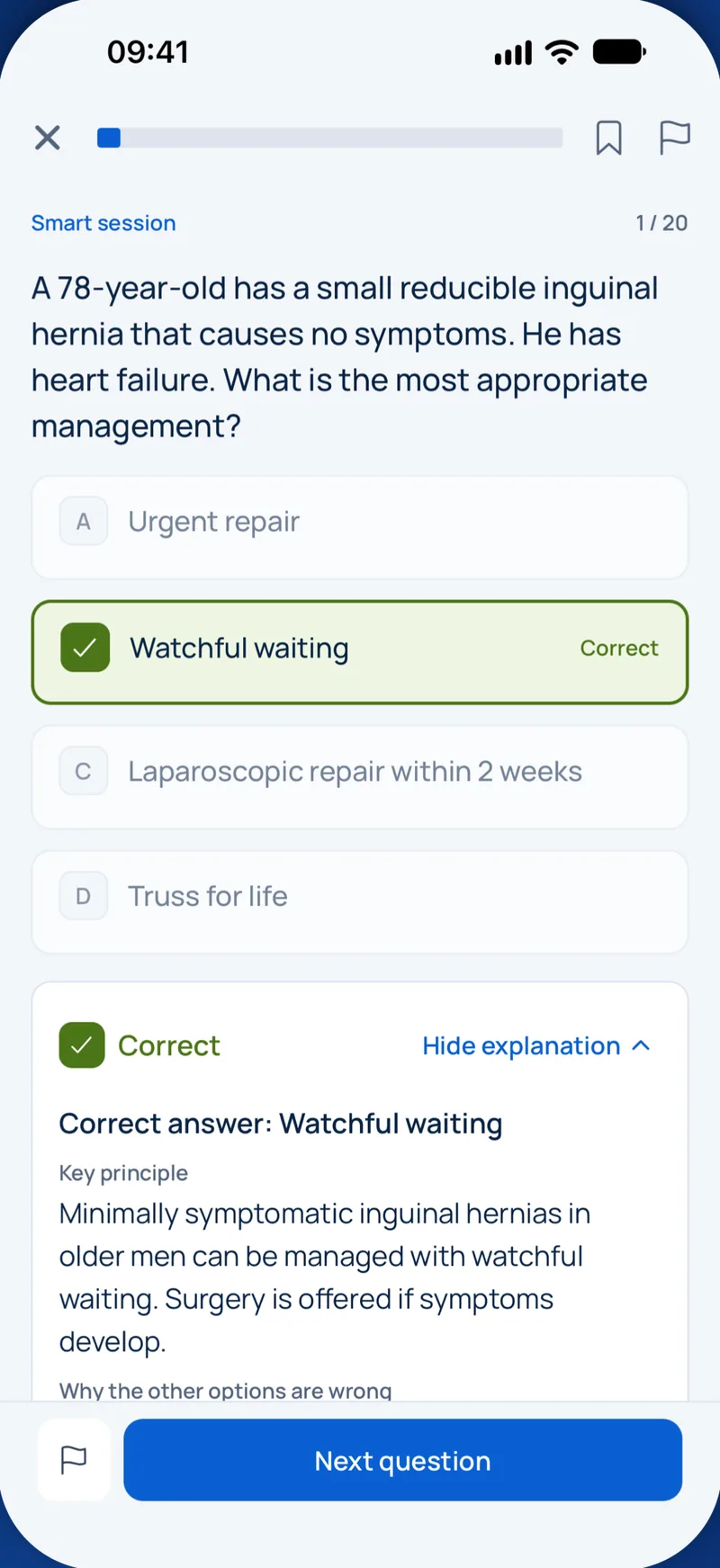

Пример вопроса
Which ECG finding is the diagnostic criterion for ST-elevation myocardial infarction in leads V2–V3 in a 55-year-old man?
Keys: 1–5 or A–E to choose, Enter to check and continue, F to mark.
Original MediFlow content, not official exam questions. Medical review in progress.
Syllabus and high-yield notes
1. Cardiology · 12 % вес на экзамене · 0 lessons+
- STEMI: primary PCI if achievable within 120 minutes of diagnosis, otherwise fibrinolysis within 10 minutes of diagnosis then transfer. NSTE-ACS with haemodynamic instability, refractory pain or life-threatening arrhythmia needs immediate angiography; high-risk NSTEMI (GRACE above 140, dynamic ST change) within 24 hours.
- HFrEF: four pillars started early and up-titrated: ARNI or ACE inhibitor, evidence-based beta-blocker, MRA and SGLT2 inhibitor. Add an ICD for LVEF 35% or less after at least 3 months of optimal therapy with expected survival over 1 year, and CRT for LVEF 35% or less with LBBB and QRS 150 ms or more.
- Atrial fibrillation: anticoagulate by CHA2DS2-VASc (men 2 or more, women 3 or more), with a DOAC preferred over warfarin except in moderate-to-severe mitral stenosis or a mechanical valve. Unstable AF needs synchronised cardioversion; early rhythm control improves outcomes in recently diagnosed AF.
- Severe aortic stenosis is treated with valve replacement once symptomatic, with LVEF below 50%, or with a very high gradient; TAVI versus surgery depends on age and risk. Infective endocarditis is diagnosed with the modified Duke/ESC criteria and needs at least 2 sets of blood cultures before antibiotics.
2. Pulmonology & sleep · 9 % вес на экзамене · 0 lessons+
- COPD is managed by GOLD group: LABA plus LAMA for group B, and LABA plus LAMA with an inhaled corticosteroid added when exacerbations continue and blood eosinophils are 300 cells/microlitre or more. Long-term oxygen is indicated when PaO2 is 7.3 kPa (55 mmHg) or less, or 8.0 kPa (60 mmHg) with cor pulmonale or polycythaemia.
- Asthma: GINA recommends as-needed low-dose ICS-formoterol as the reliever in all steps and avoids SABA-only treatment. Severe asthma with eosinophilic phenotype can use anti-IL5 or anti-IL5R biologics; allergic asthma with raised IgE, omalizumab or tezepelumab.
- Pulmonary embolism, pneumothorax and pleural disease: Light's criteria separate exudates from transudates; pleural infection needs drainage if pH is below 7.2, glucose below 2.2 mmol/L or pus is present. A large primary spontaneous pneumothorax is treated with needle aspiration or a small-bore drain.
- Obstructive sleep apnoea is diagnosed by an apnoea-hypopnoea index of 5 or more with symptoms, or 15 or more regardless. CPAP is first-line for moderate-to-severe disease; hypoventilation with obesity (BMI over 30, PaCO2 above 6 kPa) is managed with non-invasive ventilation.
3. Gastroenterology & hepatology · 9 % вес на экзамене · 0 lessons+
- Upper GI bleeding: resuscitate, give a proton pump inhibitor after endoscopy, and endoscope within 24 hours; restrictive transfusion at haemoglobin below 70 g/L (80 g/L in cardiovascular disease). In variceal bleeding add terlipressin, antibiotic prophylaxis and band ligation within 12 hours.
- Chronic hepatitis B: treat with entecavir or tenofovir when HBV DNA is above 2000 IU/mL with raised ALT or significant fibrosis. Hepatitis C is curable with direct-acting antivirals for 8–12 weeks; sustained virological response at 12 weeks equals cure. Hepatitis C and B remain important in the Gulf expatriate workforce.
- Cirrhosis complications: diagnostic paracentesis for all admissions with ascites, albumin with large-volume paracentesis (over 5 L), norfloxacin or ciprofloxacin prophylaxis after spontaneous bacterial peritonitis, and lactulose with rifaximin for hepatic encephalopathy. Refer for transplant assessment at MELD 15 or after the first decompensation.
- Inflammatory bowel disease: induce remission in moderate-to-severe Crohn disease with biologic therapy early; severe ulcerative colitis (Truelove and Witts) needs intravenous hydrocortisone, with rescue infliximab or ciclosporin at day 3 if not improving. Coeliac disease is diagnosed with tTG-IgA on a gluten-containing diet.
4. Nephrology, fluids & electrolytes · 8 % вес на экзамене · 0 lessons+
- Hyponatraemia: classify by tonicity, volume status, urine osmolality and urine sodium. Correct chronic hyponatraemia by no more than 8–10 mmol/L in 24 hours to avoid osmotic demyelination; severe symptoms (seizures, coma) need 150 mL of 3% saline over 20 minutes, repeated up to twice.
- Hyperkalaemia: ECG changes need intravenous calcium gluconate first, then insulin with glucose and nebulised salbutamol to shift potassium, and removal by loop diuretic, potassium binders or dialysis. Refractory cases or severe AKI need renal replacement.
- Chronic kidney disease: stage by eGFR and albuminuria; start an ACE inhibitor or ARB for albuminuria with hypertension, add an SGLT2 inhibitor for eGFR 20 mL/min/1.73 m2 or more, and finerenone in diabetic kidney disease with albuminuria. Consider dialysis planning at eGFR below 15–20.
- Acute kidney injury: KDIGO defines AKI by creatinine rise of 26.5 µmol/L in 48 hours, 1.5 times baseline in 7 days, or urine output below 0.5 mL/kg/h for 6 hours. Stop nephrotoxins, restore volume, and exclude obstruction with ultrasound; indications for urgent dialysis are refractory hyperkalaemia, acidosis, overload, uraemic complications and toxins.
5. Endocrinology & diabetes · 10 % вес на экзамене · 0 lessons+
- Type 2 diabetes: in patients with established atherosclerotic disease, heart failure or CKD, add an SGLT2 inhibitor or GLP-1 receptor agonist independent of HbA1c. Metformin remains first line if eGFR is 30 mL/min/1.73 m2 or more. Fasting in Ramadan needs pre-Ramadan risk assessment, dose changes for sulfonylureas and insulin, and glucose monitoring.
- Diabetic ketoacidosis: fluids first, then fixed-rate insulin 0.1 units/kg/h once potassium is 3.5 mmol/L or more; add dextrose when glucose falls below 14 mmol/L (250 mg/dL), and replace potassium to keep 4–5 mmol/L. Hyperosmolar hyperglycaemic state needs slower correction and lower insulin rates.
- Thyroid: TSH is the screening test; Graves disease is treated with carbimazole 12–18 months, radioiodine or surgery; thyroid storm needs beta-blocker, thionamide, iodine after thionamide, steroids and cooling. Hypothyroidism is treated with levothyroxine 1.6 micrograms/kg, with lower starting doses in the elderly and heart disease.
- Adrenal and pituitary: suspected adrenal crisis needs hydrocortisone 100 mg IV immediately without waiting for tests. Primary hyperaldosteronism should be screened in resistant hypertension or hypokalaemia; incidentalomas over 4 cm or HU above 10 need further evaluation. Hypercalcaemia with raised PTH is primary hyperparathyroidism.
6. Haematology & oncology · 9 % вес на экзамене · 0 lessons+
- Haemoglobinopathies are common in the Gulf: beta-thalassaemia major needs regular transfusion with iron chelation, sickle cell disease needs hydroxycarbamide, vaccination and penicillin prophylaxis in children, and premarital screening reduces new cases. G6PD deficiency causes haemolysis after oxidant drugs and fava beans.
- Venous thromboembolism: DOACs (apixaban, rivaroxaban) are first-line for most; treat provoked VTE for 3 months, unprovoked for at least 3–6 months with extended therapy considered; cancer-associated VTE uses a DOAC or LMWH with attention to bleeding risk. Heparin-induced thrombocytopenia is a prothrombotic emergency: stop heparin and start a non-heparin anticoagulant.
- Haematological malignancy: acute promyelocytic leukaemia is an emergency treated with ATRA and arsenic trioxide as soon as it is suspected; chronic myeloid leukaemia is treated with tyrosine kinase inhibitors; myeloma needs CRAB features or biomarkers of malignancy to start therapy. Tumour lysis syndrome is prevented with hydration and rasburicase.
- Oncology emergencies and solid tumours: febrile neutropenia needs antibiotics within 1 hour, spinal cord compression needs dexamethasone and urgent MRI, and superior vena cava obstruction needs urgent imaging and tissue diagnosis. Screening: colorectal screening from 45–50, breast mammography from 40–50, and cervical HPV testing.
7. Infectious diseases · 9 % вес на экзамене · 0 lessons+
- Sepsis: recognise early, take cultures, give broad-spectrum antibiotics within 1 hour for shock or high-probability sepsis, give 30 mL/kg crystalloid for hypotension or lactate 4 mmol/L or more, and start noradrenaline if MAP stays below 65 mmHg. Narrow therapy on culture results and aim for the shortest effective course.
- Brucellosis, MERS-CoV, tuberculosis and malaria are important in Gulf practice. Brucellosis is treated with doxycycline plus rifampicin for 6 weeks (or doxycycline plus streptomycin or gentamicin first); spondylitis and neurobrucellosis need longer therapy. Severe falciparum malaria is treated with intravenous artesunate.
- HIV: start antiretroviral therapy for all, ideally within 2 weeks of diagnosis (delay for cryptococcal and TB meningitis); first-line regimens contain dolutegravir. Prophylaxis with co-trimoxazole is given at CD4 below 200 cells/mm3. Prevent infection by pre-exposure prophylaxis and treatment as prevention (undetectable equals untransmittable).
- Antimicrobial stewardship: cover MRSA with vancomycin or linezolid only on risk factors, use carbapenems for ESBL infections, treat Clostridioides difficile with fidaxomicin or vancomycin, and treat infective syndromes by site with the shortest effective duration. Rising carbapenem resistance in the Gulf requires local antibiogram use.
8. Rheumatology & immunology · 6 % вес на экзамене · 0 lessons+
- Rheumatoid arthritis: start methotrexate with folic acid early (treat to target, DAS28 remission), add a biologic or JAK inhibitor if the target is missed after 3–6 months, and screen for latent TB and hepatitis B before biologics. Acute gout: NSAID, colchicine or steroid; start urate-lowering therapy with allopurinol after the flare, target urate below 360 micromol/L.
- Systemic lupus erythematosus: hydroxychloroquine for all patients, steroids as bridging, and cyclophosphamide, mycophenolate or belimumab for lupus nephritis class III or IV. Antiphospholipid syndrome: warfarin (not DOAC) for triple-positive or arterial disease. Consanguinity and young Gulf women make SLE common.
- Vasculitis: giant cell arteritis needs prednisolone 40–60 mg immediately without waiting for biopsy; ANCA-associated vasculitis is induced with rituximab or cyclophosphamide plus steroids; Behcet disease is frequent in the Gulf and Middle East with oral ulcers, genital ulcers and uveitis.
- Spondyloarthritis and others: axial spondyloarthritis responds to NSAIDs then TNF or IL-17 inhibitors; familial Mediterranean fever is treated with colchicine and is common in Arab populations; septic arthritis must be excluded in any hot swollen joint.
9. Neurology · 7 % вес на экзамене · 0 lessons+
- Acute ischaemic stroke: non-contrast CT immediately to exclude haemorrhage; intravenous thrombolysis (alteplase or tenecteplase) within 4.5 hours of onset if no contraindication, thrombectomy for large vessel occlusion up to 24 hours in selected patients on perfusion imaging. Blood pressure must be below 185/110 mmHg before lysis.
- Epilepsy: treat status epilepticus with IV lorazepam 4 mg (or IM midazolam), then levetiracetam, valproate or fosphenytoin; avoid valproate in women of childbearing potential unless no alternative. Raised intracranial pressure, meningitis and encephalitis need early empirical treatment, including aciclovir for suspected herpes encephalitis.
- Neuroimmunology and degenerative disease: multiple sclerosis relapses are treated with methylprednisolone 1 g for 3–5 days and disease-modifying therapy after the first demyelinating event with MRI risk; myasthenia gravis is treated with pyridostigmine and immunosuppression; Guillain-Barre syndrome needs IVIG or plasma exchange and FVC monitoring.
- Headache and movement disorders: migraine prophylaxis includes propranolol, topiramate and CGRP antibodies; cluster headache responds to oxygen and sumatriptan; Parkinson disease starts with levodopa or dopamine agonists; thunderclap headache needs CT then lumbar puncture to exclude subarachnoid haemorrhage.
10. Acute medicine, critical care & toxicology · 8 % вес на экзамене · 0 lessons+
- Septic shock: cultures, antibiotics within 1 hour, 30 mL/kg balanced crystalloid, noradrenaline as first-line vasopressor to MAP 65 mmHg, add vasopressin or hydrocortisone for refractory shock. Lung-protective ventilation (6 mL/kg ideal body weight, plateau pressure below 30 cmH2O) and prone positioning for severe ARDS (PaO2/FiO2 below 150 mmHg).
- Poisoning: paracetamol overdose is treated with acetylcysteine according to the treatment nomogram; salicylate overdose needs urinary alkalinisation and haemodialysis for severe cases; organophosphate poisoning needs atropine; toxic alcohols need fomepizole; opioid toxicity needs naloxone titrated to respiration.
- Heat illness is common in the Gulf: heat stroke (core temperature above 40 degrees Celsius with CNS dysfunction) needs immediate cold-water immersion or evaporative cooling to below 39 degrees Celsius; antipyretics do not work. Rhabdomyolysis, DIC and AKI complicate it.
- Resuscitation: high-quality CPR, early defibrillation for VF/pVT, adrenaline 1 mg every 3–5 minutes for non-shockable rhythms as soon as possible, treat reversible causes (4 Hs and 4 Ts), and targeted temperature management with avoidance of fever after return of spontaneous circulation.
11. Geriatrics & palliative care · 6 % вес на экзамене · 0 lessons+
- Delirium is an acute fluctuating disturbance of attention: look for infection, drugs (anticholinergics, opioids, benzodiazepines), retention, constipation, metabolic causes and pain. Manage with non-drug measures first; use low-dose haloperidol only for distress or risk to safety. Anticholinergic burden and polypharmacy are major causes of harm in older people.
- Falls and frailty: assess gait, orthostatic blood pressure, vision, medication and vitamin D; exercise programmes reduce falls; frailty is assessed with the Clinical Frailty Scale and guides treatment intensity. Dementia: cholinesterase inhibitors for mild to moderate Alzheimer disease, avoid antipsychotics unless severe distress or risk.
- Palliative care: opioids for pain and breathlessness (start low, titrate, add laxatives), use subcutaneous midazolam and an antisecretory agent in the dying phase, and discuss goals of care early. Use the WHO analgesic ladder; use morphine with caution in renal impairment, favouring oxycodone or fentanyl.
- Prescribing in older people: apply STOPP/START or Beers criteria, avoid sulfonylureas with long half-life (glibenclamide), non-steroidal anti-inflammatory drugs with renal disease, and long-term proton pump inhibitor without indication. Pressure injury prevention needs repositioning, support surfaces and nutrition.
12. Ethics, safety & biostatistics · 7 % вес на экзамене · 0 lessons+
- Sensitivity is the proportion of diseased people with a positive test (rules out when high, SnNout); specificity is the proportion of healthy people with a negative test (rules in when high, SpPin). Positive predictive value rises with disease prevalence; likelihood ratios do not depend on prevalence. Number needed to treat equals 1 divided by the absolute risk reduction.
- Study design: randomised controlled trials give the strongest evidence for treatment effect; cohort studies measure incidence and relative risk; case-control studies estimate odds ratios for rare diseases; cross-sectional studies measure prevalence. Confounding is controlled by randomisation, restriction or adjustment; lead-time and length-time bias distort screening studies.
- Medical ethics: respect autonomy, beneficence, non-maleficence and justice. Valid consent requires capacity, information and voluntariness; confidentiality may be breached for serious risk to others or legal duty (notifiable disease, child protection). Disclose errors openly and honestly (duty of candour). Gulf practice also involves family-centred decision-making, which must still respect the patient's wishes.
- Patient safety: use root cause analysis and the Swiss cheese model; checklists reduce surgical and line-insertion harm; look-alike sound-alike drugs and high-alert medicines (insulin, heparin, potassium) need independent double checks. Report incidents in a just culture and communicate with SBAR.
Об экзамене MOH Kuwait Specialist Internal Medicine
Сколько вопросов на экзамене MOH Kuwait Specialist Internal Medicine?+
не опубликовано. Точное число вопросов, время и проходной балл подтверждаются при записи.
Какие темы весят больше всего?+
Крупнейшие темы: Cardiology (12 %), Endocrinology & diabetes (10 %), Pulmonology & sleep (9 %). Курс охватывает 12 тем и 0 глав.
Как подготовиться к экзамену MOH Kuwait Specialist Internal Medicine?+
Проходите главы тема за темой, повторяйте ключевые заметки, затем тренируйтесь на пробных экзаменах с таймером в формате вашего органа.
Вопросы
Как долго действует доступ?+
Доступ действует 90 дней с момента оплаты для выбранной страны и профессии.
Какие устройства можно использовать?+
Любой браузер на компьютере, планшете или телефоне, а также приложение MediFlow с тем же аккаунтом.
Можно ли вернуть деньги?+
Пожалуйста, прочитайте правила возврата перед покупкой. Правила возврата

iPhone · iPad
MediFlow Exam Prep
Готовьтесь на iPhone к лицензионным экзаменам DHA, DOH, MOHAP, SCFHS и другим экзаменам стран Залива.


Экзамен — ваш единственный оставшийся шаг?
Сначала проверьте, нужен ли вам экзамен и на какое звание вы можете рассчитывать. Консультант перезвонит и ответит на вопросы.
Проверка соответствия- 1Звонок в WhatsApp в выбранное время
- 2Проверка соответствия официальным требованиям
- 3Ваш план с фиксированными ценами и понятными шагами