
🇸🇦 SCFHS
Specialist Pediatrics Saudi Arabia
Physicians preparing for the Pediatrics exams of DHA, DOH, MOHAP, Qatar DHP and SCFHS
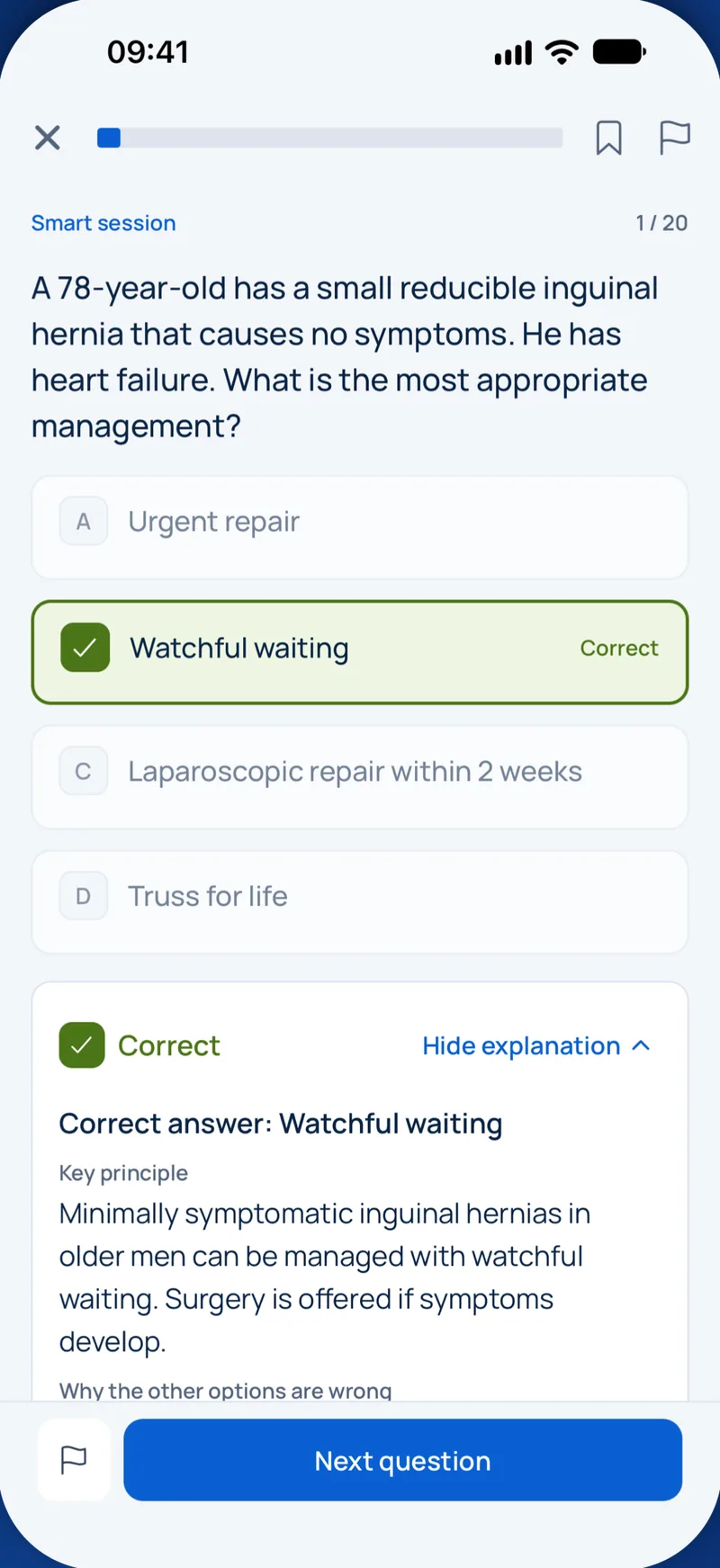
Question d’exemple
A 36-hour-old term boy of Gulf Arab descent develops jaundice with bilirubin rising rapidly. The mother's family has a history of favism. Which test is most useful to explain the rapid rise?
Keys: 1–5 or A–E to choose, Enter to check and continue, F to mark.
Original MediFlow content, not official exam questions. Medical review in progress.
Syllabus and high-yield notes
1. Neonatology · 10 % poids à l’examen · 0 lessons+
- Neonatal resuscitation: ventilation is the priority. If the heart rate stays below 60 per minute after 30 seconds of effective ventilation (chest rise), start compressions at 3:1 with 100% oxygen and consider adrenaline via an umbilical venous catheter.
- Bilirubin management uses gestational age, postnatal age and neurotoxicity risk factors (haemolysis, G6PD deficiency, sepsis, acidosis, albumin below 30 g/L). Escalate to intensive phototherapy and exchange transfusion thresholds when the total serum bilirubin approaches the escalation-of-care line.
- Bilious vomiting in a neonate is malrotation with volvulus until proved otherwise: urgent upper GI contrast study, surgical review, and no delay for abdominal ultrasound if the baby is unstable.
- Duct-dependent congenital heart disease presents with collapse, shock or cyanosis in the first 2 weeks as the duct closes. Start prostaglandin E1 early, ventilate with caution and do not give high-flow oxygen to a baby with a duct-dependent systemic circulation.
2. Growth, development & nutrition · 10 % poids à l’examen · 0 lessons+
- Faltering growth is judged on the weight centile trend, not a single value. Plot on WHO charts (corrected for prematurity until 2 years), observe a feed, take a dietary history and treat the commonest cause (inadequate intake) before ordering extensive tests.
- Vitamin D deficiency rickets is common in the Gulf despite sunshine. Treat with cholecalciferol (2000 IU daily for 3 months at 1-12 months of age; 3000-6000 IU above 12 months) plus dietary calcium, then maintenance of 400-600 IU daily.
- Constitutional delay of growth and puberty gives short stature with delayed bone age, normal growth velocity for bone age and a family history of late maturation; reassurance and observation is usual. Mid-parental height gives the genetic target: (father + mother + 13 cm for boys, minus 13 cm for girls) divided by 2.
- Severe acute malnutrition with poor appetite or medical complications is treated in hospital with F-75 first, then transition to F-100 or RUTF. Refeeding syndrome presents with hypophosphataemia, hypokalaemia and hypomagnesaemia in the first days.
3. Infectious diseases · 10 % poids à l’examen · 0 lessons+
- Neonatal and young-infant meningitis (under 3 months) needs Listeria cover: cefotaxime plus amoxicillin or ampicillin. In older children, ceftriaxone or cefotaxime is first line, with dexamethasone given with or before the first antibiotic dose when Haemophilus influenzae or pneumococcal disease is suspected.
- Brucellosis is common in the Gulf after raw camel, goat or sheep milk. In children under 8 years use co-trimoxazole plus rifampicin for 6 weeks; in older children doxycycline plus rifampicin. Fever with arthritis, hepatosplenomegaly and cytopenias fits the picture.
- Kawasaki disease (fever 5 days or more plus conjunctivitis, oral changes, rash, limb changes, cervical node) is treated with IVIG 2 g/kg within 10 days of fever onset and aspirin; echocardiography at diagnosis and at 1-2 weeks and 4-6 weeks. IVIG-resistant disease needs steroids or infliximab.
- Latent TB in a child contact is treated after active disease is excluded: 3 months of isoniazid plus rifampicin (3HR) or 6 months of isoniazid. Tuberculous meningitis requires 2HRZE then 10HR with corticosteroids.
4. Immunisation, allergy & immunology · 6 % poids à l’examen · 0 lessons+
- Anaphylaxis in children is treated with intramuscular adrenaline 0.01 mg/kg (1 mg/mL, maximum 0.5 mg) into the anterolateral thigh, repeated after 5 minutes if there is no improvement; antihistamines and steroids do not replace adrenaline. Discharge needs a period of observation, adrenaline auto-injectors with training, and an allergy plan.
- Live vaccines (MMR, varicella, BCG, rotavirus) are avoided in severe combined immunodeficiency and deferred in children on high-dose steroids (2 mg/kg/day for 14 days or more, to be stopped at least 1 month), and deferred for 11 months after high-dose IVIG. Egg allergy is not a contraindication to MMR or influenza vaccines.
- Suspect primary immunodeficiency in a young infant with persistent thrush, recurrent severe infections, failure to thrive and lymphopenia; consanguinity increases risk of autosomal recessive types. In SCID give irradiated, CMV-safe blood products and prepare for early haematopoietic stem-cell transplantation.
- Mild-to-moderate non-IgE cow's milk protein allergy in a formula-fed infant is managed with an extensively hydrolysed formula; amino-acid formula is for severe symptoms, faltering growth or failure of eHF. Penicillin allergy labels in children are usually inaccurate and low-risk histories can be de-labelled by direct oral challenge.
5. Respiratory · 8 % poids à l’examen · 0 lessons+
- Bronchiolitis is managed supportively: oxygen when SpO2 is persistently below 92%, nasogastric or IV fluids when feeding is inadequate, and high-flow nasal oxygen for increasing work of breathing. Salbutamol, adrenaline, steroids, hypertonic saline routine use and antibiotics are not recommended.
- Croup is treated with a single dose of oral or IM dexamethasone 0.15 mg/kg whatever the severity; nebulised adrenaline is added for stridor at rest. A toxic child with croup-like illness that does not respond suggests bacterial tracheitis and needs airway assessment and IV antibiotics.
- Acute severe asthma: oxygen to SpO2 of 94-98%, repeated salbutamol via spacer, ipratropium, early oral prednisolone 1-2 mg/kg (maximum 40 mg), and IV magnesium sulfate 40 mg/kg (maximum 2 g) over 20 minutes if there is poor response. Silent chest, exhaustion and cyanosis are life-threatening features.
- Cystic fibrosis is confirmed by sweat chloride 60 mmol/L or more on two occasions and/or two CFTR variants. First Pseudomonas aeruginosa isolates are treated with an eradication regimen, and primary ciliary dyskinesia should be considered in chronic wet cough from birth with situs inversus.
6. Cardiology · 7 % poids à l’examen · 0 lessons+
- Stable SVT in an infant is treated with vagal manoeuvres (ice-water to the face), then adenosine 0.1 mg/kg by rapid IV bolus into a proximal vein, doubling to 0.2 mg/kg if needed; unstable SVT requires synchronised cardioversion at 1 J/kg. Check for pre-excitation on the post-conversion ECG.
- Hypercyanotic spells of tetralogy of Fallot are managed with knee-to-chest positioning, oxygen, calming, then IV fluid, morphine and phenylephrine to increase systemic resistance; propranolol or esmolol if refractory. Definitive repair is usually elective in infancy.
- Acute rheumatic fever is diagnosed by the revised Jones criteria after documented group A streptococcal infection: carditis, migratory polyarthritis, chorea, erythema marginatum and subcutaneous nodules as major signs. Treat with penicillin and anti-inflammatory therapy, then secondary prophylaxis with benzathine penicillin every 3-4 weeks for years.
- Exertional syncope, palpitations at rest or a family history of sudden death needs an ECG and echocardiogram before sport; innocent murmurs are soft, systolic, vary with position and occur with normal pulses and no symptoms.
7. Gastroenterology & hepatology · 8 % poids à l’examen · 0 lessons+
- Infantile hypertrophic pyloric stenosis causes non-bilious projectile vomiting at 3-8 weeks with hypochloraemic, hypokalaemic metabolic alkalosis. Correct dehydration and electrolytes first (0.45% saline in 5% dextrose with potassium once urine is passed); pyloromyotomy follows only when chloride and bicarbonate have normalised.
- Acute gastroenteritis: oral rehydration with reduced-osmolarity ORS 50 mL/kg over 4 hours for some dehydration, ondansetron may aid oral rehydration; IV 20 mL/kg isotonic crystalloid boluses for shock. Antimotility drugs are avoided, and antibiotics are not routine for Salmonella or STEC.
- Coeliac disease can be diagnosed without biopsy in a symptomatic child when anti-tTG IgA is at least 10 times the upper limit of normal with positive EMA on a second sample (ESPGHAN 2020). Total IgA is measured to exclude IgA deficiency.
- Button batteries lodged in the oesophagus are an emergency: urgent endoscopic removal within 2 hours, honey (over 12 months) or sucralfate on the way, and no delay for imaging beyond a radiograph. Magnets and multiple objects also need urgent removal.
8. Nephrology & urology · 6 % poids à l’examen · 0 lessons+
- Idiopathic nephrotic syndrome in a child aged 1-10 years without haematuria, hypertension or low complement is treated empirically with prednisolone 60 mg/m2/day (maximum 80 mg) for 4-6 weeks, then alternate-day tapering, without biopsy. Relapse is treated with daily prednisolone until protein-free for 3 days.
- Febrile UTI in an infant is imaged by renal ultrasound; DMSA or micturating cystourethrography are reserved for atypical or recurrent infection (NICE). Treat with a cephalosporin or aminoglycoside, adjusting to culture.
- Shiga toxin-producing E. coli diarrhoea can lead to haemolytic uraemic syndrome 5-10 days later (anaemia with schistocytes, thrombocytopenia, AKI). Antibiotics and antimotility drugs are avoided; management is supportive with dialysis if required.
- Hyperkalaemia with ECG changes is an emergency: IV calcium gluconate 10% 0.5 mL/kg to stabilise the myocardium, then salbutamol or insulin with glucose to shift potassium, and removal by diuresis, resin or dialysis.
9. Endocrinology & diabetes · 7 % poids à l’examen · 0 lessons+
- DKA in children (ISPAD 2022): resuscitate only if shocked (10 mL/kg isotonic bolus), then replace the deficit over 24-48 hours with isotonic fluids, start insulin 0.05-0.1 unit/kg/hour at least 1 hour after fluids begin, and add potassium once urine is passed. If potassium is below 3.3 mmol/L, hold insulin and give potassium first.
- Cerebral oedema complicates 0.5-1% of DKA, typically 4-12 hours into treatment, with headache, bradycardia, hypertension and falling consciousness; give mannitol 0.5-1 g/kg or 3% saline 2.5-5 mL/kg, reduce fluid rate and elevate the head.
- Congenital hypothyroidism is detected by newborn screening; start levothyroxine 10-15 microgram/kg/day immediately after confirmatory sampling to protect neurodevelopment. In congenital adrenal hyperplasia (21-hydroxylase deficiency, common with consanguinity) a salt-losing crisis occurs at 1-2 weeks with hyponatraemia, hyperkalaemia and hypoglycaemia, treated with hydrocortisone, saline and glucose.
- Gulf context: type 1 diabetes during Ramadan is high risk. Pre-Ramadan counselling, glucose monitoring and a break of the fast if glucose is below 3.9 mmol/L (70 mg/dL) or above 16.7 mmol/L (300 mg/dL) with ketones are essential; children and adolescents are generally advised against fasting.
10. Neurology & development disorders · 8 % poids à l’examen · 0 lessons+
- Simple febrile seizures (generalised, under 15 minutes, once in 24 hours, age 6 months to 5 years) need reassurance, not EEG, neuroimaging or prophylactic anticonvulsants. Lumbar puncture is considered in infants under 12 months with incomplete immunisation or meningeal signs. A seizure lasting 5 minutes or more is treated as status epilepticus.
- Status epilepticus: benzodiazepine first (IV lorazepam 0.1 mg/kg, buccal midazolam 0.3 mg/kg or rectal diazepam), repeat once after 5-10 minutes, then second-line levetiracetam 40 mg/kg, phenytoin 20 mg/kg or valproate. Check glucose early.
- Infantile epileptic spasms syndrome (West syndrome) with hypsarrhythmia needs treatment within days: prednisolone or ACTH, or vigabatrin first line when tuberous sclerosis is present. Valproate should be avoided in girls and women of childbearing potential for generalised epilepsies where alternatives exist.
- Floppy infants with absent reflexes and tongue fasciculations need urgent SMN1 testing for spinal muscular atrophy because disease-modifying therapy works best before symptoms are advanced. Duchenne muscular dystrophy presents with Gowers sign and very high CK; genetic testing confirms and corticosteroids are started.
11. Haematology & oncology · 6 % poids à l’examen · 2 lessons+
- Sickle cell disease: early opioid analgesia within 30 minutes for vaso-occlusive pain, penicillin prophylaxis from 2 months to at least 5 years, hydroxycarbamide for recurrent crises or acute chest syndrome, and transcranial Doppler screening from 2 years with chronic transfusion if the time-averaged mean velocity is 200 cm/s or more. Acute chest syndrome and splenic sequestration are emergencies.
- Thalassaemia major is common in the Gulf and managed with regular transfusion (pre-transfusion Hb about 90-105 g/L) and iron chelation guided by ferritin and MRI. Premarital screening and counselling reduce incidence. Microcytosis with normal ferritin and HbA2 above 3.5% indicates beta-thalassaemia trait.
- G6PD deficiency (X-linked, common in the Gulf) causes acute haemolysis after fava beans, infection or oxidant drugs (primaquine, dapsone, rasburicase, nitrofurantoin, methylene blue). Rasburicase is contraindicated; use allopurinol and hyperhydration for tumour lysis syndrome.
- Febrile neutropenia in a child on chemotherapy is an emergency: blood cultures and an anti-pseudomonal beta-lactam (piperacillin-tazobactam) within 60 minutes. Leucocoria must prompt urgent retinoblastoma assessment.
- Foundations: blood cells, haematopoiesis and haemostasis – All blood cells come from haematopoietic stem cells in the bone marrow. A stem cell gives rise to a myeloid progenitor, which produces red cells, platelets, granulocytes and monocytes, and a lymphoid progenitor, which produces lymphocytes. Recognising each cell on a blood film and knowing what it does is the basis for reading a full blood count, and platelets together with clotting factors stop bleeding when a vessel is injured.
- Foundations: tumour growth, spread and staging – A carcinoma starts in an epithelium. While the abnormal cells stay above the basement membrane the lesion is carcinoma in situ and cannot metastasise. Once they breach the basement membrane the tumour is invasive and can reach lymphatic vessels and blood vessels, spreading to regional lymph nodes and distant organs. Haematological malignancies arise instead from cells of the myeloid or lymphoid lines in the bone marrow and lymphoid tissue.
12. Genetics & metabolic disease · 6 % poids à l’examen · 0 lessons+
- Suspect an inborn error of metabolism in any sick neonate after a symptom-free interval: poor feeding, vomiting, lethargy, seizures, unexplained acidosis or hyperammonaemia. At collapse, take glucose, blood gas, lactate, ammonia, ketones, plasma amino acids, acylcarnitines and urine organic acids, and stop protein while giving IV glucose.
- Hyperammonaemia (above about 150 micromol/L in neonates) is a neurological emergency: stop protein, high-rate dextrose with insulin if needed, ammonia scavengers (sodium benzoate, sodium phenylbutyrate), arginine for urea cycle defects, and early haemodialysis for levels above about 400 micromol/L or coma.
- Consanguinity (common in Gulf populations) raises the risk of autosomal recessive disease; each pregnancy of two carriers carries 25% risk, and carrier testing, preimplantation or prenatal diagnosis may be offered. Expanded newborn screening by tandem mass spectrometry detects PKU, MCAD deficiency and organic acidaemias.
- Cytogenetic syndromes: Down syndrome (screen for CHD, hypothyroidism, hearing, coeliac, atlantoaxial instability), Williams (7q11.23, supravalvular aortic stenosis, hypercalcaemia), Prader-Willi (15q11-13 methylation testing), fragile X (FMR1 CGG repeat analysis).
13. Emergency, toxicology & child protection · 8 % poids à l’examen · 0 lessons+
- Heat illness is common in Gulf summers. Exertional heat stroke (core temperature above 40 C with altered mental state) is treated by rapid cooling, ideally cold-water immersion to below 39 C, with ABC support; antipyretics do not work. Never leave children in parked vehicles.
- Paediatric cardiac arrest: 5 rescue breaths, then 15 compressions to 2 ventilations; shock VF/pulseless VT at 4 J/kg; adrenaline 10 microgram/kg (0.1 mL/kg of 1:10,000) every 3-5 minutes in non-shockable rhythms and after the third shock. Drowning arrests are treated as respiratory arrests with early rescue breaths.
- Suspected child maltreatment: unexplained injuries in non-mobile infants, posterior rib fractures, bruises in unusual sites, retinal haemorrhage or subdural haematoma with inconsistent history require skeletal survey, neuroimaging, ophthalmology review and immediate referral to child protection services; the child must not be discharged until a safety plan exists.
- Toxicology principles: identify agent, dose and time; activated charcoal only within 1 hour for suitable agents; N-acetylcysteine for paracetamol above the treatment line; naloxone for opioid toxidrome; desferrioxamine for severe iron toxicity; bicarbonate for salicylates; octreotide for sulfonylurea-induced hypoglycaemia.
L’examen SCFHS Specialist Pediatrics
Combien de questions comporte l’examen SCFHS Specialist Pediatrics ?+
non publié. Le nombre exact de questions, la durée et le seuil sont confirmés lors de votre réservation.
Quels thèmes pèsent le plus ?+
Les thèmes principaux sont Neonatology (10 %), Growth, development & nutrition (10 %), Infectious diseases (10 %). Le cours couvre 13 thèmes et 2 chapitres au total.
Comment me préparer à l’examen SCFHS Specialist Pediatrics ?+
Travaillez les chapitres thème par thème, révisez les notes essentielles, puis entraînez-vous avec des examens blancs chronométrés au format de votre autorité.
Questions
Combien de temps dure l’accès ?+
L’accès dure 90 jours à partir du paiement pour le pays et la profession choisis.
Quels appareils puis-je utiliser ?+
Tout navigateur sur ordinateur, tablette ou téléphone, ainsi que l’application MediFlow avec le même compte.
Puis-je être remboursé ?+
Veuillez lire notre politique de remboursement avant l’achat. Politique de remboursement

iPhone · iPad
MediFlow Exam Prep
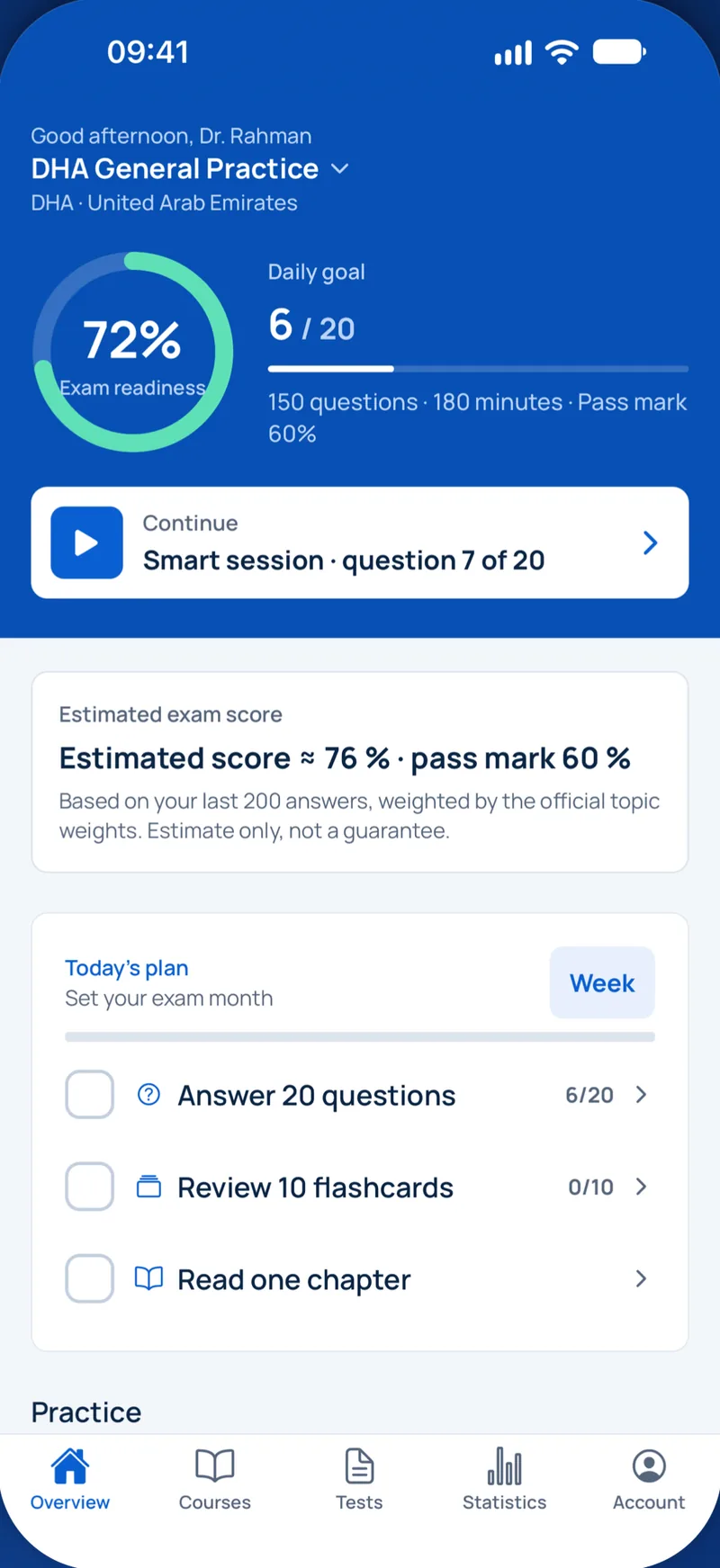
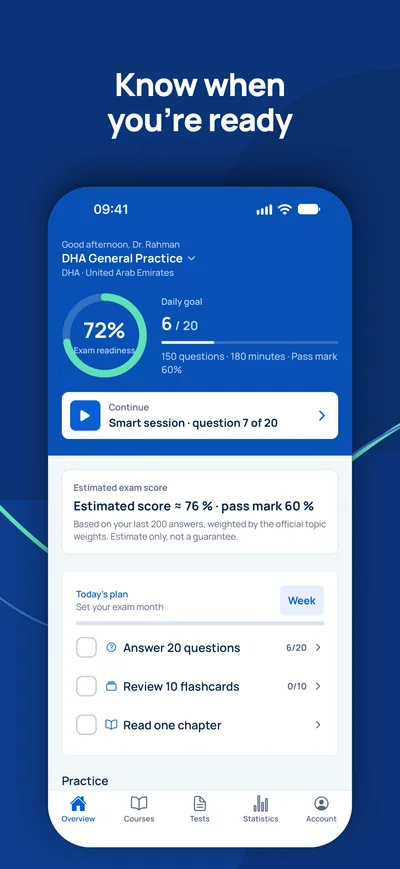
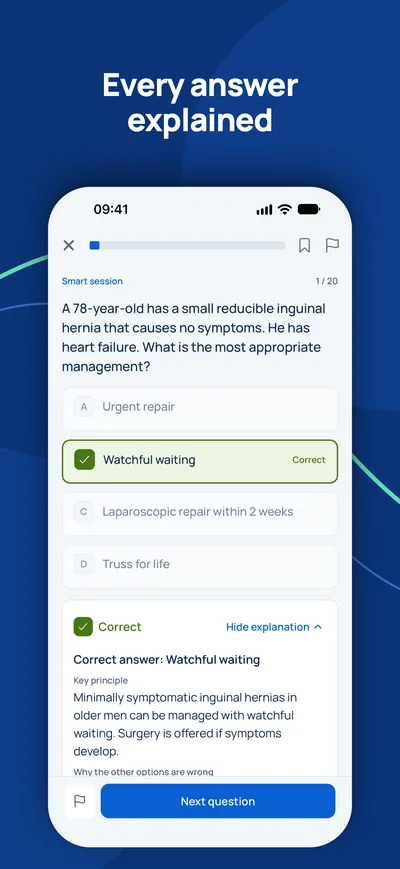
Préparez sur votre iPhone les examens de licence DHA, DOH, MOHAP, SCFHS et d’autres pays du Golfe.

L’examen est-il votre seule étape restante ?
Vérifiez d’abord si vous avez besoin de l’examen et quel titre vous pouvez obtenir. Un conseiller vous rappelle et répond à vos questions.
Vérification d’éligibilité- 1Rappel sur WhatsApp au moment choisi
- 2Vérification d’éligibilité selon les exigences officielles
- 3Votre plan avec des prix fixes et des étapes claires