🇵🇭 PRC · Philippinen
Zahnärztliche Zulassungsprüfung
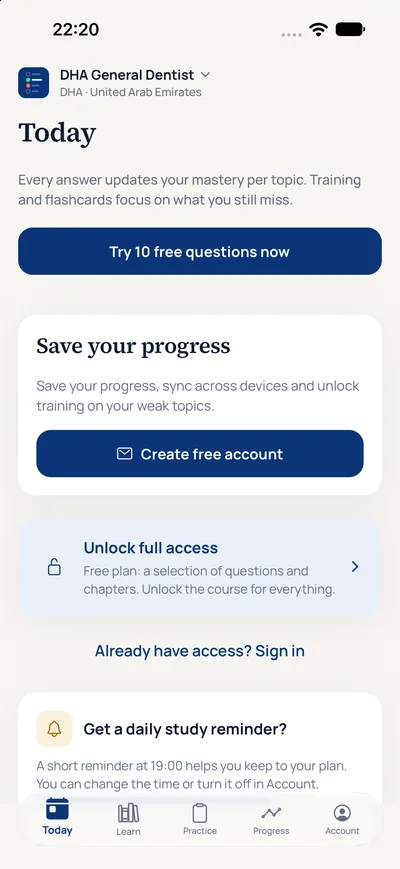
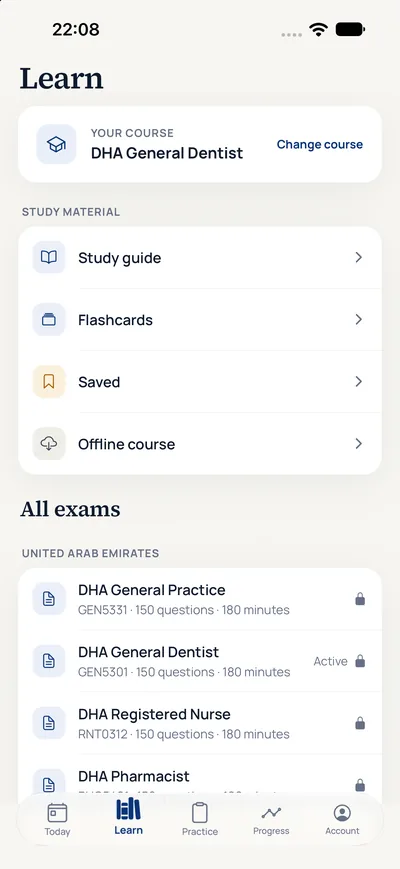
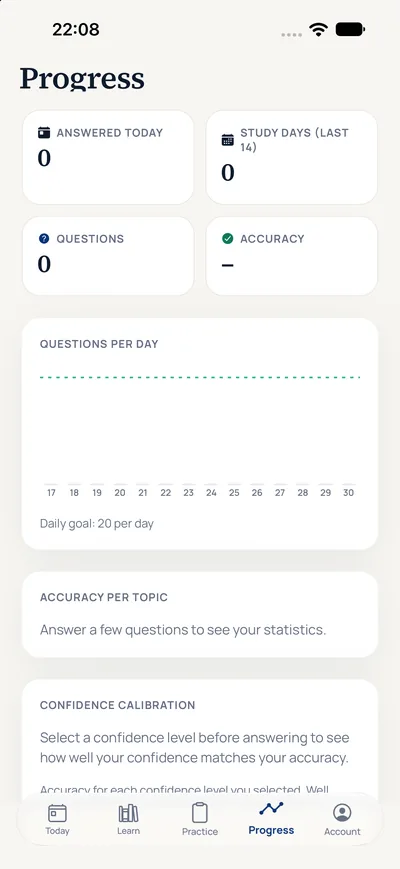
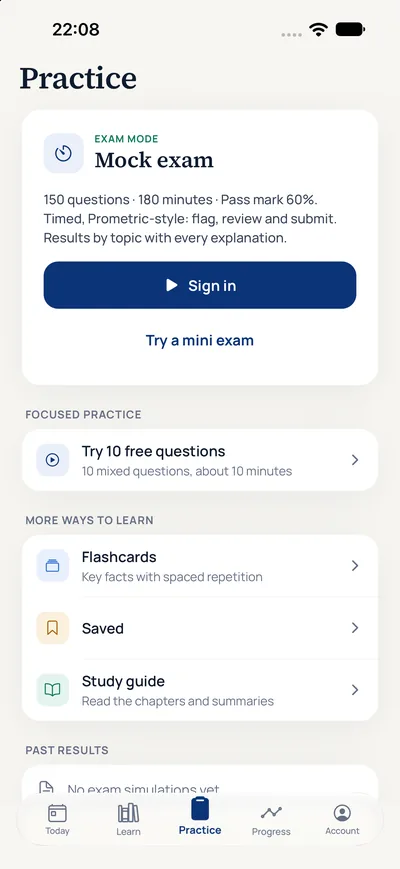
Die Prüfung Zahnärztliche Zulassungsprüfung entscheidet, ob PRC Ihnen die Zulassung erteilt. MediFlow bereitet Sie gezielt auf diese Prüfung vor: 300 Übungsfragen in 12 Themen, eine Erklärung zu jeder Antwort und Prüfungssimulationen mit Zeitlimit im echten Prüfungsformat.
- 799 PHP · 3 Monate Zugang · eine Zahlung · kein Abo
- 300 Übungsfragen
- Bestehensgrenze 75 %
MediFlow Exam Prep
KIKI-Tutor erklärt jede Antwort
300 Übungsfragen
Die Herausforderung
Die Prüfung Zahnärztliche Zulassungsprüfung entscheidet, ob PRC Ihnen die Zulassung erteilt.
- Geprüft wird alle Fächer der Zahnmedizin, von Endodontie bis Oralchirurgie und Berufsrecht. Lehrbücher sagen nicht, was PRC tatsächlich fragt.
- Der Zeitdruck in der Prüfung ist real, das Tempo muss vorher geübt werden.
- Der Fragestil ist eigen: Fallvignetten, beste Antwort und Ablenker, die richtig aussehen.
- Neben dem Beruf bleibt wenig Zeit zum Planen, und eine Wiederholung kostet Monate Wartezeit und eine weitere Prüfungsgebühr.
- Den mündlichen oder praktischen Teil kann man allein kaum üben.
So löst MediFlow das
- Eine Fragenbank auf Basis der veröffentlichten Inhalte von PRC, nach Themen geordnet, damit Sie wissen, worauf es ankommt.
- Prüfungssimulationen mit Zeitlimit im echten Prüfungsformat trainieren Ihr Tempo vor dem Prüfungstag.
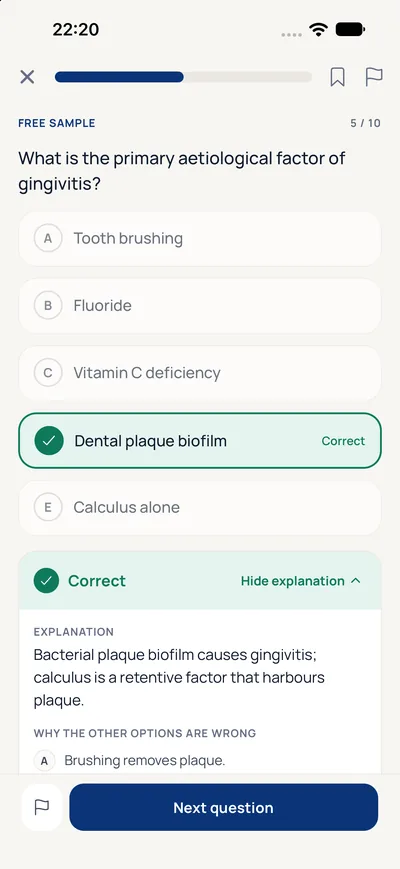
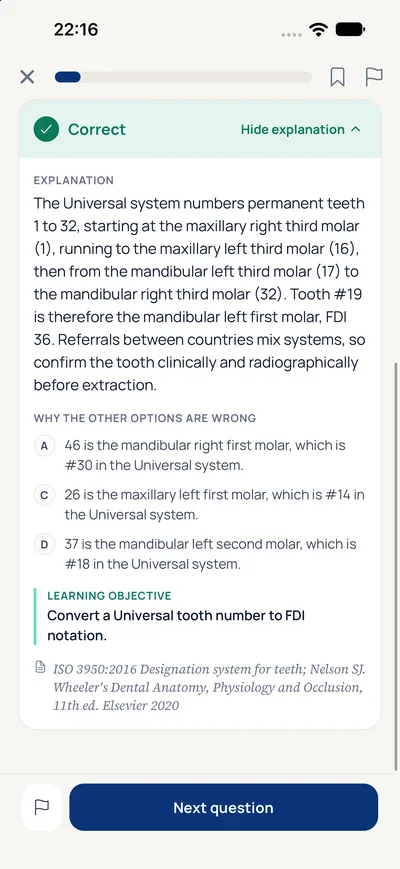
- Jede Antwort ist erklärt, auch warum die anderen Antworten falsch sind.
- Ein Lernplan bis zum Prüfungstermin sagt Ihnen täglich, was dran ist, und holt schwache Themen zurück.
- Ein KI-Prüfer lässt Sie den mündlichen oder praktischen Teil jederzeit üben.
In drei Schritten zur Prüfung
- 1
Kostenlose Fragen testen und den Stil der Prüfung kennenlernen.
- 2
Paket freischalten und dem Lernplan Thema für Thema folgen.
- 3
Prüfungssimulationen mit Zeitlimit, bis die Ergebnisse stabil sind, dann zur Prüfung.
Was Sie prüfen können
- 300 Übungsfragen in 12 Themen
- Fragenbank zuletzt aktualisiert am 30. Oktober 2026
Ein Paket, eine Zahlung
799 PHP für 3 Monate Zugang zu dieser Prüfung. Eine Zahlung, kein Abo, keine automatische Verlängerung. Web und App mit einem Konto.
Übungsmaterial. MediFlow ist unabhängig von PRC und kann kein Ergebnis garantieren.
Prüfung auf einen Blick
- Fragen
- nicht veröffentlicht
- Dauer
- nicht veröffentlicht
- Bestehensgrenze
- 75 %
- Teile
- Schriftliche (theoretische) Phase, 60 %: elf Fachgebiete von Anatomie und Physiologie bis Berufsrecht und Praxisführung; 2026: 4.–6. Mai und 22.–24. November · Praktische (klinische) Phase, 40 %: Füllungstherapie, festsitzende Brücke, Modellguss-Planung, Totalprothese am Patienten; erst nach bestandener schriftlicher Phase; 2026: 11.–14. Mai und 28. November–5. Dezember
- Prüfungsart
- Schriftlich und mündlich/praktisch
- Sprache
- English
- Prüfungsstelle
- PRC
Lehrplan
Aus der Fragenbank erstellt und automatisch aktualisiert, sobald neue Fragen dazukommen. 12 Module · 300 Fragen · Zuletzt aktualisiert: 30. Oktober 2026
01Anatomie und Physiologie (Kopf und Hals, Histologie, Embryologie, Zahnanatomie)24 Fragen · 8 % der Bank
Kapitel
- Foundations: tooth types, primary and permanent teeth
- Foundations: nerve supply of the teeth and the inferior alveolar nerve block
- Foundations: intraoral radiographs and the panoramic view
- Foundations: anatomy of the tooth and periodontium
- Foundations: periodontal health and periodontitis
Beispielfrage
Beispielfrage1 / 1 · 0 richtigA mother brings her infant to the barangay health station because the first tooth has just appeared. Which primary tooth is usually the first to erupt, at about 6 months of age?
Tasten: 1–5 oder A–E wählen, Enter prüft und geht weiter, F markiert.
02Orale Diagnostik, Oralmedizin und Radiologie24 Fragen · 8 % der Bank
Kapitel
- Foundations: tooth types, primary and permanent teeth
- Foundations: nerve supply of the teeth and the inferior alveolar nerve block
- Foundations: intraoral radiographs and the panoramic view
Beispielfrage
Beispielfrage1 / 1 · 0 richtigA 25-year-old patient has no symptoms, but the dentist suspects early interproximal caries between the maxillary premolars and molars. Which radiograph is most appropriate for detecting it?
Tasten: 1–5 oder A–E wählen, Enter prüft und geht weiter, F markiert.
03Zahnärztliche Werkstoffkunde24 Fragen · 8 % der Bank
Beispielfrage
Beispielfrage1 / 1 · 0 richtigWhy is triethylene glycol dimethacrylate (TEGDMA) commonly blended with Bis-GMA in the resin matrix of dental composites?
Tasten: 1–5 oder A–E wählen, Enter prüft und geht weiter, F markiert.
04Rechtsgrundlagen, Berufsethik und Praxismanagement20 Fragen · 6.7 % der Bank
Beispielfrage
Beispielfrage1 / 1 · 0 richtigBefore placing a dental implant, a dentist in a provincial clinic explains the diagnosis, the benefits and risks of the implant, the alternative of a fixed bridge, the cost of each option and the option of no treatment. The patient then chooses the bridge. Which ethical principle is most directly respected by this process?
Tasten: 1–5 oder A–E wählen, Enter prüft und geht weiter, F markiert.
05Konservierende Zahnheilkunde und Endodontie43 Fragen · 14.3 % der Bank
Kapitel
- Foundations: tooth surfaces, cavity classes and minimal intervention
- Foundations: direct restorative materials
- Foundations: caries, pulpitis and apical disease
- Foundations: root canal anatomy and treatment principles
- Foundations: access cavities, canal configurations and working length
- Foundations: obturation, root-end surgery and the cracked tooth
Beispielfrage
Beispielfrage1 / 1 · 0 richtigA dentist at a rural health unit finds a carious lesion on the mesial surface of a mandibular lateral incisor. The incisal angle is intact. According to Black's classification, which class is this lesion?
Tasten: 1–5 oder A–E wählen, Enter prüft und geht weiter, F markiert.
06Orale Pathologie und Mikrobiologie24 Fragen · 8 % der Bank
Kapitel
- Foundations: extraction forceps and impacted third molars
- Foundations: spread of odontogenic infection and dry socket
- Foundations: mandibular fractures, the TMJ and oral mucosal lesions
07Kieferorthopädie und Kinderzahnheilkunde24 Fragen · 8 % der Bank
Kapitel
- Foundations: Angle classification and cephalometric analysis
- Foundations: tooth movement and orthodontic appliances
- Foundations: facial growth and retention
- Foundations: dental trauma and pulp therapy in children
- Foundations: space maintainers and fissure sealants
08Parodontologie24 Fragen · 8 % der Bank
Kapitel
- Foundations: anatomy of the tooth and periodontium
- Foundations: periodontal health and periodontitis
- Foundations: patterns of bone loss around teeth and implants
- Foundations: subgingival instrumentation and access flap surgery
09Pharmakologie, Anästhesie und Notfallmanagement21 Fragen · 7 % der Bank
Kapitel
- Foundations: tooth types, primary and permanent teeth
- Foundations: nerve supply of the teeth and the inferior alveolar nerve block
- Foundations: intraoral radiographs and the panoramic view
10Prothetik (Kronen und Brücken, Teil- und Totalprothesen)28 Fragen · 9.3 % der Bank
Kapitel
- Foundations: bridges and post-retained crowns
- Foundations: complete and partial dentures and implant components
11Zahnärztliche Public Health, Prävention und Infektionskontrolle20 Fragen · 6.7 % der Bank
12Mund-, Kiefer- und Gesichtschirurgie, Exodontie24 Fragen · 8 % der Bank
Kapitel
- Foundations: extraction forceps and impacted third molars
- Foundations: spread of odontogenic infection and dry socket
- Foundations: mandibular fractures, the TMJ and oral mucosal lesions
Beispielfrage
Aus dem Modul Anatomie und Physiologie (Kopf und Hals, Histologie, Embryologie, Zahnanatomie). Wählen Sie eine Antwort, um die Erklärung zu sehen.
A mother brings her infant to the barangay health station because the first tooth has just appeared. Which primary tooth is usually the first to erupt, at about 6 months of age?
Tasten: 1–5 oder A–E wählen, Enter prüft und geht weiter, F markiert.
Das ist enthalten
- Fragenbank mit ausführlicher Erklärung zu jeder Antwort
- Prüfungssimulationen mit Zeitlimit im echten Prüfungsformat, Auswertung nach Themen
- Persönlicher Lernplan bis zum Prüfungstermin und Wiederholung schwacher Themen
- KI-Tutor, der jede Frage verständlich erklärt
- Ein Konto für App (iPhone, iPad) und Browser
- KI-Prüfer zum Üben des mündlichen oder praktischen Teils
Von der Anmeldung zur Zulassung
Die üblichen Schritte bei PRC. Einzelheiten können sich ändern; prüfen Sie die aktuellen Regeln bei PRC vor der Anmeldung.
- Voraussetzungen prüfen und Unterlagen sammeln (Abschluss, Berufserfahrung, Unbedenklichkeit).
- Konto bei PRC anlegen und Antrag stellen.
- Prüfungszulassung erhalten und Termin beim Prüfungszentrum buchen.
- Prüfung ablegen. Das Ergebnis kommt meist nach wenigen Tagen.
- Nach dem Bestehen: Zulassung abschließen (z. B. Prüfung der Dokumente an der Quelle) und Lizenz erhalten.
Häufige Fragen
Was kostet die Vorbereitung auf Zahnärztliche Zulassungsprüfung?
799 PHP für 3 Monate Zugang zu dieser Prüfung. Eine Zahlung, kein Abo, keine automatische Verlängerung.
Wie lange habe ich Zugang?
Der Zugang gilt 90 Tage ab Kauf für dieses Prüfungspaket.
Wo kann ich kaufen?
In der App MediFlow Exam Prep (App Store) oder auf mediflow.ae. Beides schaltet dasselbe Paket für Ihr MediFlow-Konto frei.
Sind das echte Prüfungsfragen?
Nein. MediFlow schreibt eigene Fragen anhand der veröffentlichten Prüfungsinhalte. Wir nutzen keine Erinnerungsprotokolle oder geleakten Fragen und sind nicht mit PRC verbunden.
Ist das Prüfungsformat aktuell?
Das Format stammt aus den veröffentlichten Angaben von PRC. Bitte prüfen Sie es vor der Prüfung dort, Behörden können es ändern.
Bereit für den Start
Beginnen Sie mit kostenlosen Fragen oder schalten Sie das ganze Paket jetzt frei.
MediFlow ist ein unabhängiger Anbieter und nicht mit Behörden oder Prüfungsanbietern verbunden. Die Fragen schreibt MediFlow anhand veröffentlichter Prüfungsinhalte; es sind keine Fragen aus echten Prüfungen. Bitte prüfen Sie das Format vor der Prüfung bei der zuständigen Stelle.
Eine App für jede Prüfung
MediFlow Exam Prep auf iPhone und iPad: Land, Beruf und Prüfung wählen. Übungsfragen mit Erklärungen, Prüfungssimulationen mit Zeitlimit und ein Lernplan. Dasselbe Konto gilt im Browser.