🇴🇲 OMSB · Oman
OMSB-Prüfung Apotheker (OEP)
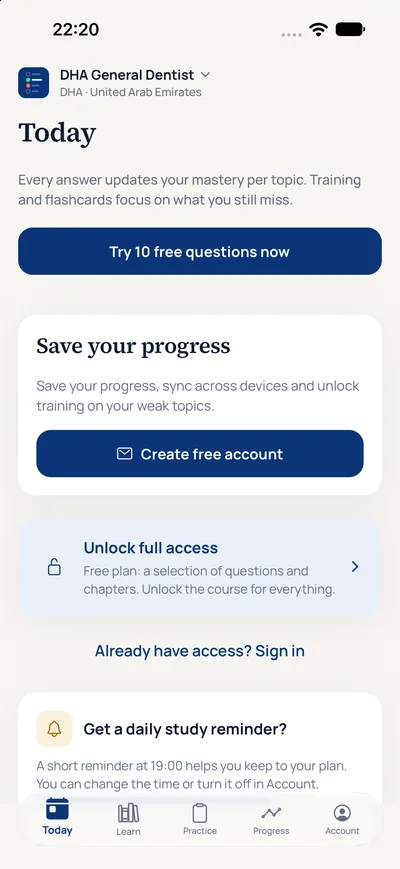
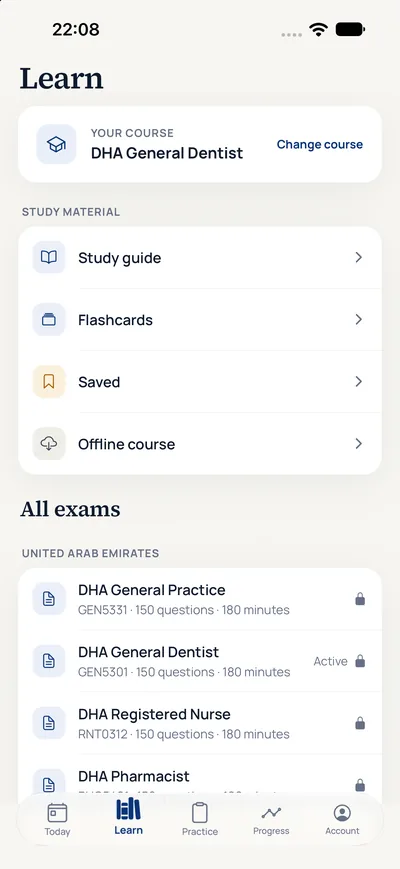
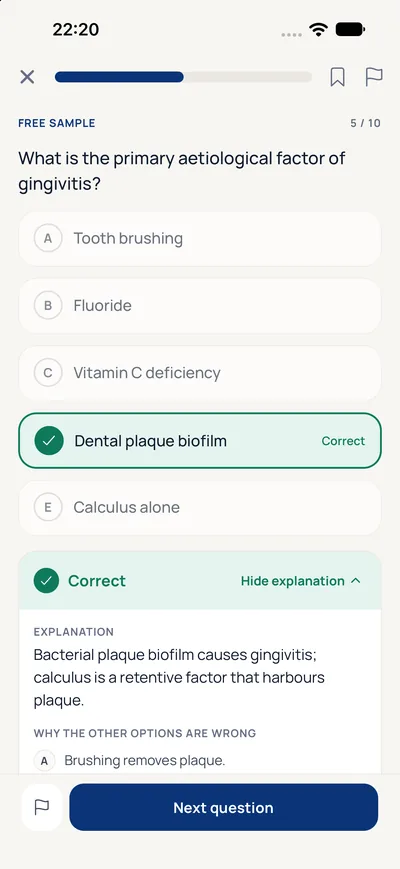
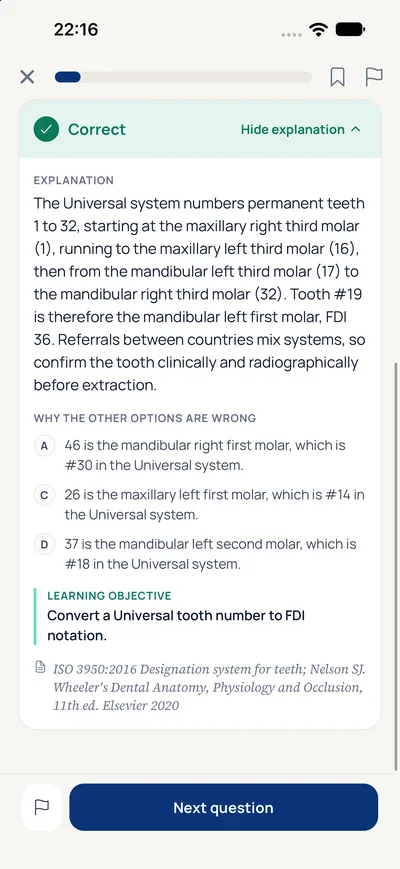
OMSB-Prüfung Apotheker (OEP): 100 Fragen, Bestehensgrenze 60 %, und davon hängt Ihre Zulassung ab. MediFlow bereitet Sie gezielt auf diese Prüfung vor: 2.258 Übungsfragen in 16 Themen, eine Erklärung zu jeder Antwort und Prüfungssimulationen mit Zeitlimit im echten Prüfungsformat.
- 199 AED · 3 Monate Zugang · eine Zahlung · kein Abo
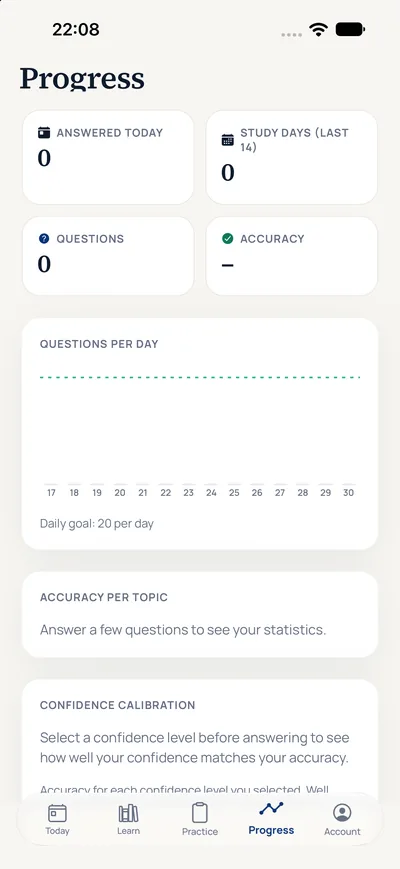
- 2.258 Übungsfragen
- 100 Fragen · 150 Minuten · Bestehensgrenze 60 %
MediFlow Exam Prep
KIKI-Tutor erklärt jede Antwort
2.258 Übungsfragen
Die Herausforderung
OMSB-Prüfung Apotheker (OEP): 100 Fragen, Bestehensgrenze 60 %, und davon hängt Ihre Zulassung ab.
- Geprüft wird Pharmakologie, Rechnen, Abgabe und Apothekenrecht. Lehrbücher sagen nicht, was OMSB tatsächlich fragt.
- 100 Fragen in 150 Minuten lassen etwa 90 Sekunden pro Frage. Tempo muss man üben.
- Der Fragestil ist eigen: Fallvignetten, beste Antwort und Ablenker, die richtig aussehen.
- Neben dem Beruf bleibt wenig Zeit zum Planen, und eine Wiederholung kostet Monate Wartezeit und eine weitere Prüfungsgebühr.
So löst MediFlow das
- Eine Fragenbank auf Basis der veröffentlichten Inhalte von OMSB, nach Themen geordnet, damit Sie wissen, worauf es ankommt.
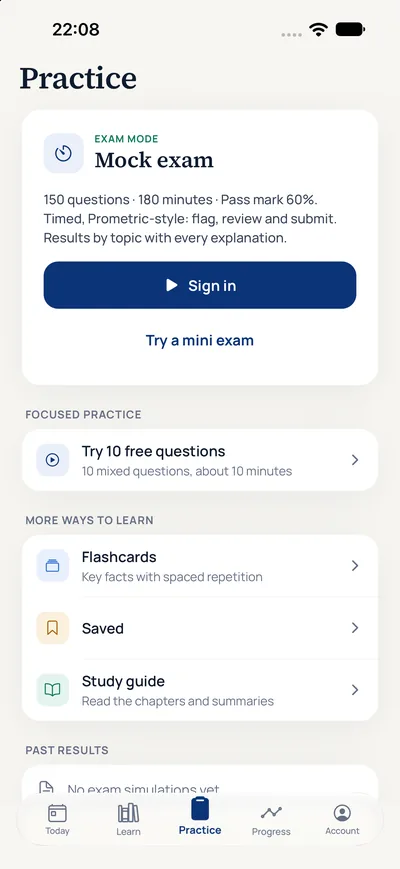
- Prüfungssimulationen mit Zeitlimit im echten Prüfungsformat trainieren Ihr Tempo vor dem Prüfungstag.
- Jede Antwort ist erklärt, auch warum die anderen Antworten falsch sind.
- Ein Lernplan bis zum Prüfungstermin sagt Ihnen täglich, was dran ist, und holt schwache Themen zurück.
In drei Schritten zur Prüfung
- 1
Kostenlose Fragen testen und den Stil der Prüfung kennenlernen.
- 2
Paket freischalten und dem Lernplan Thema für Thema folgen.
- 3
Prüfungssimulationen mit Zeitlimit, bis die Ergebnisse stabil sind, dann zur Prüfung.
Was Sie prüfen können
- 2.258 Übungsfragen in 16 Themen
- Fragenbank zuletzt aktualisiert am 29. Oktober 2026
- Prüfungssimulationen im Prüfungsformat von OMSB
Ein Paket, eine Zahlung
199 AED für 3 Monate Zugang zu dieser Prüfung. Eine Zahlung, kein Abo, keine automatische Verlängerung. Web und App mit einem Konto.
Übungsmaterial. MediFlow ist unabhängig von OMSB und kann kein Ergebnis garantieren.
Prüfung auf einen Blick
- Fragen
- 100
- Dauer
- 150 Minuten
- Bestehensgrenze
- 60 %
- Teile
- 1
- Prüfungsart
- Schriftlich
- Sprache
- English
- Prüfungsstelle
- OMSB
Lehrplan
Aus der Fragenbank erstellt und automatisch aktualisiert, sobald neue Fragen dazukommen. 16 Module · 2,258 Fragen · Zuletzt aktualisiert: 29. Oktober 2026
01Biomedical sciences100 Fragen · 4.4 % der Bank
Kapitel
- Renal, cardiac and autonomic physiology for pharmacists
- Endocrine axes, gut physiology and the biochemistry behind drug action
- Microbiology and immunology that guide drug choice
- Foundations: anatomy of the respiratory tract
- Foundations: alveoli and gas exchange
- Foundations: mechanics and control of breathing
- Foundations: dosage forms and inhaler technique
- Foundations: the concentration–time curve and receptor types
Beispielfrage
Beispielfrage1 / 1 · 0 richtigA 58-year-old man starts empagliflozin for type 2 diabetes and heart failure. He asks where in the kidney the drug works. Which site and transporter does it mainly inhibit?
Tasten: 1–5 oder A–E wählen, Enter prüft und geht weiter, F markiert.
02Medicinal chemistry100 Fragen · 4.4 % der Bank
Kapitel
- Functional groups, stability and acid-base behaviour
- Stereochemistry and prodrugs in practice
- Structure-activity relationships, metabolism and drug design
Beispielfrage
Beispielfrage1 / 1 · 0 richtigA mother asks why the amoxicillin suspension made up for her son expires about 2 weeks after reconstitution, although the dry powder lasts for years. What is the chemical reason?
Tasten: 1–5 oder A–E wählen, Enter prüft und geht weiter, F markiert.
03Pharmakokinetik135 Fragen · 6 % der Bank
Kapitel
- Core pharmacokinetic parameters: Vd, clearance, half-life and bioavailability
- Dosing calculations: loading dose, maintenance dose, steady state and decay
- Therapeutic drug monitoring: aminoglycosides, vancomycin, digoxin, lithium, phenytoin, theophylline
- Special populations: renal and hepatic impairment, obesity, older people and bioequivalence
- Foundations: pharmacokinetics – what the body does to the drug
- Foundations: pharmacodynamics – what the drug does to the body
- Foundations: dosage forms and inhaler technique
- Foundations: the concentration–time curve and receptor types
Beispielfrage
Beispielfrage1 / 1 · 0 richtigA drug has a half-life of 6 hours and is given regularly. After approximately how long will steady state be reached?
Tasten: 1–5 oder A–E wählen, Enter prüft und geht weiter, F markiert.
04Pharmazeutische Technologie & Rezeptur178 Fragen · 7.9 % der Bank
Kapitel
- Dosage forms, bioavailability and what not to crush
- Suspensions, emulsions and tablet excipients
- Stability, storage and packaging
- Sterile and hazardous compounding (USP 797 and 800)
- Non-sterile compounding and suppositories
- Foundations: dosage forms and inhaler technique
- Foundations: the concentration–time curve and receptor types
Beispielfrage
Beispielfrage1 / 1 · 0 richtigDuring development, a new oral drug shows high aqueous solubility across pH 1.2–6.8 but low intestinal permeability. In which class of the Biopharmaceutics Classification System does it belong?
Tasten: 1–5 oder A–E wählen, Enter prüft und geht weiter, F markiert.
05Pharmazeutische Berechnungen228 Fragen · 10.1 % der Bank
Kapitel
- Units, percentages, ratios and dilutions
- Moles, milliequivalents, osmolarity and isotonicity
- Infusion rates and reconstitution
- Dosing by body size, kidney function and age
- Nutrition, supply quantities and safety checks
Beispielfrage
Beispielfrage1 / 1 · 0 richtigA 45-year-old man needs a digital nerve block. The doctor draws up 5 mL of plain lidocaine 2% w/v. How many milligrams of lidocaine are in the syringe?
Tasten: 1–5 oder A–E wählen, Enter prüft und geht weiter, F markiert.
06Wechselwirkungen & Nebenwirkungen102 Fragen · 4.5 % der Bank
Kapitel
- How drug interactions happen: CYP enzymes, transporters and absorption
- High-risk interaction pairs every pharmacist must know
- Pharmacodynamic interactions: QT prolongation, serotonin syndrome and hypertensive crisis
- Adverse drug reactions: classification, causality assessment and reporting
07Antiinfektiva129 Fragen · 5.7 % der Bank
Kapitel
- Antibacterial basics: mechanisms, spectrum and beta-lactam allergy
- Common infections: urinary tract, pneumonia, MRSA and C. difficile
- Antifungals, tuberculosis and antimalarials
- Antivirals: influenza, herpes viruses, HIV and hepatitis B and C
- Foundations: bacteria, the Gram stain and antibiotic targets
- Foundations: infection prevention and antimicrobial stewardship
08Kardiovaskuläre Pharmakotherapie128 Fragen · 5.7 % der Bank
Kapitel
- Hypertension and lipid-lowering therapy
- Heart failure with reduced ejection fraction
- Atrial fibrillation, antiarrhythmics and digoxin
- Anticoagulants, reversal, HIT and acute coronary syndromes
- Foundations: anatomy of the heart
- Foundations: conduction system and cardiac cycle
- Foundations: circulation and blood vessels
09ZNS- & Schmerztherapie108 Fragen · 4.8 % der Bank
Kapitel
- Depression and antidepressants
- Antipsychotics, lithium and bipolar disorder
- Epilepsy, status epilepticus and Parkinson's disease
- Pain, opioids, migraine, ADHD and smoking cessation
10Endokrine & respiratorische Pharmakotherapie128 Fragen · 5.7 % der Bank
Kapitel
- Type 2 diabetes: non-insulin drugs and organ protection
- Insulin, Ramadan fasting and the perioperative period
- Thyroid disease: levothyroxine and antithyroid drugs
- Corticosteroids, bone health and women's hormones
- Asthma, COPD and inhaler technique
- Foundations: endocrine glands and feedback control
- Foundations: the thyroid in the neck and endocrine emergencies
11Therapeutics & special populations200 Fragen · 8.9 % der Bank
Kapitel
- Respiratory and gastrointestinal therapeutics
- Kidney, joints, pain, cancer support and drug monitoring
- Special populations
12Klinische Pharmazie & Selbstmedikation228 Fragen · 10.1 % der Bank
Kapitel
- The OTC consultation and respiratory symptoms
- Diarrhoea, constipation and dyspepsia
- Pain, headache, red eye and scabies
- Pregnancy, breastfeeding and children
- Smoking cessation, interactions and drug information
13Toxicology & antidotes80 Fragen · 3.5 % der Bank
Kapitel
- Risk assessment, toxidromes and decontamination
- Antidotes, enhanced elimination and envenomation
14Pharmacognosy & supplements70 Fragen · 3.1 % der Bank
Kapitel
- Plant-derived medicines and herbal interactions
- Supplements, product quality and counselling
15Pharmazeutische Praxis, Recht & Ethik224 Fragen · 9.9 % der Bank
Kapitel
- Prescriptions, forgery and controlled drugs
- Medication errors: response, classification and just culture
- Preventing errors: high-alert medicines and safe systems
- Pharmacovigilance and adverse drug reactions
- Ethics, confidentiality, counselling and substitution
16Biostatistics, pharmacoeconomics & practice management120 Fragen · 5.3 % der Bank
Kapitel
- Study designs, bias and choosing a statistical test
- Effect measures, significance and critical appraisal
- Pharmacoeconomics, pharmacovigilance and practice management
Beispielfrage
Aus dem Modul Biomedical sciences. Wählen Sie eine Antwort, um die Erklärung zu sehen.
A 58-year-old man starts empagliflozin for type 2 diabetes and heart failure. He asks where in the kidney the drug works. Which site and transporter does it mainly inhibit?
Tasten: 1–5 oder A–E wählen, Enter prüft und geht weiter, F markiert.
Das ist enthalten
- Fragenbank mit ausführlicher Erklärung zu jeder Antwort
- Prüfungssimulationen mit Zeitlimit im echten Prüfungsformat, Auswertung nach Themen
- Persönlicher Lernplan bis zum Prüfungstermin und Wiederholung schwacher Themen
- KI-Tutor, der jede Frage verständlich erklärt
- Ein Konto für App (iPhone, iPad) und Browser
Von der Anmeldung zur Zulassung
Die üblichen Schritte bei OMSB. Einzelheiten können sich ändern; prüfen Sie die aktuellen Regeln bei OMSB vor der Anmeldung.
- Voraussetzungen prüfen und Unterlagen sammeln (Abschluss, Berufserfahrung, Unbedenklichkeit).
- Konto bei OMSB anlegen und Antrag stellen.
- Prüfungszulassung erhalten und Termin beim Prüfungszentrum buchen.
- Prüfung ablegen. Das Ergebnis kommt meist nach wenigen Tagen.
- Nach dem Bestehen: Zulassung abschließen (z. B. Prüfung der Dokumente an der Quelle) und Lizenz erhalten.
Häufige Fragen
Was kostet die Vorbereitung auf OMSB-Prüfung Apotheker (OEP)?
199 AED für 3 Monate Zugang zu dieser Prüfung. Eine Zahlung, kein Abo, keine automatische Verlängerung.
Wie lange habe ich Zugang?
Der Zugang gilt 90 Tage ab Kauf für dieses Prüfungspaket.
Wo kann ich kaufen?
In der App MediFlow Exam Prep (App Store) oder auf mediflow.ae. Beides schaltet dasselbe Paket für Ihr MediFlow-Konto frei.
Sind das echte Prüfungsfragen?
Nein. MediFlow schreibt eigene Fragen anhand der veröffentlichten Prüfungsinhalte. Wir nutzen keine Erinnerungsprotokolle oder geleakten Fragen und sind nicht mit OMSB verbunden.
Ist das Prüfungsformat aktuell?
Das Format stammt aus den veröffentlichten Angaben von OMSB. Bitte prüfen Sie es vor der Prüfung dort, Behörden können es ändern.
Bereit für den Start
Beginnen Sie mit kostenlosen Fragen oder schalten Sie das ganze Paket jetzt frei.
MediFlow ist ein unabhängiger Anbieter und nicht mit Behörden oder Prüfungsanbietern verbunden. Die Fragen schreibt MediFlow anhand veröffentlichter Prüfungsinhalte; es sind keine Fragen aus echten Prüfungen. Bitte prüfen Sie das Format vor der Prüfung bei der zuständigen Stelle.
Eine App für jede Prüfung
MediFlow Exam Prep auf iPhone und iPad: Land, Beruf und Prüfung wählen. Übungsfragen mit Erklärungen, Prüfungssimulationen mit Zeitlimit und ein Lernplan. Dasselbe Konto gilt im Browser.