🇸🇦 SCFHS · Saudi-Arabien
Saudische Ärzte-Lizenzprüfung (SMLE)
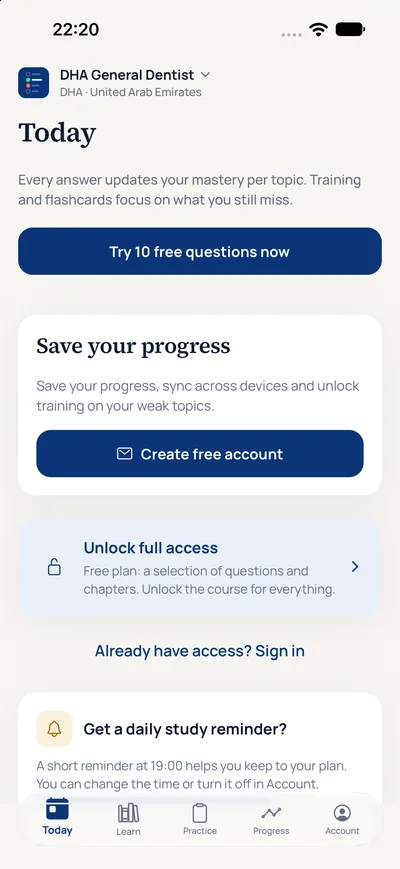
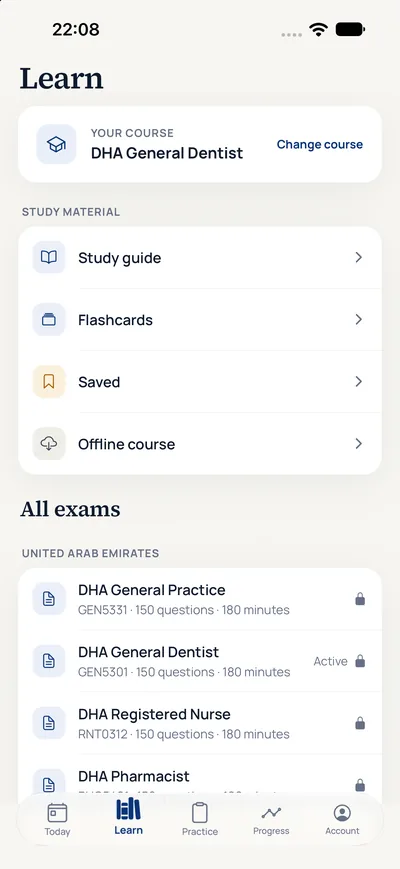
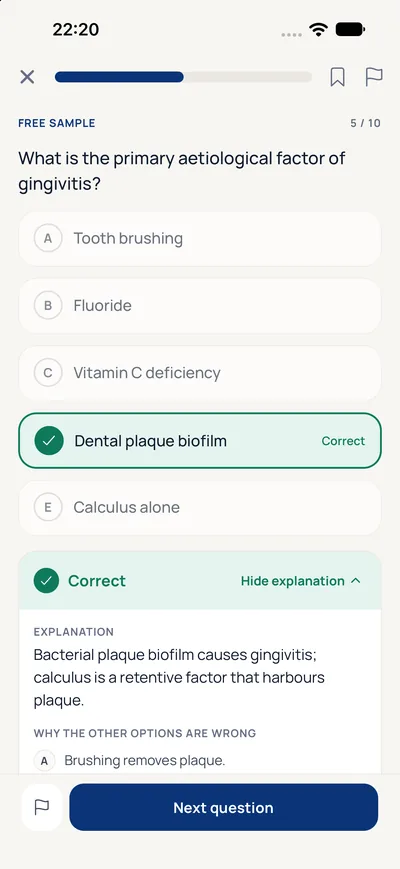
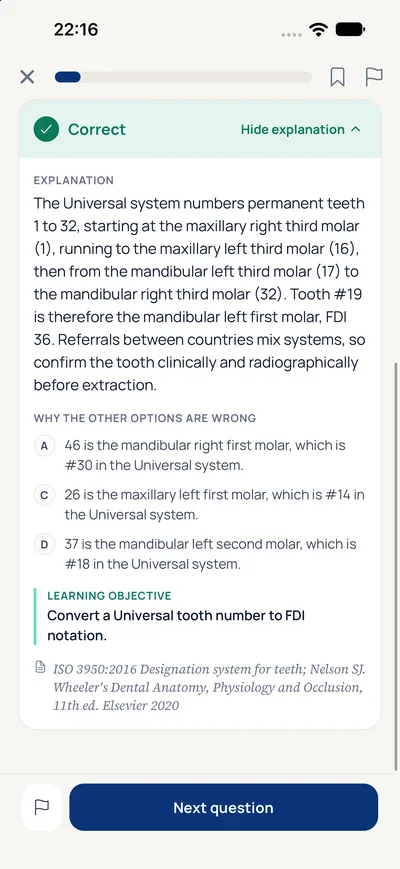
Saudische Ärzte-Lizenzprüfung (SMLE): 200 Fragen in fester Zeit, und davon hängt Ihre Zulassung ab. MediFlow bereitet Sie gezielt auf diese Prüfung vor: 3.306 Übungsfragen in 19 Themen, eine Erklärung zu jeder Antwort und Prüfungssimulationen mit Zeitlimit im echten Prüfungsformat.
- 199 AED · 3 Monate Zugang · eine Zahlung · kein Abo
- 3.306 Übungsfragen
- 200 Fragen · 240 Minuten

MediFlow Exam Prep
KIKI-Tutor erklärt jede Antwort
3.306 Übungsfragen
Die Herausforderung
Saudische Ärzte-Lizenzprüfung (SMLE): 200 Fragen in fester Zeit, und davon hängt Ihre Zulassung ab.
- Geprüft wird die ganze Breite der klinischen Medizin, vom Notfall bis zur seltenen Diagnose. Lehrbücher sagen nicht, was SCFHS tatsächlich fragt.
- 200 Fragen in 240 Minuten lassen etwa 72 Sekunden pro Frage. Tempo muss man üben.
- Der Fragestil ist eigen: Fallvignetten, beste Antwort und Ablenker, die richtig aussehen.
- Neben dem Beruf bleibt wenig Zeit zum Planen, und eine Wiederholung kostet Monate Wartezeit und eine weitere Prüfungsgebühr.
So löst MediFlow das
- Eine Fragenbank auf Basis der veröffentlichten Inhalte von SCFHS, nach Themen geordnet, damit Sie wissen, worauf es ankommt.
- Prüfungssimulationen mit Zeitlimit im echten Prüfungsformat trainieren Ihr Tempo vor dem Prüfungstag.
- Jede Antwort ist erklärt, auch warum die anderen Antworten falsch sind.
- Ein Lernplan bis zum Prüfungstermin sagt Ihnen täglich, was dran ist, und holt schwache Themen zurück.
In drei Schritten zur Prüfung
- 1
Kostenlose Fragen testen und den Stil der Prüfung kennenlernen.
- 2
Paket freischalten und dem Lernplan Thema für Thema folgen.
- 3
Prüfungssimulationen mit Zeitlimit, bis die Ergebnisse stabil sind, dann zur Prüfung.
Was Sie prüfen können
- 3.306 Übungsfragen in 19 Themen
- Fragenbank zuletzt aktualisiert am 29. Oktober 2026
- Prüfungssimulationen im Prüfungsformat von SCFHS
Ein Paket, eine Zahlung
199 AED für 3 Monate Zugang zu dieser Prüfung. Eine Zahlung, kein Abo, keine automatische Verlängerung. Web und App mit einem Konto.
Übungsmaterial. MediFlow ist unabhängig von SCFHS und kann kein Ergebnis garantieren.
Prüfung auf einen Blick
- Fragen
- 200
- Dauer
- 240 Minuten
- Bestehensgrenze
- nicht veröffentlicht
- Teile
- Part 1: 100 · 120 min / Part 2: 100 · 120 min
- Prüfungsart
- Schriftlich
- Sprache
- English
- Prüfungsstelle
- SCFHS
Lehrplan
Aus der Fragenbank erstellt und automatisch aktualisiert, sobald neue Fragen dazukommen. 19 Module · 3,306 Fragen · Zuletzt aktualisiert: 29. Oktober 2026
01Kardiologie128 Fragen · 3.9 % der Bank
Kapitel
- Acute coronary syndromes: recognising and treating chest pain
- Chronic coronary syndromes, lipids and hypertension
- Heart failure, valve disease, pericardium and the aorta
- Arrhythmias: atrial fibrillation, tachycardias and bradycardias
- Foundations: anatomy of the heart
- Foundations: conduction system and cardiac cycle
- Foundations: circulation and blood vessels
Beispielfrage
Beispielfrage1 / 1 · 0 richtigWhich drug has been shown to reduce mortality in heart failure with reduced ejection fraction?
Tasten: 1–5 oder A–E wählen, Enter prüft und geht weiter, F markiert.
02Pneumologie124 Fragen · 3.8 % der Bank
Kapitel
- Asthma and COPD: diagnosis, stepwise treatment and exacerbations
- Pneumonia and tuberculosis
- Pulmonary embolism, pleural disease and pneumothorax
- Lung cancer, interstitial lung disease, sarcoidosis, sleep apnoea and blood gases
- Foundations: anatomy of the respiratory tract
- Foundations: alveoli and gas exchange
- Foundations: mechanics and control of breathing
Beispielfrage
Beispielfrage1 / 1 · 0 richtigA 24-year-old woman with asthma uses her salbutamol inhaler four times a week and wakes at night with wheeze twice a month. She uses no other inhaler. What is the most appropriate next step?
Tasten: 1–5 oder A–E wählen, Enter prüft und geht weiter, F markiert.
03Endokrinologie & Diabetes169 Fragen · 5.1 % der Bank
Kapitel
- Diabetes mellitus: diagnosis and long-term treatment
- Diabetic emergencies: DKA, HHS and hypoglycaemia
- Thyroid disease: hypothyroidism, thyrotoxicosis, nodules and pregnancy
- Adrenal, pituitary, calcium and bone, and reproductive endocrinology
- Foundations: endocrine glands and feedback control
- Foundations: the thyroid in the neck and endocrine emergencies
Beispielfrage
Beispielfrage1 / 1 · 0 richtigA 45-year-old man with newly diagnosed type 2 diabetes has an HbA1c of 7.4 %, a BMI of 31 kg/m² and normal kidney function. What is the preferred first-line drug?
Tasten: 1–5 oder A–E wählen, Enter prüft und geht weiter, F markiert.
04Gastroenterologie & Hepatologie119 Fragen · 3.6 % der Bank
Kapitel
- Upper GI tract: reflux, dyspepsia, Helicobacter pylori and upper GI bleeding
- Lower GI tract: inflammatory bowel disease, IBS, coeliac disease and colorectal cancer screening
- The liver: reading liver tests, viral hepatitis and inherited or autoimmune liver disease
- Cirrhosis and its complications
- Foundations: the digestive tract, digestion and absorption
- Foundations: peptic ulcer disease and upper GI bleeding
Beispielfrage
Beispielfrage1 / 1 · 0 richtigWhich test is preferred to confirm eradication of Helicobacter pylori after treatment?
Tasten: 1–5 oder A–E wählen, Enter prüft und geht weiter, F markiert.
05Nephrologie & Elektrolyte117 Fragen · 3.5 % der Bank
Kapitel
- Acute kidney injury: definition, causes and management
- Chronic kidney disease and glomerular disease
- Urinary tract infection and kidney stones
- Sodium, potassium and other electrolytes
- Acid–base disorders and safe prescribing in kidney disease
- Foundations: structure and function of the kidney
- Foundations: fluids and electrolytes
- Foundations: the male urinary tract, prostate and testis
Beispielfrage
Beispielfrage1 / 1 · 0 richtigA patient has a serum potassium of 7.1 mmol/L and peaked T waves on the ECG. What should be given first?
Tasten: 1–5 oder A–E wählen, Enter prüft und geht weiter, F markiert.
06Hämatologie105 Fragen · 3.2 % der Bank
Kapitel
- Approach to anaemia: iron deficiency, thalassaemia trait and macrocytic anaemia
- Haemolysis, thalassaemia major, sickle cell disease and G6PD deficiency
- Bleeding disorders, thrombocytopenia and anticoagulation
- Haematological malignancy and transfusion medicine
- Foundations: blood cells, haematopoiesis and haemostasis
07Infektiologie119 Fragen · 3.6 % der Bank
Kapitel
- Sepsis, septic shock and antibiotic stewardship
- Central nervous system, skin, soft tissue and bone infections
- HIV, post-exposure prophylaxis and sexually transmitted infections
- Travel, tropical and Gulf-region infections and vaccination
- Foundations: bacteria, the Gram stain and antibiotic targets
- Foundations: infection prevention and antimicrobial stewardship
08Neurologie118 Fragen · 3.6 % der Bank
Kapitel
- Stroke and transient ischaemic attack
- Headache, subarachnoid haemorrhage and raised intracranial pressure
- Epilepsy, status epilepticus, Parkinson's disease and dementia
- Neuroimmunology, neuromuscular disease, peripheral nerves and spinal emergencies
- Foundations: brain anatomy and clinical localisation
- Foundations: reflexes, the spinal cord and upper versus lower motor neuron signs
- Foundations: spinal cord tracts and the cranial nerves
- Foundations: the circle of Willis and intracranial haemorrhage
09Psychiatrie130 Fragen · 3.9 % der Bank
Kapitel
- Depression and bipolar disorder: recognition, antidepressants and lithium
- Psychosis and antipsychotics: choosing, monitoring and their emergencies
- Anxiety, OCD, PTSD and eating disorders
- Alcohol and opioids: intoxication, withdrawal and complications
- Delirium, capacity and self-harm: safety in everyday practice
10Dermatology150 Fragen · 4.5 % der Bank
Kapitel
- Inflammatory skin disease and topical steroids
- Skin infections and infestations
- Skin cancer, pigment and severe drug reactions
- Foundations: skin structure, primary lesions and burn depth
11Oncology & palliative care80 Fragen · 2.4 % der Bank
Kapitel
- Cancer screening and urgent referral in primary care
- Oncological emergencies and treatment toxicity
- Palliative care and the older patient
- Foundations: tumour growth, spread and staging
- Foundations: the eye and the visual pathway
- Foundations: the ear and the larynx
- Foundations: paranasal sinuses and neck lymph nodes
12Pädiatrie427 Fragen · 12.9 % der Bank
Kapitel
- Growth and development: milestones, red flags and short stature
- The newborn: jaundice, vitamin K and prematurity
- The febrile child and acute respiratory illness
- Vomiting, diarrhoea, abdominal emergencies and the child's heart
- Safeguarding children and safe prescribing by weight
- Foundations: the newborn and the transition after birth
- Foundations: growth and development
- Foundations: the child's airway, vital signs and resuscitation
13Geburtshilfe & Gynäkologie418 Fragen · 12.6 % der Bank
Kapitel
- Antenatal care: screening, gestational diabetes and medicines in pregnancy
- Hypertension in pregnancy: pre-eclampsia, eclampsia and HELLP
- Bleeding in pregnancy and rhesus prophylaxis
- Labour problems: preterm labour, ruptured membranes and postpartum haemorrhage
- Gynaecology essentials: contraception, menstrual problems, PCOS, screening and menopause
- Foundations: female pelvic anatomy
- Foundations: placenta, pregnancy physiology and fetal circulation
- Foundations: labour and the fetal skull
- Foundations: the menstrual cycle in the ovary, endometrium and cervix
- Foundations: breast anatomy and lymphatic drainage
14Chirurgie & Trauma376 Fragen · 11.4 % der Bank
Kapitel
- The acute abdomen: appendicitis, perforation and hernias
- Gallbladder, bile ducts and bowel obstruction
- Major trauma and head injury
- Burns, wounds and limb-threatening soft-tissue emergencies
- Elective and vascular surgery: breast, thyroid, aorta, limb ischaemia and perioperative care
- Foundations: abdominal anatomy and the acute abdomen
- Foundations: hernias and the biliary system
- Foundations: wound healing and perioperative basics
- Foundations: the skeleton, spine and pelvis
- Foundations: shoulder, wrist and hand
- Foundations: hip fractures, knee and ankle ligaments
- Foundations: the male urinary tract, prostate and testis
15Notfallmedizin187 Fragen · 5.7 % der Bank
Kapitel
- Cardiac arrest: basic and advanced life support
- Shock and anaphylaxis
- Poisoning and toxidromes
- Environmental emergencies: heat, drowning, snakes and scorpions
- Metabolic and respiratory emergencies: DKA, hyperkalaemia and acute asthma
- Foundations: ABCDE approach and airway basics
- Foundations: life-threatening chest emergencies
- Foundations: shock, burns and sepsis
- Foundations: skin structure, primary lesions and burn depth
- Foundations: spinal cord tracts and the cranial nerves
- Foundations: the circle of Willis and intracranial haemorrhage
16Bewegungsapparat & Rheumatologie110 Fragen · 3.3 % der Bank
Kapitel
- Joint pain basics: rheumatoid arthritis versus osteoarthritis
- The hot swollen joint: septic arthritis and crystal arthritis
- Systemic autoimmune disease and spondyloarthritis
- Polymyalgia, giant cell arteritis and back pain red flags
- Fractures, compartment syndrome and bone health
- Foundations: the skeleton, spine and pelvis
- Foundations: shoulder, wrist and hand
- Foundations: hip fractures, knee and ankle ligaments
17Augen & HNO99 Fragen · 3 % der Bank
Kapitel
- The red eye: telling the harmless from the sight-threatening
- Sudden visual loss, diabetic eye disease and the retina
- The ear: otitis, hearing tests and sudden hearing loss
- Vertigo, the nose and the throat
- Foundations: the eye and the visual pathway
- Foundations: the ear and the larynx
- Foundations: paranasal sinuses and neck lymph nodes
18Ethik & Patientensicherheit160 Fragen · 4.8 % der Bank
Kapitel
- Ethical principles, capacity and consent
- Confidentiality and breaking bad news
- Patient safety: errors, candour and the International Patient Safety Goals
- Difficult decisions: DNR, end of life, discharge against advice and safeguarding
- Professionalism: boundaries, conflicts of interest, research and Gulf practice
19Prävention & Biostatistik170 Fragen · 5.1 % der Bank
Kapitel
- Measuring disease: rates, incidence, prevalence and levels of prevention
- Screening and diagnostic test accuracy
- Study designs, measures of association, bias and confounding
- Biostatistics: distributions, hypothesis testing and errors
- Communicable disease control, immunisation and occupational health
Beispielfrage
Aus dem Modul Kardiologie. Wählen Sie eine Antwort, um die Erklärung zu sehen.
Which drug has been shown to reduce mortality in heart failure with reduced ejection fraction?
Tasten: 1–5 oder A–E wählen, Enter prüft und geht weiter, F markiert.
Das ist enthalten
- Fragenbank mit ausführlicher Erklärung zu jeder Antwort
- Prüfungssimulationen mit Zeitlimit im echten Prüfungsformat, Auswertung nach Themen
- Persönlicher Lernplan bis zum Prüfungstermin und Wiederholung schwacher Themen
- KI-Tutor, der jede Frage verständlich erklärt
- Ein Konto für App (iPhone, iPad) und Browser
Von der Anmeldung zur Zulassung
Die üblichen Schritte bei SCFHS. Einzelheiten können sich ändern; prüfen Sie die aktuellen Regeln bei SCFHS vor der Anmeldung.
- Voraussetzungen prüfen und Unterlagen sammeln (Abschluss, Berufserfahrung, Unbedenklichkeit).
- Konto bei SCFHS anlegen und Antrag stellen.
- Prüfungszulassung erhalten und Termin beim Prüfungszentrum buchen.
- Prüfung ablegen. Das Ergebnis kommt meist nach wenigen Tagen.
- Nach dem Bestehen: Zulassung abschließen (z. B. Prüfung der Dokumente an der Quelle) und Lizenz erhalten.
Häufige Fragen
Was kostet die Vorbereitung auf Saudische Ärzte-Lizenzprüfung (SMLE)?
199 AED für 3 Monate Zugang zu dieser Prüfung. Eine Zahlung, kein Abo, keine automatische Verlängerung.
Wie lange habe ich Zugang?
Der Zugang gilt 90 Tage ab Kauf für dieses Prüfungspaket.
Wo kann ich kaufen?
In der App MediFlow Exam Prep (App Store) oder auf mediflow.ae. Beides schaltet dasselbe Paket für Ihr MediFlow-Konto frei.
Sind das echte Prüfungsfragen?
Nein. MediFlow schreibt eigene Fragen anhand der veröffentlichten Prüfungsinhalte. Wir nutzen keine Erinnerungsprotokolle oder geleakten Fragen und sind nicht mit SCFHS verbunden.
Ist das Prüfungsformat aktuell?
Das Format stammt aus den veröffentlichten Angaben von SCFHS. Bitte prüfen Sie es vor der Prüfung dort, Behörden können es ändern.
Bereit für den Start
Beginnen Sie mit kostenlosen Fragen oder schalten Sie das ganze Paket jetzt frei.
MediFlow ist ein unabhängiger Anbieter und nicht mit Behörden oder Prüfungsanbietern verbunden. Die Fragen schreibt MediFlow anhand veröffentlichter Prüfungsinhalte; es sind keine Fragen aus echten Prüfungen. Bitte prüfen Sie das Format vor der Prüfung bei der zuständigen Stelle.
Verwandte Prüfungen
- SCFHS-Einstufungsprüfung Facharzt-EinstufungsprüfungenSCFHSIn Vorbereitung
| Prüfung | Format | Preis (3 Monate) | |
|---|---|---|---|
| SCFHS-Einstufungsprüfung Facharzt-Einstufungsprüfungen SCFHS | — | In Vorbereitung |
Eine App für jede Prüfung
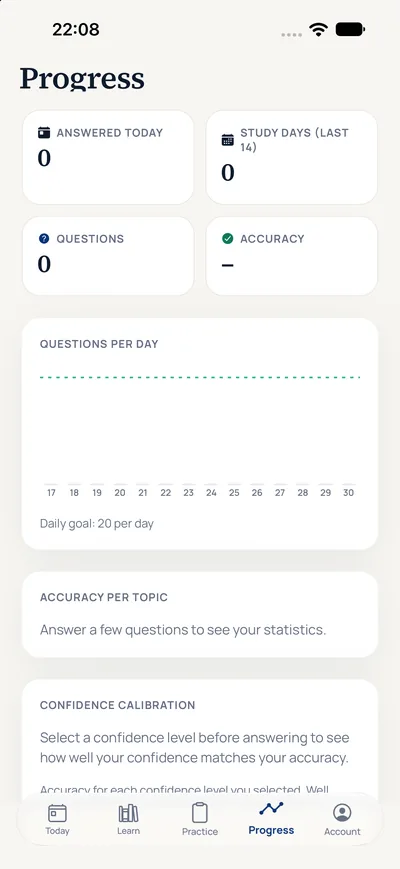
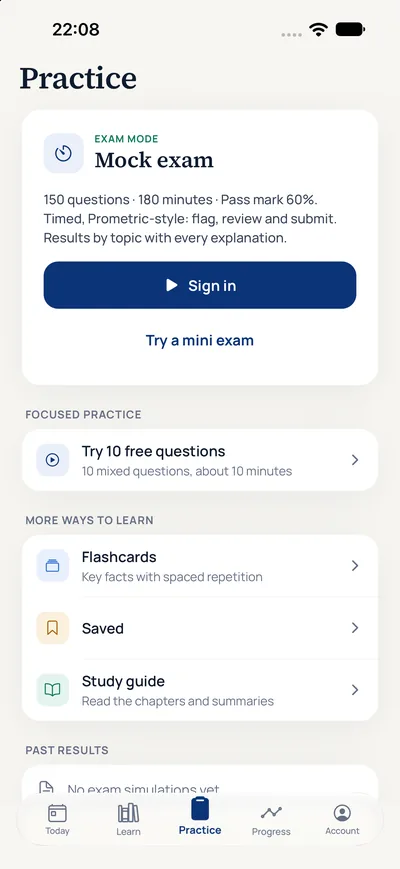
MediFlow Exam Prep auf iPhone und iPad: Land, Beruf und Prüfung wählen. Übungsfragen mit Erklärungen, Prüfungssimulationen mit Zeitlimit und ein Lernplan. Dasselbe Konto gilt im Browser.