🇴🇲 OMSB · Oman
OMSB Exam for General Practitioners (OEGP)
The OMSB Exam for General Practitioners (OEGP): 150 questions, a pass mark of 60 %, and a licence that depends on it. MediFlow prepares you specifically for this exam: 3,306 practice questions across 19 topics, an explanation for every answer and timed mock exams in the real exam format.
- AED 199 · 3 months of access · one payment · no subscription
- 3,306 practice questions
- 150 questions · 165 minutes · pass mark 60 %

MediFlow Exam Prep
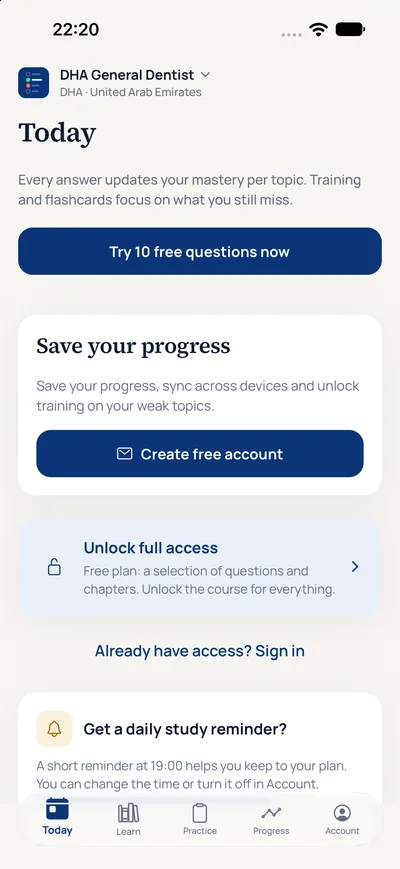
AIAI tutor explains every answer
3,306 practice questions
The challenge
The OMSB Exam for General Practitioners (OEGP): 150 questions, a pass mark of 60 %, and a licence that depends on it.
- The exam covers the whole breadth of clinical medicine, from emergencies to rare diagnoses. Textbooks do not tell you what OMSB actually asks.
- 150 questions in 165 minutes leave about 66 seconds per question. Speed has to be trained, not hoped for.
- The question style is specific: clinical scenarios, best-answer choices and distractors that look right.
- Working full time leaves little room to plan revision, and a retake costs months of waiting and another exam fee.
How MediFlow solves it
- A question bank built on the published content of OMSB, organised by topic, so you know what matters.
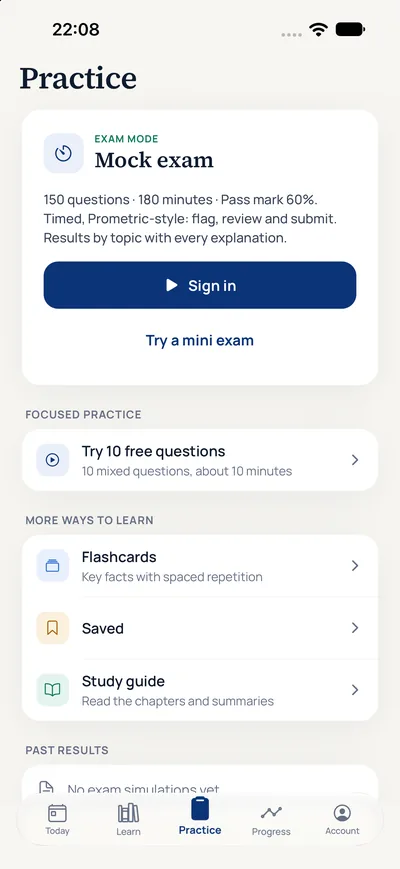
- Timed mock exams in the real exam format train your pace before the real day.
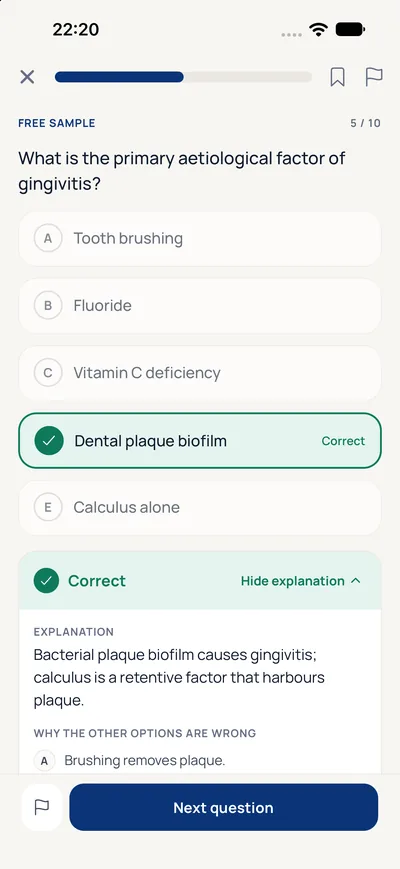
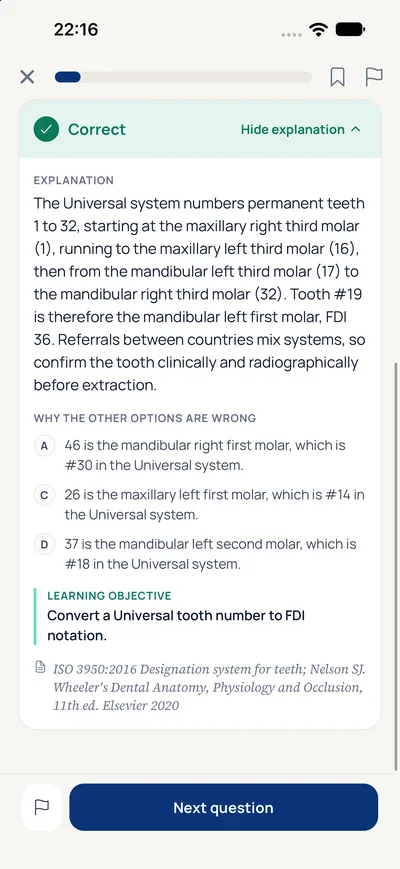
- Every answer is explained, including why the other options are wrong.
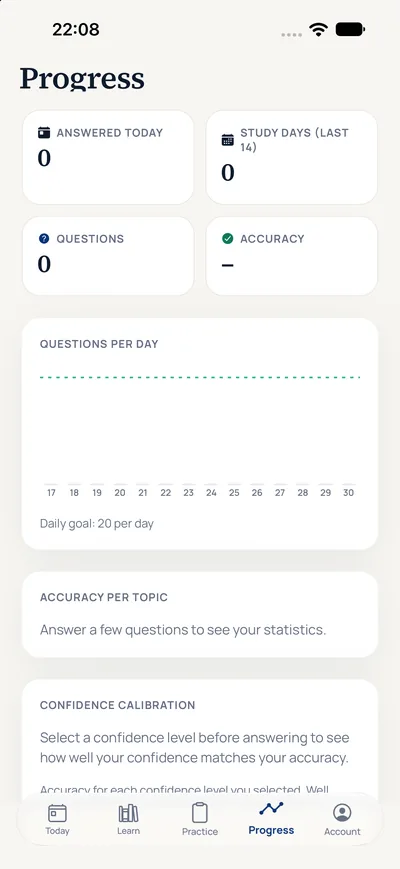
- A study plan up to your exam date tells you what to do each day and brings weak topics back for review.
Three steps to exam day
- 1
Try free questions and see the style of the exam.
- 2
Unlock the package and follow your study plan, topic by topic.
- 3
Take timed mock exams until your results are stable, then sit the exam.
What you can check
- 3,306 practice questions in 19 topics
- Question bank last updated on 29 October 2026
- Mock exams in the OMSB exam format
One package, one payment
AED 199 for 3 months of access to this exam. One payment, no subscription, no automatic renewal. Web and app with one account.
Practice material only. MediFlow is independent of OMSB and cannot guarantee a result.
Exam at a glance
- Questions
- 150
- Duration
- 165 minutes
- Pass mark
- 60 %
- Sections
- 1
- Exam type
- Written
- Language
- English
- Authority
- OMSB
Curriculum
Built from the question bank and updated automatically when new questions are added. 19 modules · 3,306 questions · Last updated: 29 October 2026
01Cardiology128 questions · 3.9 % of the bank
Chapters
- Acute coronary syndromes: recognising and treating chest pain
- Chronic coronary syndromes, lipids and hypertension
- Heart failure, valve disease, pericardium and the aorta
- Arrhythmias: atrial fibrillation, tachycardias and bradycardias
- Foundations: anatomy of the heart
- Foundations: conduction system and cardiac cycle
- Foundations: circulation and blood vessels
Sample question
Sample question1 / 1 · 0 correctWhich drug has been shown to reduce mortality in heart failure with reduced ejection fraction?
Keys: 1–5 or A–E to choose, Enter to check and continue, F to mark.
02Respiratory124 questions · 3.8 % of the bank
Chapters
- Asthma and COPD: diagnosis, stepwise treatment and exacerbations
- Pneumonia and tuberculosis
- Pulmonary embolism, pleural disease and pneumothorax
- Lung cancer, interstitial lung disease, sarcoidosis, sleep apnoea and blood gases
- Foundations: anatomy of the respiratory tract
- Foundations: alveoli and gas exchange
- Foundations: mechanics and control of breathing
Sample question
Sample question1 / 1 · 0 correctA 24-year-old woman with asthma uses her salbutamol inhaler four times a week and wakes at night with wheeze twice a month. She uses no other inhaler. What is the most appropriate next step?
Keys: 1–5 or A–E to choose, Enter to check and continue, F to mark.
03Endocrinology & Diabetes169 questions · 5.1 % of the bank
Chapters
- Diabetes mellitus: diagnosis and long-term treatment
- Diabetic emergencies: DKA, HHS and hypoglycaemia
- Thyroid disease: hypothyroidism, thyrotoxicosis, nodules and pregnancy
- Adrenal, pituitary, calcium and bone, and reproductive endocrinology
- Foundations: endocrine glands and feedback control
- Foundations: the thyroid in the neck and endocrine emergencies
Sample question
Sample question1 / 1 · 0 correctA 45-year-old man with newly diagnosed type 2 diabetes has an HbA1c of 7.4 %, a BMI of 31 kg/m² and normal kidney function. What is the preferred first-line drug?
Keys: 1–5 or A–E to choose, Enter to check and continue, F to mark.
04Gastroenterology & Hepatology119 questions · 3.6 % of the bank
Chapters
- Upper GI tract: reflux, dyspepsia, Helicobacter pylori and upper GI bleeding
- Lower GI tract: inflammatory bowel disease, IBS, coeliac disease and colorectal cancer screening
- The liver: reading liver tests, viral hepatitis and inherited or autoimmune liver disease
- Cirrhosis and its complications
- Foundations: the digestive tract, digestion and absorption
- Foundations: peptic ulcer disease and upper GI bleeding
Sample question
Sample question1 / 1 · 0 correctWhich test is preferred to confirm eradication of Helicobacter pylori after treatment?
Keys: 1–5 or A–E to choose, Enter to check and continue, F to mark.
05Nephrology & Electrolytes117 questions · 3.5 % of the bank
Chapters
- Acute kidney injury: definition, causes and management
- Chronic kidney disease and glomerular disease
- Urinary tract infection and kidney stones
- Sodium, potassium and other electrolytes
- Acid–base disorders and safe prescribing in kidney disease
- Foundations: structure and function of the kidney
- Foundations: fluids and electrolytes
- Foundations: the male urinary tract, prostate and testis
Sample question
Sample question1 / 1 · 0 correctA patient has a serum potassium of 7.1 mmol/L and peaked T waves on the ECG. What should be given first?
Keys: 1–5 or A–E to choose, Enter to check and continue, F to mark.
06Haematology105 questions · 3.2 % of the bank
Chapters
- Approach to anaemia: iron deficiency, thalassaemia trait and macrocytic anaemia
- Haemolysis, thalassaemia major, sickle cell disease and G6PD deficiency
- Bleeding disorders, thrombocytopenia and anticoagulation
- Haematological malignancy and transfusion medicine
- Foundations: blood cells, haematopoiesis and haemostasis
07Infectious Diseases119 questions · 3.6 % of the bank
Chapters
- Sepsis, septic shock and antibiotic stewardship
- Central nervous system, skin, soft tissue and bone infections
- HIV, post-exposure prophylaxis and sexually transmitted infections
- Travel, tropical and Gulf-region infections and vaccination
- Foundations: bacteria, the Gram stain and antibiotic targets
- Foundations: infection prevention and antimicrobial stewardship
08Neurology118 questions · 3.6 % of the bank
Chapters
- Stroke and transient ischaemic attack
- Headache, subarachnoid haemorrhage and raised intracranial pressure
- Epilepsy, status epilepticus, Parkinson's disease and dementia
- Neuroimmunology, neuromuscular disease, peripheral nerves and spinal emergencies
- Foundations: brain anatomy and clinical localisation
- Foundations: reflexes, the spinal cord and upper versus lower motor neuron signs
- Foundations: spinal cord tracts and the cranial nerves
- Foundations: the circle of Willis and intracranial haemorrhage
09Psychiatry130 questions · 3.9 % of the bank
Chapters
- Depression and bipolar disorder: recognition, antidepressants and lithium
- Psychosis and antipsychotics: choosing, monitoring and their emergencies
- Anxiety, OCD, PTSD and eating disorders
- Alcohol and opioids: intoxication, withdrawal and complications
- Delirium, capacity and self-harm: safety in everyday practice
10Dermatology150 questions · 4.5 % of the bank
Chapters
- Inflammatory skin disease and topical steroids
- Skin infections and infestations
- Skin cancer, pigment and severe drug reactions
- Foundations: skin structure, primary lesions and burn depth
11Oncology & palliative care80 questions · 2.4 % of the bank
Chapters
- Cancer screening and urgent referral in primary care
- Oncological emergencies and treatment toxicity
- Palliative care and the older patient
- Foundations: tumour growth, spread and staging
- Foundations: the eye and the visual pathway
- Foundations: the ear and the larynx
- Foundations: paranasal sinuses and neck lymph nodes
12Paediatrics427 questions · 12.9 % of the bank
Chapters
- Growth and development: milestones, red flags and short stature
- The newborn: jaundice, vitamin K and prematurity
- The febrile child and acute respiratory illness
- Vomiting, diarrhoea, abdominal emergencies and the child's heart
- Safeguarding children and safe prescribing by weight
- Foundations: the newborn and the transition after birth
- Foundations: growth and development
- Foundations: the child's airway, vital signs and resuscitation
13Obstetrics & Gynaecology418 questions · 12.6 % of the bank
Chapters
- Antenatal care: screening, gestational diabetes and medicines in pregnancy
- Hypertension in pregnancy: pre-eclampsia, eclampsia and HELLP
- Bleeding in pregnancy and rhesus prophylaxis
- Labour problems: preterm labour, ruptured membranes and postpartum haemorrhage
- Gynaecology essentials: contraception, menstrual problems, PCOS, screening and menopause
- Foundations: female pelvic anatomy
- Foundations: placenta, pregnancy physiology and fetal circulation
- Foundations: labour and the fetal skull
- Foundations: the menstrual cycle in the ovary, endometrium and cervix
- Foundations: breast anatomy and lymphatic drainage
14Surgery & Trauma376 questions · 11.4 % of the bank
Chapters
- The acute abdomen: appendicitis, perforation and hernias
- Gallbladder, bile ducts and bowel obstruction
- Major trauma and head injury
- Burns, wounds and limb-threatening soft-tissue emergencies
- Elective and vascular surgery: breast, thyroid, aorta, limb ischaemia and perioperative care
- Foundations: abdominal anatomy and the acute abdomen
- Foundations: hernias and the biliary system
- Foundations: wound healing and perioperative basics
- Foundations: the skeleton, spine and pelvis
- Foundations: shoulder, wrist and hand
- Foundations: hip fractures, knee and ankle ligaments
- Foundations: the male urinary tract, prostate and testis
15Emergency Medicine187 questions · 5.7 % of the bank
Chapters
- Cardiac arrest: basic and advanced life support
- Shock and anaphylaxis
- Poisoning and toxidromes
- Environmental emergencies: heat, drowning, snakes and scorpions
- Metabolic and respiratory emergencies: DKA, hyperkalaemia and acute asthma
- Foundations: ABCDE approach and airway basics
- Foundations: life-threatening chest emergencies
- Foundations: shock, burns and sepsis
- Foundations: skin structure, primary lesions and burn depth
- Foundations: spinal cord tracts and the cranial nerves
- Foundations: the circle of Willis and intracranial haemorrhage
16Musculoskeletal & Rheumatology110 questions · 3.3 % of the bank
Chapters
- Joint pain basics: rheumatoid arthritis versus osteoarthritis
- The hot swollen joint: septic arthritis and crystal arthritis
- Systemic autoimmune disease and spondyloarthritis
- Polymyalgia, giant cell arteritis and back pain red flags
- Fractures, compartment syndrome and bone health
- Foundations: the skeleton, spine and pelvis
- Foundations: shoulder, wrist and hand
- Foundations: hip fractures, knee and ankle ligaments
17Eye & ENT99 questions · 3 % of the bank
Chapters
- The red eye: telling the harmless from the sight-threatening
- Sudden visual loss, diabetic eye disease and the retina
- The ear: otitis, hearing tests and sudden hearing loss
- Vertigo, the nose and the throat
- Foundations: the eye and the visual pathway
- Foundations: the ear and the larynx
- Foundations: paranasal sinuses and neck lymph nodes
18Ethics & Patient Safety160 questions · 4.8 % of the bank
Chapters
- Ethical principles, capacity and consent
- Confidentiality and breaking bad news
- Patient safety: errors, candour and the International Patient Safety Goals
- Difficult decisions: DNR, end of life, discharge against advice and safeguarding
- Professionalism: boundaries, conflicts of interest, research and Gulf practice
19Preventive Medicine & Biostatistics170 questions · 5.1 % of the bank
Chapters
- Measuring disease: rates, incidence, prevalence and levels of prevention
- Screening and diagnostic test accuracy
- Study designs, measures of association, bias and confounding
- Biostatistics: distributions, hypothesis testing and errors
- Communicable disease control, immunisation and occupational health
Sample question
From the module Cardiology. Choose an answer to see the explanation.
Which drug has been shown to reduce mortality in heart failure with reduced ejection fraction?
Keys: 1–5 or A–E to choose, Enter to check and continue, F to mark.
What you get
- Question bank with a detailed explanation for every answer
- Timed mock exams in the real exam format, with score report by topic
- Personal study plan up to your exam date and review of weak topics
- AI tutor that explains any question in plain words
- One account for the app (iPhone, iPad) and the browser
From registration to licence
The usual steps with OMSB. Details can change; check the current rules with OMSB before you register.
- Check eligibility and collect your documents (degree, experience, good standing).
- Create an account with OMSB and submit the application.
- Receive the exam eligibility and book a date with the test centre.
- Sit the exam. Results usually come within days.
- After passing: complete licensing (for example primary source verification) and receive your licence.
Frequently asked questions
How much does OMSB Exam for General Practitioners (OEGP) preparation cost?
AED 199 for 3 months of access to this exam. One payment, no subscription, no automatic renewal.
How long is my access?
Access runs for 90 days from purchase for this exam package.
Where can I buy it?
In the MediFlow Exam Prep app (App Store) or on mediflow.ae. Both unlock the same package for your MediFlow account.
Are these real exam questions?
No. MediFlow writes original questions based on the published exam content. We do not use recalled or leaked exam questions and we are not affiliated with OMSB.
Is the exam format up to date?
The format comes from the published information of OMSB. Check it with OMSB before your exam, as authorities can change it.
Ready to start
Begin with free questions or unlock the full package now.
MediFlow is an independent provider. We are not affiliated with any licensing authority or exam provider. Questions are written by MediFlow from published exam outlines; they are not questions from real exams. Always check the format with the authority before your exam.
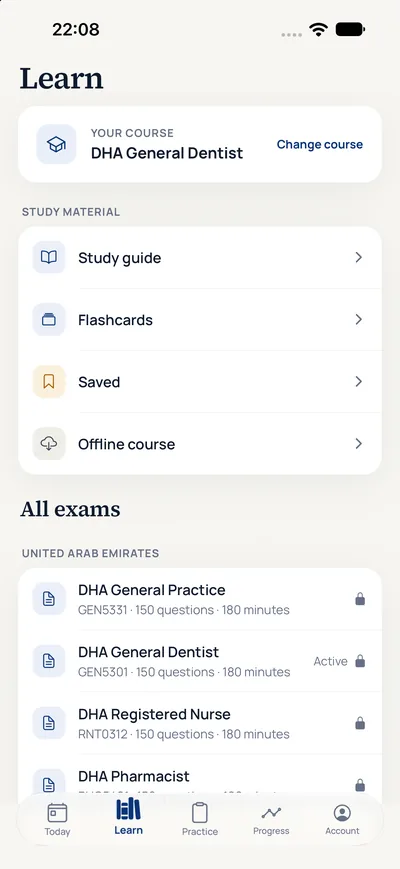
One app for every exam
MediFlow Exam Prep on iPhone and iPad: choose your country, profession and exam. Practice questions with explanations, timed mock exams and a study plan. The same account works in the browser.