🇳🇿 NCNZ · New Zealand
NCNZ IQN theoretical examination (enrolled nurse)
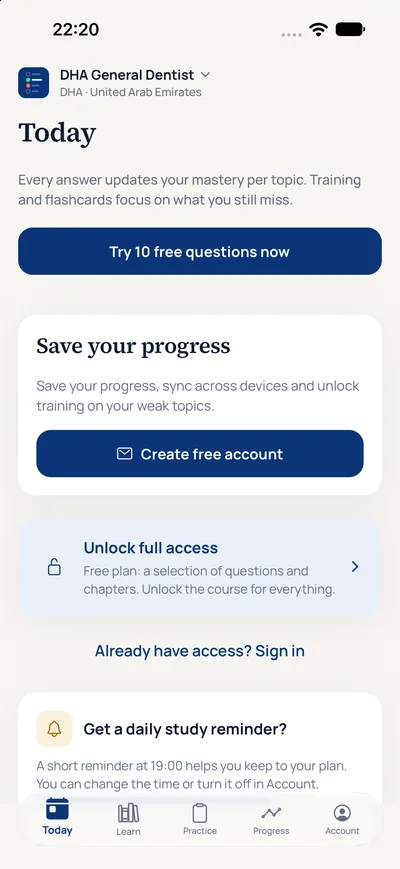
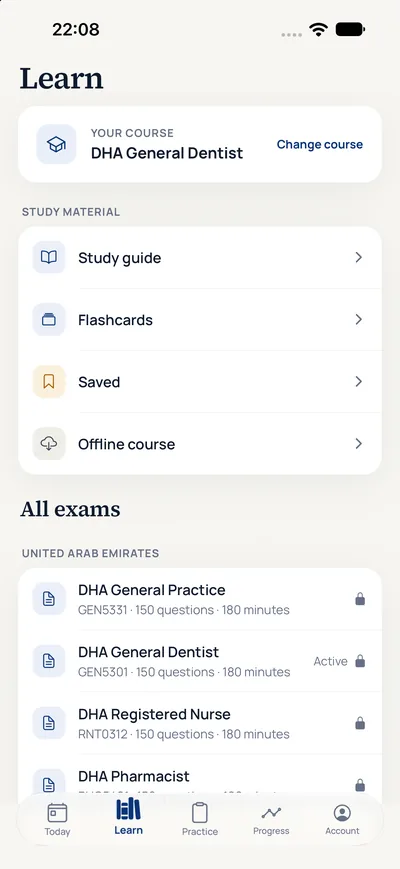
The NCNZ IQN theoretical examination (enrolled nurse): 90 questions in a fixed time, and a licence that depends on the result. MediFlow prepares you specifically for this exam: 298 practice questions across 13 topics, an explanation for every answer and timed mock exams in the real exam format.
- NZ$59.99 · 3 months of access · one payment · no subscription
- 298 practice questions
- 90 questions · 135 minutes

MediFlow Exam Prep
AIAI tutor explains every answer
298 practice questions
The challenge
The NCNZ IQN theoretical examination (enrolled nurse): 90 questions in a fixed time, and a licence that depends on the result.
- The exam covers nursing practice, pharmacology, patient safety and professional standards. Textbooks do not tell you what NCNZ actually asks.
- 90 questions in 135 minutes leave about 90 seconds per question. Speed has to be trained, not hoped for.
- The question style is specific: clinical scenarios, best-answer choices and distractors that look right.
- Working full time leaves little room to plan revision, and a retake costs months of waiting and another exam fee.
- The oral or practical part is hard to practise alone.
How MediFlow solves it
- A question bank built on the published content of NCNZ, organised by topic, so you know what matters.
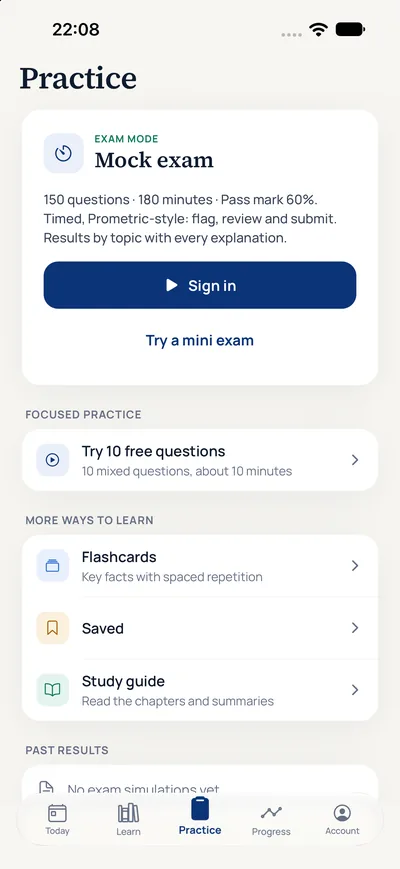
- Timed mock exams in the real exam format train your pace before the real day.
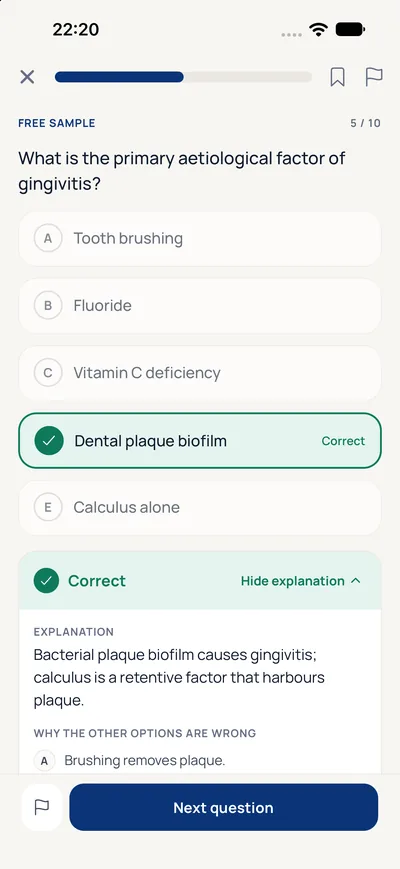
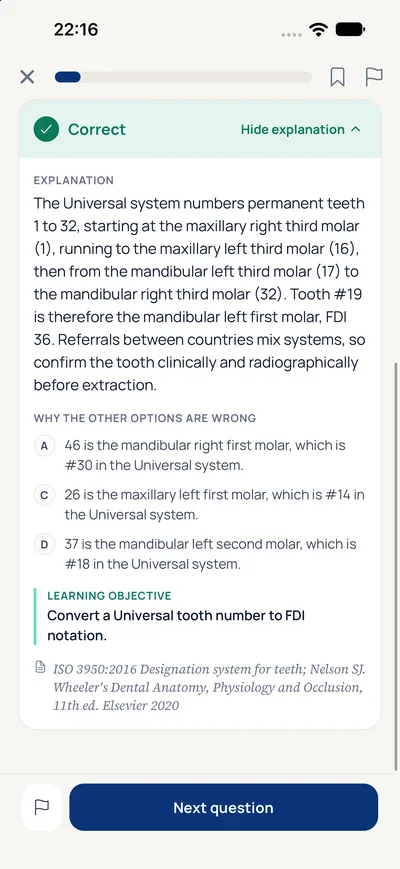
- Every answer is explained, including why the other options are wrong.
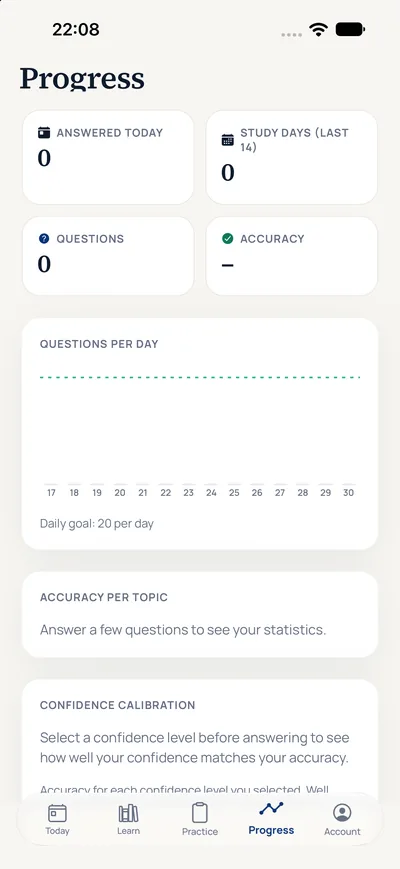
- A study plan up to your exam date tells you what to do each day and brings weak topics back for review.
- An AI examiner lets you rehearse the oral or practical part at any time.
Three steps to exam day
- 1
Try free questions and see the style of the exam.
- 2
Unlock the package and follow your study plan, topic by topic.
- 3
Take timed mock exams until your results are stable, then sit the exam.
What you can check
- 298 practice questions in 13 topics
- Question bank last updated on 30 October 2026
- Mock exams in the NCNZ exam format
One package, one payment
NZ$59.99 for 3 months of access to this exam. One payment, no subscription, no automatic renewal. Web and app with one account.
Practice material only. MediFlow is independent of NCNZ and cannot guarantee a result.
Exam at a glance
- Questions
- 90
- Duration
- 135 minutes
- Pass mark
- not published
- Sections
- Part A: 9 questions, 25 min; Part B: 81 questions, 110 min · OSCE: 8 stations, Christchurch
- Exam type
- Written and oral/practical
- Language
- English
- Authority
- NCNZ
Curriculum
Built from the question bank and updated automatically when new questions are added. 13 modules · 298 questions · Last updated: 30 October 2026
01Adult physiological conditions: cardiovascular, respiratory, renal and metabolic care30 questions · 10.1 % of the bank
Chapters
- Foundations: anatomy of the heart
- Foundations: conduction system and cardiac cycle
- Foundations: circulation and blood vessels
- Foundations: anatomy of the respiratory tract
- Foundations: alveoli and gas exchange
- Foundations: mechanics and control of breathing
Sample question
Sample question1 / 1 · 0 correctA 66-year-old woman with type 2 diabetes who takes gliclazide is found sweaty, shaky and anxious. She is alert and able to swallow. Her blood glucose is 3.2 mmol/L. What should the EN do first?
Keys: 1–5 or A–E to choose, Enter to check and continue, F to mark.
02Aged care, dementia and palliative care21 questions · 7 % of the bank
Sample question
Sample question1 / 1 · 0 correctAt 1630 a resident with moderate dementia is pacing near the front door of the aged care home. She says she must go home to cook dinner for her children. Which response by the enrolled nurse is most appropriate?
Keys: 1–5 or A–E to choose, Enter to check and continue, F to mark.
03Nursing assessment, vital signs and recognising deterioration29 questions · 9.7 % of the bank
Sample question
Sample question1 / 1 · 0 correctAn enrolled nurse on a medical ward is asked by the registered nurse (RN) to take the morning observations for four patients. Which action best reflects the enrolled nurse's role in assessment?
Keys: 1–5 or A–E to choose, Enter to check and continue, F to mark.
04Medication and fluid calculations16 questions · 5.4 % of the bank
Sample question
Sample question1 / 1 · 0 correctA postoperative patient has a prescription for sodium chloride 0.9% 1000 mL intravenously over 8 hours using a volumetric infusion pump. At what rate should the enrolled nurse set the pump?
Keys: 1–5 or A–E to choose, Enter to check and continue, F to mark.
05Clinical skills: wound care, elimination, nutrition, personal hygiene and pain management18 questions · 6 % of the bank
Chapters
- Foundations: patient positions and peripheral intravenous cannulas
- Foundations: urinary catheters and nasogastric tubes
- Foundations: safe medication administration and injections
- Foundations: preventing and staging pressure injuries
Sample question
Sample question1 / 1 · 0 correctAn enrolled nurse assists a registered nurse to assess a healing pressure injury on a resident's heel. The wound bed is moist and bright red with a bumpy, granular surface, and there is a small amount of clear serous exudate. Which term best describes the tissue in the wound bed?
Keys: 1–5 or A–E to choose, Enter to check and continue, F to mark.
06Communication, therapeutic relationships and clinical handover (ISBAR)27 questions · 9.1 % of the bank
07Cultural safety and the health of Aboriginal and Torres Strait Islander peoples and Māori21 questions · 7 % of the bank
08Infection prevention and control24 questions · 8.1 % of the bank
Chapters
- Foundations: hand-rub technique and personal protective equipment
09Maternal and child health nursing care15 questions · 5 % of the bank
Chapters
- Foundations: female pelvic anatomy
- Foundations: placenta, pregnancy physiology and fetal circulation
- Foundations: labour and the fetal skull
- Foundations: the newborn and the transition after birth
- Foundations: growth and development
- Foundations: the child's airway, vital signs and resuscitation
10Medication safety and administration30 questions · 10.1 % of the bank
Chapters
- Foundations: safe medication administration and injections
- Foundations: preventing and staging pressure injuries
11Mental health and psychosocial care24 questions · 8.1 % of the bank
12Work health and safety, falls prevention, safe handling and emergencies15 questions · 5 % of the bank
13Professional standards, scope of practice and delegation for the enrolled nurse28 questions · 9.4 % of the bank
Sample question
From the module Adult physiological conditions: cardiovascular, respiratory, renal and metabolic care. Choose an answer to see the explanation.
A 66-year-old woman with type 2 diabetes who takes gliclazide is found sweaty, shaky and anxious. She is alert and able to swallow. Her blood glucose is 3.2 mmol/L. What should the EN do first?
Keys: 1–5 or A–E to choose, Enter to check and continue, F to mark.
What you get
- Question bank with a detailed explanation for every answer
- Timed mock exams in the real exam format, with score report by topic
- Personal study plan up to your exam date and review of weak topics
- AI tutor that explains any question in plain words
- One account for the app (iPhone, iPad) and the browser
- AI oral examiner for practising the oral or practical part
From registration to licence
The usual steps with NCNZ. Details can change; check the current rules with NCNZ before you register.
- Check eligibility and collect your documents (degree, experience, good standing).
- Create an account with NCNZ and submit the application.
- Receive the exam eligibility and book a date with the test centre.
- Sit the exam. Results usually come within days.
- After passing: complete licensing (for example primary source verification) and receive your licence.
Frequently asked questions
How much does NCNZ IQN theoretical examination (enrolled nurse) preparation cost?
NZ$59.99 for 3 months of access to this exam. One payment, no subscription, no automatic renewal.
How long is my access?
Access runs for 90 days from purchase for this exam package.
Where can I buy it?
In the MediFlow Exam Prep app (App Store) or on mediflow.ae. Both unlock the same package for your MediFlow account.
Are these real exam questions?
No. MediFlow writes original questions based on the published exam content. We do not use recalled or leaked exam questions and we are not affiliated with NCNZ.
Is the exam format up to date?
The format comes from the published information of NCNZ. Check it with NCNZ before your exam, as authorities can change it.
Ready to start
Begin with free questions or unlock the full package now.
MediFlow is an independent provider. We are not affiliated with any licensing authority or exam provider. Questions are written by MediFlow from published exam outlines; they are not questions from real exams. Always check the format with the authority before your exam.
Related exams
- NCNZ IQN theoretical examination (registered nurse)NCNZ · 724 practice questions · +300 new in 30 days120 questions · 165 minutesNZ$59.99BuyDetails
- NCNZ OSCE (registered nurse)NCNZ · 724 practice questions · +300 new in 30 daysNZ$59.99BuyDetails
| Exam | Format | Price (3 months) | |
|---|---|---|---|
| NCNZ IQN theoretical examination (registered nurse) NCNZ · 724 practice questions · +300 new in 30 days | 120 questions · 165 minutes | NZ$59.99 | BuyApp Store |
| NCNZ OSCE (registered nurse) NCNZ · 724 practice questions · +300 new in 30 days | NZ$59.99 | BuyApp Store |
One app for every exam
MediFlow Exam Prep on iPhone and iPad: choose your country, profession and exam. Practice questions with explanations, timed mock exams and a study plan. The same account works in the browser.