Brain & mind
Psychiatry
Mental health has moved high up the healthcare agenda in the Gulf, and psychiatrists are needed in hospitals, community services and private practice. This page explains how foreign-trained psychiatrists are graded, which exams apply and how MediFlow helps.

What psychiatrists do
Psychiatrists assess, diagnose and treat mental, emotional and behavioural disorders. Their work combines careful history taking and risk assessment with pharmacotherapy, psychotherapy and coordination of multidisciplinary care involving psychologists, nurses, social workers and occupational therapists. Patients range from young people with anxiety or eating disorders to adults with depression, bipolar disorder or schizophrenia and older people with dementia and delirium.
Recognised subspecialty areas include:
- Child and adolescent psychiatry, including neurodevelopmental disorders such as ADHD and autism
- Old age psychiatry
- Addiction psychiatry
- Consultation-liaison psychiatry in general hospitals
- Forensic psychiatry
- Perinatal psychiatry
Psychiatrists work on inpatient units, in emergency departments, outpatient clinics, community mental health services and private practices. In the Gulf, a growing part of care is also delivered through telepsychiatry and integrated services within general hospitals.
Training routes worldwide
Psychiatric specialist training is a structured programme of several years in most countries. In Germany, doctors complete the Weiterbildung to become Facharzt für Psychiatrie und Psychotherapie, which includes a substantial, documented psychotherapy component and a period in neurology. This combination of psychiatric and psychotherapeutic training is generally regarded favourably in equivalence assessments.
In the United Kingdom, trainees progress through core and higher training towards the CCT and must pass the membership exams of the Royal College of Psychiatrists (MRCPsych). In the United States, residency leads to the American Board of Psychiatry and Neurology exam. The Arab Board and Saudi Board in psychiatry are common in the region, and in India the MD Psychiatry or DNB is widely held. Many psychiatrists add training in child and adolescent psychiatry or specific therapy methods such as cognitive behavioural therapy.
Recognition in the Gulf states
DHA in Dubai, DOH in Abu Dhabi and MOHAP for the other Emirates first assess whether your specialist training is equivalent and then grade you. As a rule, psychiatrists with a recognised specialist qualification and limited subsequent experience are licensed as Specialist, while Consultant grading usually requires a higher qualification or several years of independent practice after specialist training. The details depend on the authority and your country of training.
Your file always includes Primary Source Verification of your medical degree, specialist certificate, licences and employment history. Depending on the outcome of the equivalence review, you may need to pass a Specialist exam, attend an interview or may be exempt from assessment.
Psychiatry has a few particularities: mental health legislation, involuntary admission procedures and the prescribing of controlled medicines are regulated locally, and employers often expect you to familiarise yourself with these rules early. Since requirements change, MediFlow reviews each application individually.
Career outlook in the Gulf and beyond
Awareness of mental health has grown considerably across the Gulf, supported by national wellbeing initiatives and reduced stigma, especially among younger people. A young and growing population, a large expatriate workforce living far from family, and high rates of chronic physical illness such as diabetes all contribute to demand for psychiatric care, including the treatment of depression and anxiety that accompanies chronic disease.
Child and adolescent psychiatry, addiction services and consultation-liaison psychiatry are areas where experienced specialists are particularly sought after. Psychiatrists who can work in English and ideally Arabic, and who are comfortable with culturally sensitive care, tend to find a wide range of options in public hospitals, private clinics and telehealth services, as well as internationally.
Relevant exams and how MediFlow Exam Prep helps
Depending on your background and the authority, these assessments may be relevant:
- DHA Specialist assessment in psychiatry for Dubai
- Qualification review and, if required, an exam for DOH or MOHAP
- SCFHS classification in Saudi Arabia and comparable processes in Qatar, Oman, Bahrain and Kuwait
- International exams such as the MRCPsych, the American Board of Psychiatry and Neurology or the German Facharztprüfung
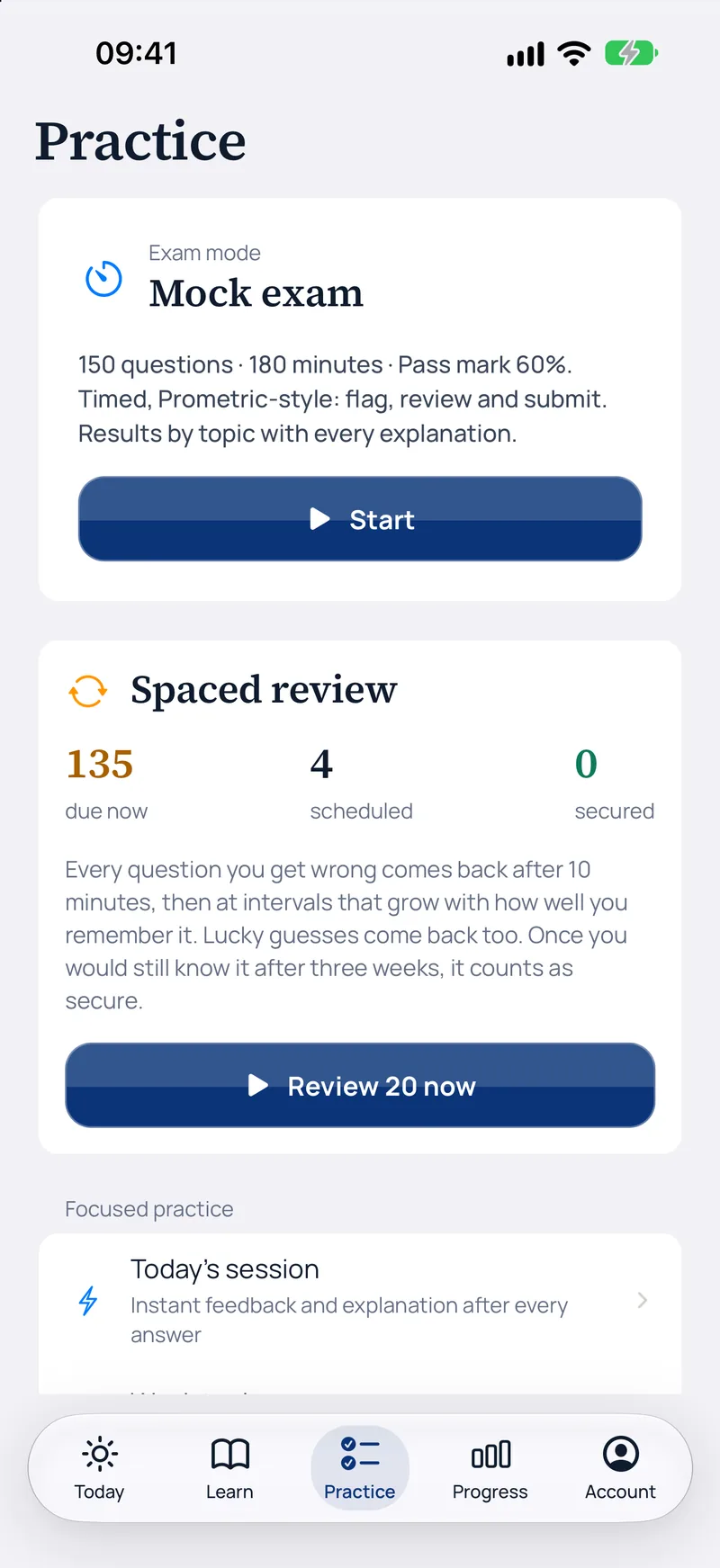
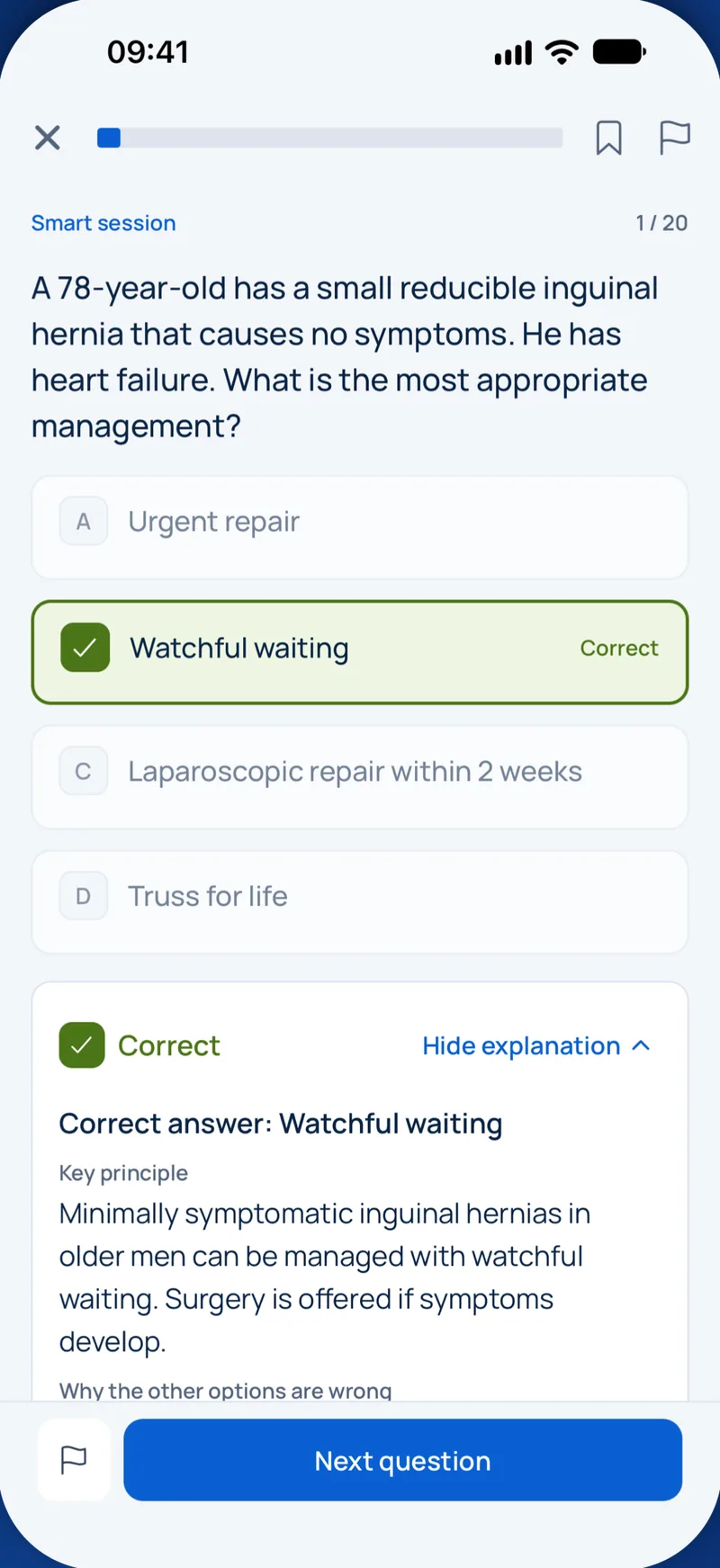
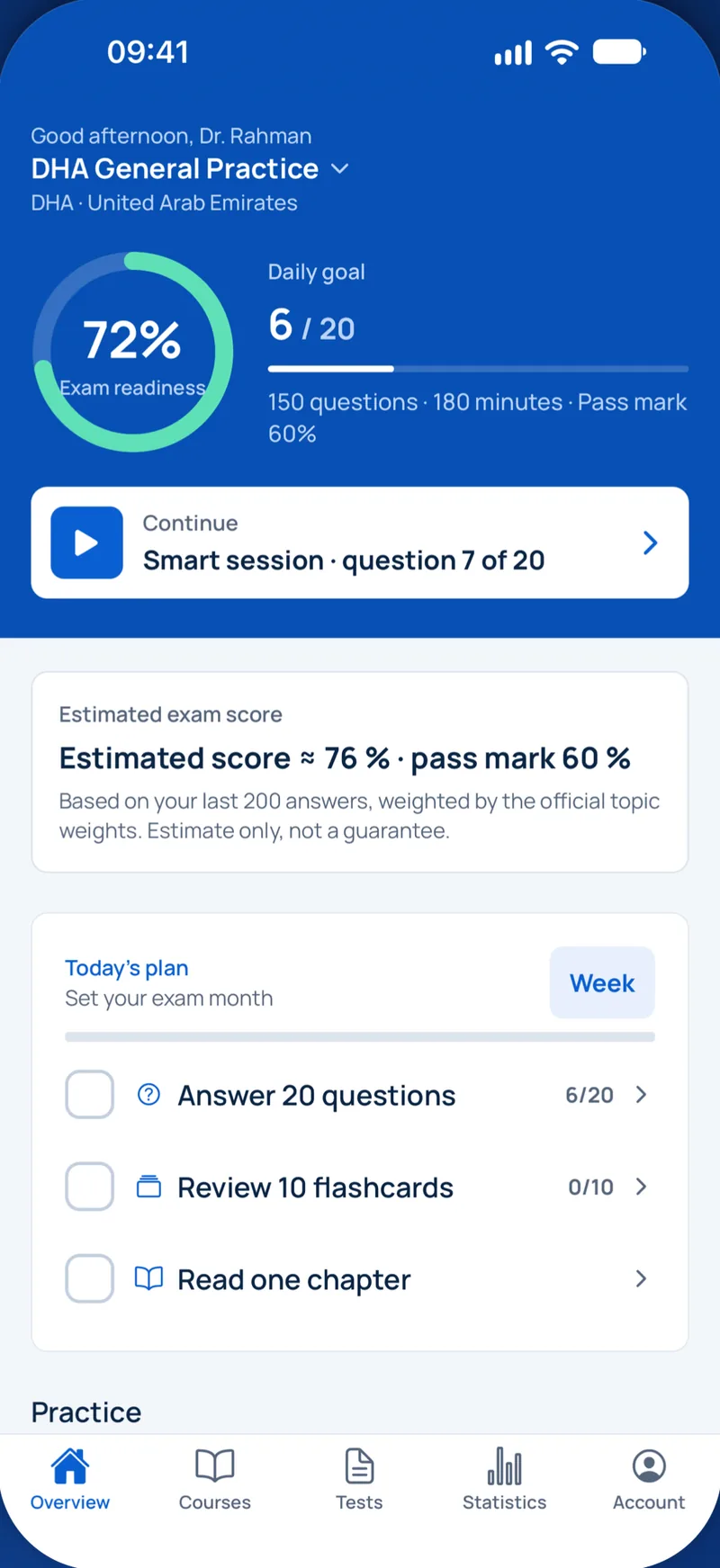
Psychiatry licensing exams usually test diagnostic criteria, psychopharmacology and side effects, emergency psychiatry, risk assessment, psychotherapy principles and the psychiatric aspects of medical illness. MediFlow Exam Prep offers a question bank with explanations and mock exams in the real format, so you can practise clinical vignettes and refresh areas such as child psychiatry or substance use disorders.
Matching exams and courses
Prepare with question banks and timed mock exams in the format of the respective exam.
- DHADHA Specialist PsychiatryView course
- LandesärztekammerSpecialist board exam: Psychiatry and PsychotherapyView course
- SIWFSwiss board exam in psychiatry and psychotherapyView course
- ÖÄKBoard exam psychiatryView course
- CNGEVC physicians: psychiatryView course
- DOHDOH Specialist/Consultant physician CBT (Anesthesia, Dermatology, Internal Medicine, Family Medicine, Pediatrics, ENT, General Surgery, OB/GYN; consultant also Ophthalmology)View course
- SCFHSSCFHS Physician specialty classification exams (Internal Medicine, Family Medicine, Pediatrics, OB/GYN, General Surgery, Anesthesia, Emergency, Psychiatry and others)View course
- DHPQatar specialist physician qualifying exams (34 specialties)View course
Frequently asked questions
Can I work as a Consultant psychiatrist in Dubai with a German Facharzt?
It is possible if you have enough experience after completing your Facharzt für Psychiatrie und Psychotherapie. Recently qualified specialists are usually licensed as Specialist first. Consultant grading generally requires several years of independent practice, such as an Oberarzt role, or a higher qualification. MediFlow reviews your file in advance to estimate the realistic grade.
Do I need to speak Arabic to work as a psychiatrist in the UAE?
Arabic is not usually a licensing requirement, and many patients in the UAE are expatriates who speak English or other languages. However, Arabic skills are a real advantage in psychiatry, where nuance in conversation matters. Many facilities provide interpreters, and some employers specifically look for Arabic-speaking psychiatrists for certain services.
Is psychotherapy experience recognised in the Gulf?
Psychotherapy training that forms part of your specialist qualification, as in the German Facharzt, is generally taken into account in the equivalence assessment. Separate therapy qualifications may be relevant for specific roles or privileges. Keep documentation of supervised therapy hours and methods, as employers and authorities may ask for evidence.
What topics are typically tested in a psychiatry licensing exam?
Expect questions on diagnostic classification, psychopharmacology, drug interactions and adverse effects such as neuroleptic malignant syndrome or lithium toxicity, management of suicidal patients, delirium, dementia, child psychiatry and addiction. Many items are case-based. MediFlow Exam Prep trains this format with explanations for every answer.
Can I work in telepsychiatry for Gulf patients?
Telepsychiatry is well established in parts of the Gulf, but treating patients there normally requires a licence or registration with the responsible authority and compliance with local telehealth rules. Employers may add their own requirements. MediFlow can review your planned arrangement and explain which licensing steps apply to you.