Women & children
Obstetrics & Gynaecology
Obstetrics and gynaecology combines acute labour ward medicine, surgery and long-term women's health care. Here you can see how your OB/GYN training is assessed in the Gulf and which exams may be part of your licensing route.
The scope of obstetrics and gynaecology
Obstetricians and gynaecologists look after women across their reproductive life and beyond. On the obstetric side, the work includes antenatal care, management of high-risk pregnancies, labour and delivery, caesarean sections and postnatal care. Gynaecology covers menstrual disorders, endometriosis, fibroids, pelvic floor problems, contraception, menopause and the diagnosis and surgical treatment of benign and malignant conditions of the female reproductive tract.
The specialty is unusual in combining emergency medicine, outpatient care and operative work. Recognised subspecialties include:
- Maternal-fetal medicine – complicated pregnancies, fetal medicine and prenatal diagnosis
- Reproductive medicine and IVF – infertility, assisted reproduction and reproductive endocrinology
- Gynaecological oncology – cancers of the cervix, uterus and ovaries
- Urogynaecology – incontinence and pelvic organ prolapse
- Minimally invasive gynaecological surgery – laparoscopy and hysteroscopy
In the Gulf, gestational diabetes is common because of the high prevalence of diabetes and obesity in the population, and polycystic ovary syndrome is frequently seen. Fertility services are in strong demand, and many families have several children, so experience with repeat caesarean sections and placental complications is valuable.
Training routes in OB/GYN
Specialist training in obstetrics and gynaecology usually takes several years after medical school and covers both obstetric and gynaecological practice, including a defined surgical logbook. Common routes include:
- Germany: Weiterbildung zum Facharzt für Frauenheilkunde und Geburtshilfe in authorised training posts, ending with the specialist examination at the medical chamber. Focus areas such as gynaecological oncology or special obstetrics and perinatal medicine are acquired afterwards.
- United Kingdom: specialty training with the MRCOG examinations and, on completion, the CCT, followed by optional subspecialty training.
- United States: a four-year residency followed by written and oral examinations of the American Board of Obstetrics and Gynecology; fellowships for subspecialties.
- Arab and Saudi Boards: residency programmes with board examinations recognised across much of the region.
- India and Pakistan: MS or MD in Obstetrics and Gynaecology, DNB, or FCPS, frequently with a diploma (DGO).
Licensing authorities pay particular attention to operative experience. A documented logbook of deliveries, caesarean sections and gynaecological procedures can be decisive for the scope of practice you are granted.
How your OB/GYN title is recognised
DHA, DOH and MOHAP each classify physicians by professional grade. For OB/GYN, the main categories are Specialist and Consultant. The decision is based on your qualification and on how many years you have practised independently after completing specialist training. A Consultant grade typically requires either a higher qualification or substantially more experience at a senior level, for example as a lead clinician for a labour ward or a surgical service.
Before any assessment, your credentials go through Primary Source Verification, usually handled by DataFlow. Universities, training bodies and previous employers are contacted to confirm your degree, specialist certificate, licences and work history. Delays often arise when hospitals abroad do not respond or when certificates show different names or dates.
The authority then decides whether your qualification is equivalent to its standard. Depending on the outcome, you may need to sit the specialist exam, attend an interview, or you may be exempt. Your clinical privileges, for example for operative obstetrics or advanced laparoscopy, are often reviewed separately by the employing hospital. Requirements differ between authorities and are updated from time to time; MediFlow looks at your individual situation before you apply.
Career outlook in the Gulf and beyond
Birth rates in the Gulf remain high compared with many European countries, and populations are growing through both births and migration. Maternity services are therefore a core part of government and private healthcare. Private hospitals in particular compete on maternity care, and women often prefer to be treated by female doctors, which shapes recruitment in this specialty.
Fertility treatment is a growing field, supported by family-oriented social structures. Gynaecological oncology, urogynaecology and maternal-fetal medicine are developing as services expand. Experience in managing pregnancies complicated by diabetes, hypertension or obesity is especially useful.
For doctors who later move on, Gulf experience offers a high case volume and exposure to modern facilities. Many OB/GYN specialists also take part in teaching and in national screening programmes for cervical and breast cancer.
Exams and preparation for OB/GYN
Depending on your qualification, the following assessments may be relevant:
- DHA specialist exam in obstetrics and gynaecology
- DOH or MOHAP evaluation, which may include a written assessment or interview
- SCFHS classification for Saudi Arabia
- International exams such as MRCOG, the ABOG boards or the German Facharzt examination, which influence your grading
Exam questions typically cover antenatal screening, hypertensive disorders of pregnancy, gestational diabetes, preterm labour, obstetric haemorrhage, intrapartum fetal monitoring, ectopic pregnancy, infertility work-up, menopause, contraception and gynaecological cancers.
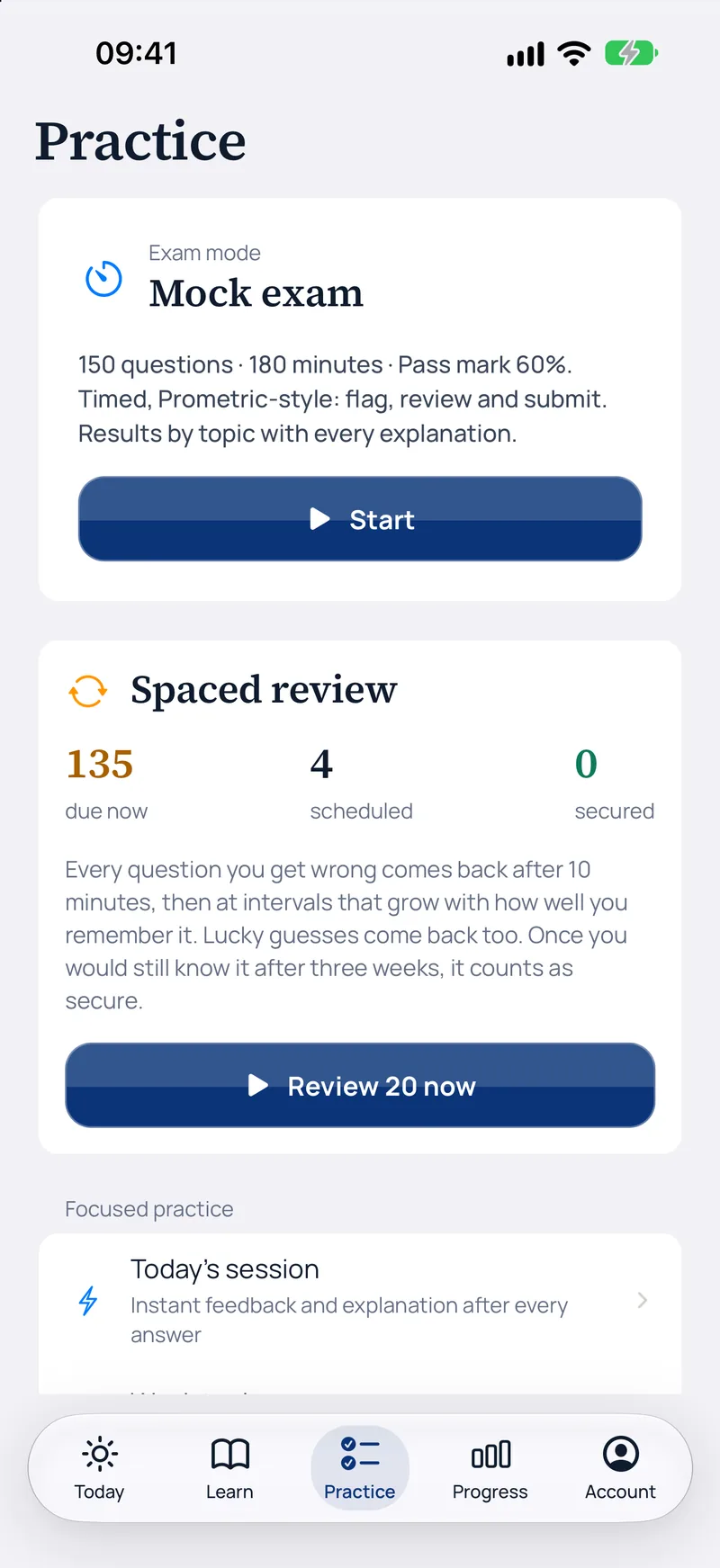
MediFlow Exam Prep gives you a dedicated OB/GYN question bank with clinical case questions, clear explanations of the reasoning behind each answer and mock exams that follow the timing and style of the specialist exams. Progress tracking shows which topics need more work.
Matching exams and courses
Prepare with question banks and timed mock exams in the format of the respective exam.
- DHADHA Specialist Obstetrics and GynecologyView course
- LandesärztekammerSpecialist board exam: Obstetrics and GynaecologyView course
- SIWFSwiss board exam in obstetrics and gynaecologyView course
- ÖÄKBoard exam obstetrics and gynaecologyView course
- DOHDOH Specialist/Consultant physician CBT (Anesthesia, Dermatology, Internal Medicine, Family Medicine, Pediatrics, ENT, General Surgery, OB/GYN; consultant also Ophthalmology)View course
- SCFHSSCFHS Physician specialty classification exams (Internal Medicine, Family Medicine, Pediatrics, OB/GYN, General Surgery, Anesthesia, Emergency, Psychiatry and others)View course
- DHPQatar specialist physician qualifying exams (34 specialties)View course
Frequently asked questions
Can I work as a Consultant OB/GYN in the UAE with a German specialist title?
A German Facharzt in Frauenheilkunde und Geburtshilfe is a strong basis, but the grade depends on your experience after qualifying and on the authority's assessment. Doctors with several years of senior experience, for instance as Oberarzt, have better chances of Consultant level. MediFlow reviews your documents and experience and explains which grade you can realistically expect.
Do I need an operative logbook for licensing?
A logbook is not always formally required for the licence itself, but it is very useful. Hospitals use it to decide which clinical privileges you receive, for example for caesarean sections, laparoscopy or oncological surgery. A clear record of procedures, signed by your supervisors or department head, makes the process easier.
Is MRCOG necessary to practise in the Gulf?
No. MRCOG is well known in the region, but authorities also consider other specialist qualifications, including European specialist titles, American boards, Arab Board and Indian degrees. Whether you must take an additional exam depends on your specific qualification and the authority. MediFlow can tell you which route applies to your training.
Can I work in reproductive medicine or IVF?
Fertility medicine is usually practised within OB/GYN, often with additional subspecialty training or documented experience in assisted reproduction. Fertility centres in the Gulf are regulated closely, and privileges are granted based on your training and practical record. Prepare evidence of your work in reproductive medicine together with your specialist documents.
What topics should I focus on for the OB/GYN specialist exam?
Key areas include hypertensive disorders, gestational diabetes, postpartum haemorrhage, fetal monitoring, preterm birth, early pregnancy complications, infertility, menopause and gynaecological oncology. Questions are usually based on clinical scenarios. The MediFlow Exam Prep question bank covers these areas with explanations and timed mock exams.