Eye, ENT & skin
Ophthalmology
Ophthalmology is both a medical and a surgical specialty, and eye care in the Gulf is shaped by diabetes, an ageing population and a strong private sector. Here you can see how foreign-trained ophthalmologists are graded, which exams apply and how MediFlow supports you.

What ophthalmologists do
Ophthalmologists diagnose and treat diseases of the eye, the orbit and the visual pathways. Their work ranges from outpatient diagnostics with slit lamp, optical coherence tomography and visual field testing to intravitreal injections, laser treatment and microsurgery. Patients include premature babies screened for retinopathy, children with squint or amblyopia, working adults with refractive problems or eye injuries, and older people with cataract, glaucoma or macular degeneration.
Common subspecialties are:
- Cataract and refractive surgery
- Medical and surgical retina, including diabetic eye disease
- Glaucoma
- Cornea and external eye disease
- Paediatric ophthalmology and strabismus
- Oculoplastics and neuro-ophthalmology
Ophthalmologists work in hospital eye departments, dedicated eye centres, day-surgery units and private clinics. They cooperate closely with endocrinology, neurology and paediatrics, and with optometrists and orthoptists in the wider eye care team.
Training routes worldwide
Ophthalmology training is a structured multi-year programme in almost every country. In Germany, doctors complete the Weiterbildung to become Facharzt für Augenheilkunde, combining conservative eye care with a defined spectrum of surgical and laser procedures. In the United Kingdom, specialty training leads to the CCT and Fellowship of the Royal College of Ophthalmologists (FRCOphth), assessed through several written and clinical parts.
In the United States, residency ends with the American Board of Ophthalmology exams, and many go on to a fellowship in retina, glaucoma or cornea. The Arab Board and Saudi Board in ophthalmology are well established in the region, while in India the MS Ophthalmology or DNB is common. The International Council of Ophthalmology also offers examinations that many ophthalmologists take as an additional international benchmark of knowledge.
For the Gulf, a well-documented surgical logbook is often as important as the specialist title itself.
Recognition in the Gulf states
DHA in Dubai, DOH in Abu Dhabi and MOHAP for the other Emirates assess the equivalence of your specialist qualification and then assign a professional grade. Ophthalmologists with a recognised specialist title and limited experience afterwards are generally licensed as Specialist. Consultant grading typically requires a higher qualification or several years of independent practice after completing training. The exact criteria depend on the authority and on where you trained.
Every application includes Primary Source Verification, confirming your medical degree, specialist certificate, licences and employment directly with the issuing bodies. Based on the equivalence assessment, you may have to sit a Specialist exam, attend an interview or be exempt from testing.
Surgical privileges, for example for phacoemulsification, vitreoretinal surgery or refractive laser procedures, are usually granted by the facility based on your documented experience. Because rules change over time, MediFlow assesses each case individually.
Career outlook in the Gulf and beyond
The high prevalence of diabetes in the Gulf makes diabetic retinopathy and diabetic macular oedema a central part of everyday eye care, with ongoing need for screening, laser and intravitreal therapy. An ageing population increases demand for cataract and glaucoma care, while a young, image-conscious population drives interest in refractive surgery. Intense sunlight, dust and dry indoor air contribute to ocular surface complaints and pterygium.
Dubai and Abu Dhabi also attract international patients for eye surgery, and private eye centres compete for experienced surgeons. Subspecialty skills in retina, glaucoma or paediatric ophthalmology are portable worldwide and often support progression to senior roles.
Relevant exams and how MediFlow Exam Prep helps
Depending on your training and the authority, these assessments may apply:
- DHA Specialist assessment in ophthalmology for Dubai
- Qualification review and, if required, an exam for DOH or MOHAP
- SCFHS classification in Saudi Arabia and similar procedures in Qatar, Oman, Bahrain and Kuwait
- International exams such as FRCOphth, the American Board of Ophthalmology, the ICO examinations or the German Facharztprüfung
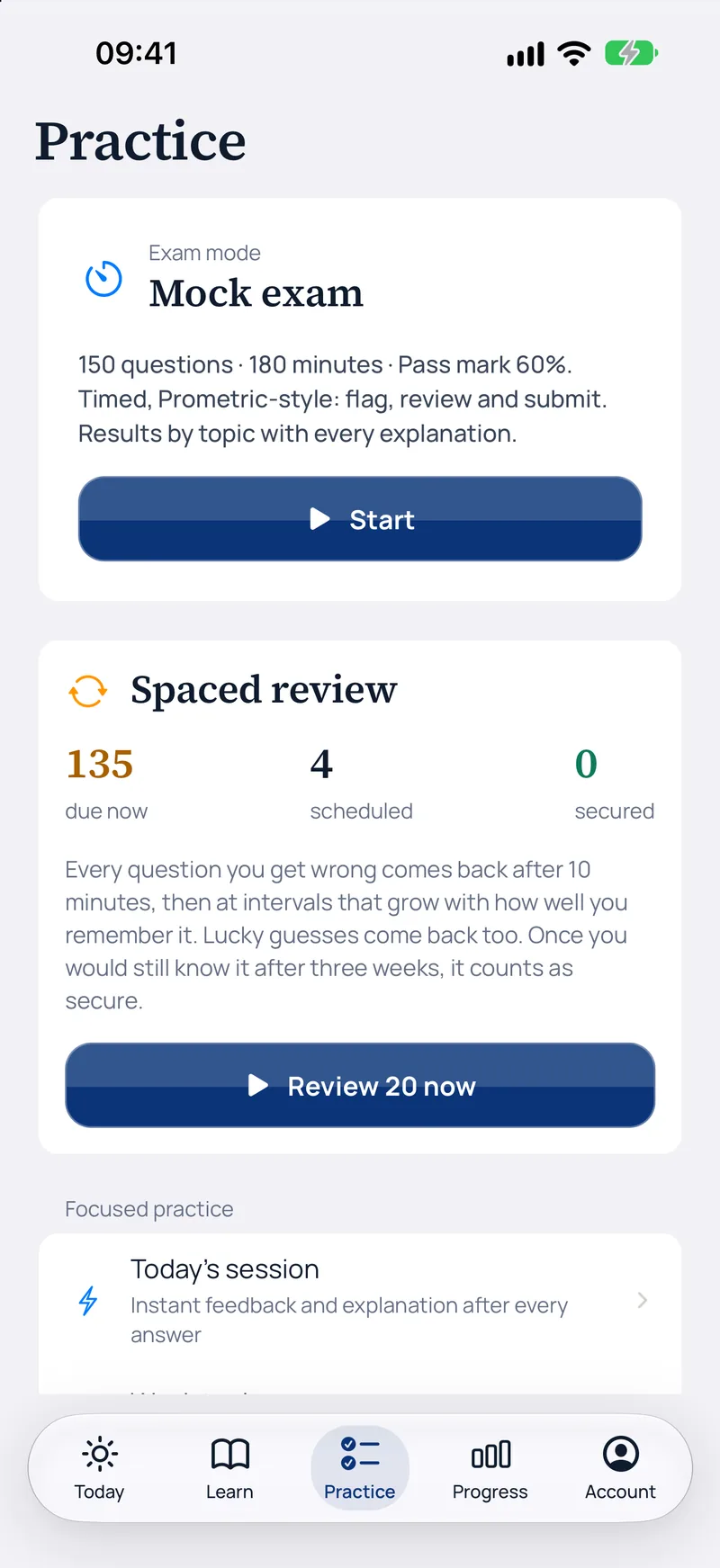
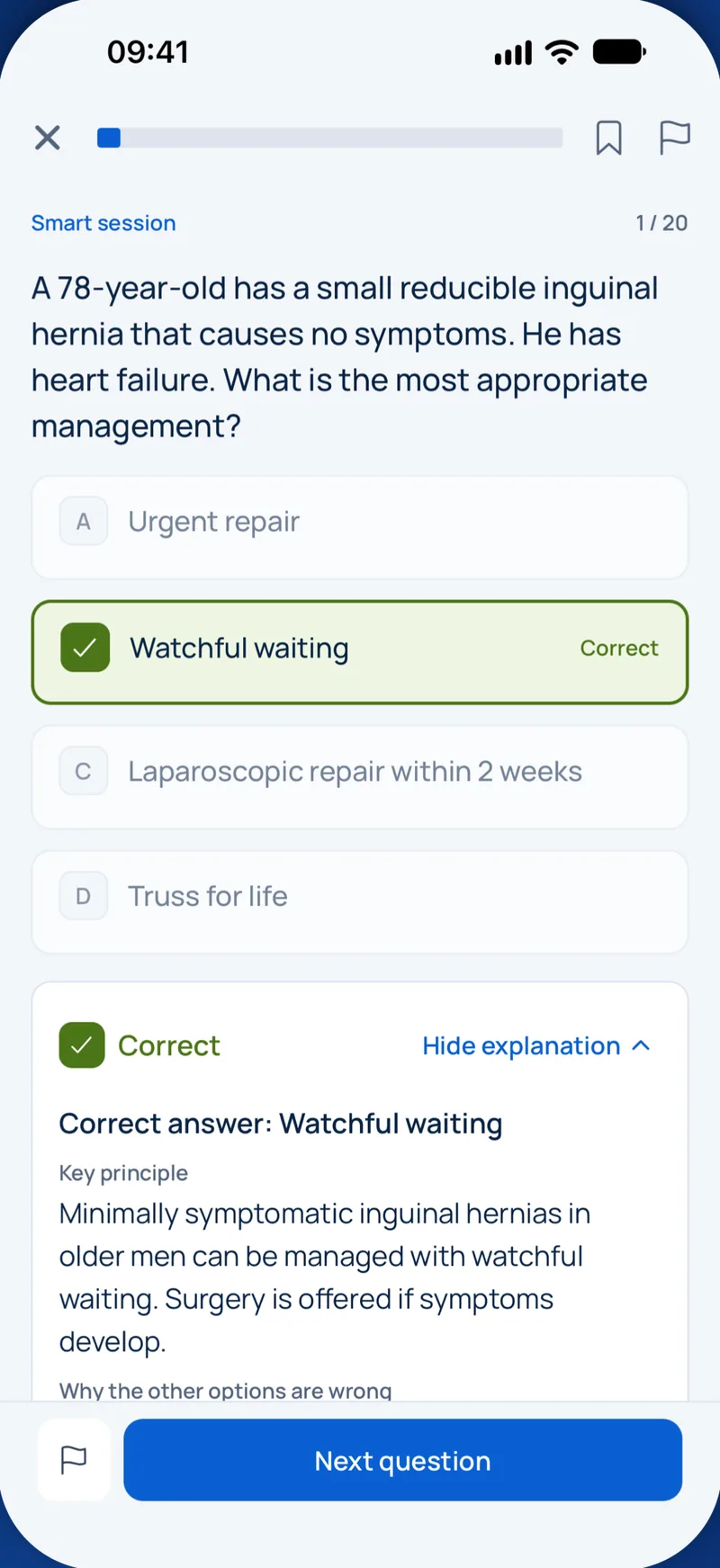
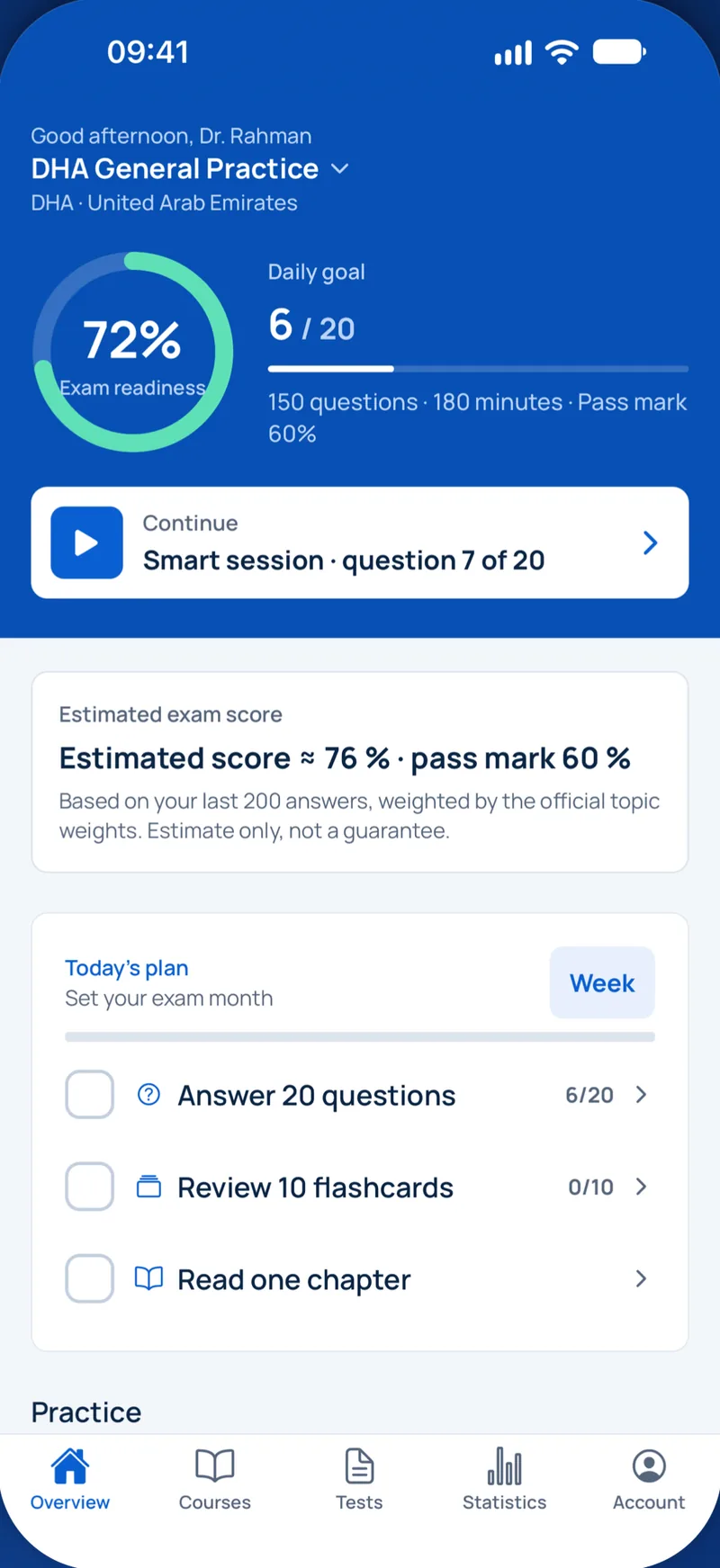
Ophthalmology exams commonly test anatomy and optics, fundus and OCT interpretation, emergencies such as acute angle closure or retinal detachment, ocular manifestations of systemic disease and surgical complications. MediFlow Exam Prep offers a question bank with explanations and mock exams in the real format, helping you revise image-based questions and topics such as neuro-ophthalmology.
Matching exams and courses
Prepare with question banks and timed mock exams in the format of the respective exam.
- DHADHA Specialist OphthalmologyView course
- DHADHA Consultant OphthalmologyView course
- DOHDOH Specialist/Consultant physician CBT (Anesthesia, Dermatology, Internal Medicine, Family Medicine, Pediatrics, ENT, General Surgery, OB/GYN; consultant also Ophthalmology)View course
- SCFHSSCFHS Physician specialty classification exams (Internal Medicine, Family Medicine, Pediatrics, OB/GYN, General Surgery, Anesthesia, Emergency, Psychiatry and others)View course
- DHPQatar specialist physician qualifying exams (34 specialties)View course
Frequently asked questions
Can I work as a Consultant ophthalmologist in Dubai with a German Facharzt?
Yes, if you have enough independent experience after your Facharzt für Augenheilkunde. Recently qualified ophthalmologists are usually licensed as Specialist first. Consultant grading generally requires several years of practice at senior level, such as Oberarzt, or a higher qualification. MediFlow reviews your documents beforehand so you know which grade is realistic.
Do I need a surgical logbook for my application?
It is strongly recommended. While the licence itself is based on your specialist qualification, hospitals and eye centres usually grant surgical privileges based on documented case numbers, for example for cataract surgery or intravitreal injections. A signed logbook or confirmation from your head of department makes this step much easier.
Is the FRCOphth required to practise in the Gulf?
No. Many national qualifications, including the German Facharzt, the American Board and the Arab Board, can be accepted after equivalence review. FRCOphth and similar international qualifications may simplify the process with some authorities. The best route depends on your training country and your plans for the coming years.
Which topics should I focus on for a Gulf ophthalmology exam?
Besides general ophthalmology, focus on diabetic retinopathy grading and management, glaucoma diagnosis and therapy, cataract surgery complications, paediatric eye disease, ocular trauma and neuro-ophthalmology. Image interpretation of fundus photos and OCT scans is frequently tested. MediFlow Exam Prep includes these topics with detailed answer explanations.
Can I work only in refractive surgery in the UAE?
Some private centres focus mainly on refractive procedures, but you will still need a full ophthalmology licence, and the facility will grant specific privileges based on your training and experience. Broader clinical skills usually make you more attractive to employers. MediFlow can help you assess your profile before you apply.