
Surgery
Plastic Surgery
Plastic surgery in the Gulf spans complex reconstruction, burn care and a large aesthetic sector. Here you learn how plastic surgeons trained abroad are assessed, graded and prepared for licensing exams.
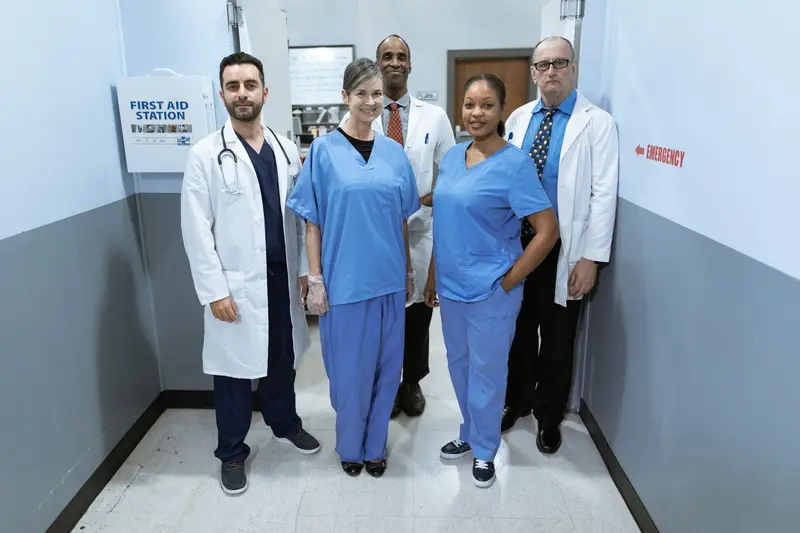
What plastic surgeons do
Plastic surgeons restore and improve the form and function of the body. The specialty is broader than its aesthetic reputation suggests: a large part of the work is reconstructive and closely linked with trauma, oncology and paediatric care.
Main areas include:
- Reconstructive surgery after tumour resection, including breast reconstruction and free flap microsurgery
- Hand surgery, covering tendon and nerve repairs, fractures and work-related injuries
- Burn care, from acute management and grafting to scar correction, including burns from domestic and industrial accidents
- Craniofacial and cleft surgery, often in children
- Body contouring after massive weight loss, increasingly common following bariatric surgery
- Aesthetic surgery of the face, breast and body, and minimally invasive procedures
Plastic surgeons work in government hospitals, trauma and burn centres, cancer centres and a wide range of private hospitals and day surgery clinics. They collaborate with general surgeons, orthopaedic surgeons, ENT surgeons, oncologists and dermatologists. In the Gulf, hospital privileges define exactly which procedures a surgeon may perform, so documented operative experience matters a great deal.
Training routes worldwide
Plastic surgery is a long surgical training in most countries, usually starting with a period of general or core surgery.
- Germany: Facharzt for plastic, reconstructive and aesthetic surgery, a multi-year Weiterbildung with a surgical common trunk and a defined operative catalogue, ending in an examination at the Ärztekammer.
- United Kingdom: core surgical training with MRCS, then higher specialty training in plastic surgery leading to a CCT and the FRCS (Plast).
- United States: integrated or independent plastic surgery residency, followed by the American Board of Plastic Surgery examinations.
- Europe: the EBOPRAS examination is used as an additional European qualification.
- Arab and Saudi Boards: structured plastic surgery residency programmes with board examinations.
- India: MS in general surgery followed by MCh or DNB in plastic surgery.
Gulf authorities assess the full surgical pathway, including whether aesthetic surgery, hand surgery and microsurgery were part of your training and logbook.
Recognition of your specialist title in the Gulf
Gulf health authorities grade surgeons as Specialist or Consultant, according to qualification and experience after specialist training. A Consultant plastic surgeon is generally expected to hold a higher-level qualification and to have practised independently for several years. Newly qualified surgeons usually begin at Specialist level.
The process typically includes:
- Primary source verification of your medical degree, specialist title, licences and employment history, typically via DataFlow
- An equivalence assessment of your surgical training against the authority's standards
- An assessment step, which may be a specialist exam, an interview or an exemption, depending on your qualification and the authority
- Clinical privileges granted by the hospital, based on your operative logbook
A well-organised logbook showing reconstructive, hand, burn and aesthetic cases supports both grading and privileging. DHA, DOH and MOHAP have their own criteria and update them over time. MediFlow reviews your individual situation before you apply.
Demand and career prospects
Demand for plastic surgery in the Gulf comes from several directions. Road traffic and workplace injuries require hand and reconstructive expertise, burn centres need experienced surgeons, and cancer care creates demand for breast and head and neck reconstruction. At the same time, the region has a large aesthetic market and attracts medical tourists.
Widespread obesity and bariatric surgery lead to growing interest in body contouring after weight loss. Opportunities exist in government hospitals, academic centres and private hospitals and clinics. Surgeons with microsurgical, craniofacial or hand surgery skills can stand out, as reconstructive expertise is less widely available than aesthetic work.
Experience across reconstructive and aesthetic surgery in the Gulf is valued internationally.
Relevant exams and how MediFlow Exam Prep helps
Depending on your background, the following can be relevant:
- DHA specialist examination in plastic surgery, unless an exemption applies
- DOH and MOHAP assessment through an exam or interview
- SCFHS classification in Saudi Arabia, sometimes with an assessment exam
- International exams such as FRCS (Plast), EBOPRAS, the American Board of Plastic Surgery or the German Facharztprüfung
Typical exam topics include wound healing and skin grafts, flap anatomy and physiology, hand anatomy and injuries, burn resuscitation, breast reconstruction, cleft and craniofacial principles, skin cancer management, aesthetic surgery complications and perioperative safety.
MediFlow Exam Prep offers a question bank with clear explanations, topic-based practice and mock exams in the format of Gulf licensing exams, helping you prepare efficiently alongside a full operating schedule.
Matching exams and courses
Prepare with question banks and timed mock exams in the format of the respective exam.
- DHADHA Specialist Plastic SurgeryView course
- DOHDOH Specialist/Consultant physician CBT (Anesthesia, Dermatology, Internal Medicine, Family Medicine, Pediatrics, ENT, General Surgery, OB/GYN; consultant also Ophthalmology)View course
- SCFHSSCFHS Physician specialty classification exams (Internal Medicine, Family Medicine, Pediatrics, OB/GYN, General Surgery, Anesthesia, Emergency, Psychiatry and others)View course
- DHPQatar specialist physician qualifying exams (34 specialties)View course
Frequently asked questions
Can I work as a Consultant plastic surgeon in Dubai with a German Facharzt?
Yes, if your post-specialist experience meets the authority's criteria. The German Facharzt for plastic, reconstructive and aesthetic surgery is assessed together with your years of independent practice, for example as an Oberarzt. Your operative logbook also plays a role, especially for hospital privileges. With limited experience, Specialist is the usual starting grade. MediFlow checks your file beforehand.
Can I perform aesthetic procedures as a plastic surgeon in the UAE?
Aesthetic surgery is part of plastic surgery, but each hospital or clinic grants privileges for specific procedures based on your training and documented experience. Clearly recording aesthetic cases in your logbook helps. Requirements for minimally invasive treatments can differ, so it is worth clarifying this with your future employer.
How important is my operative logbook?
Very important. While the licensing decision is based on your title and experience, hospitals use your logbook to decide which operations you may perform independently. A detailed, signed logbook covering reconstructive, hand, burn and aesthetic procedures makes privileging easier and supports a Consultant application.
Which topics are tested in the plastic surgery licensing exam?
Expect questions on flaps and grafts, hand anatomy and trauma, burns, breast surgery, craniofacial and cleft surgery, skin tumours and aesthetic procedures, along with basic science such as wound healing. Many questions are clinical scenarios that ask for the best next step in management.
Does EBOPRAS help with licensing in the Gulf?
The European board examination is well known and can strengthen your profile, particularly alongside a national specialist title. It does not replace the specialist qualification itself. Its weight depends on the authority and your overall training, and MediFlow assesses it as part of your complete documentation.