Surgery
Urology
Kidney stones, prostate disease and endourology keep urologists busy across the Gulf. This page explains how your urology qualification is assessed and how MediFlow helps you with licensing and specialist exams.
What urologists do
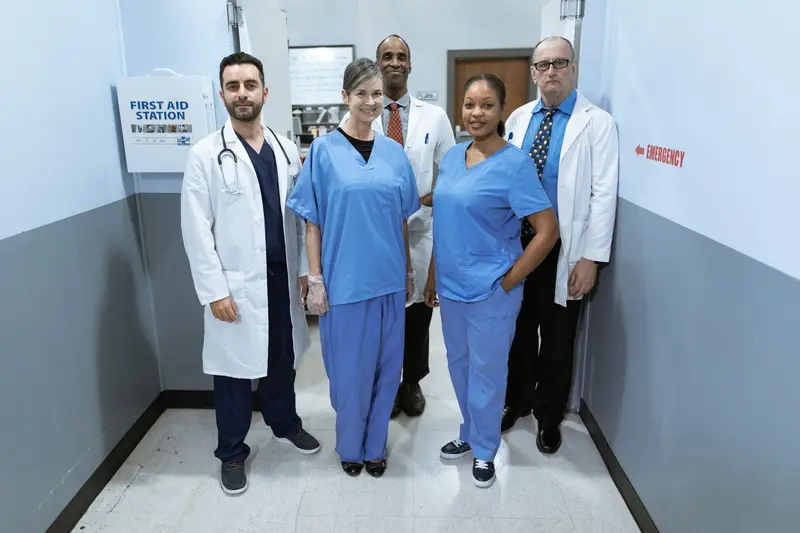
Urology is a surgical specialty dealing with the kidneys, ureters, bladder, urethra, prostate and male genital organs. Urologists combine outpatient diagnostics such as ultrasound, cystoscopy and urodynamics with a wide range of operations, from minimally invasive endoscopic procedures to open and robotic tumour surgery.
Urinary stone disease is especially common in hot climates, where dehydration and dietary factors contribute, so ureteroscopy, laser lithotripsy and percutaneous nephrolithotomy are everyday procedures in the Gulf. Other frequent conditions include benign prostatic hyperplasia, prostate, bladder and kidney cancer, urinary incontinence, recurrent infections, male infertility and erectile dysfunction, as well as congenital anomalies in children.
- Subspecialties: endourology and stone disease, uro-oncology, robotic surgery, functional and female urology, andrology and male infertility, paediatric urology, reconstructive urology, kidney transplantation.
- Settings: government hospitals with stone and uro-oncology units, private hospitals and day-surgery centres, fertility clinics, transplant centres.
Training routes in urology
Urology training follows internship and usually begins with a period of general surgery before dedicated urology years. In most countries it is a multi-year pathway with an operative logbook and a final examination.
- Germany: the Weiterbildung to Facharzt für Urologie in urological departments, including a defined spectrum of endoscopic and open procedures, ends with the Facharztprüfung at the medical chamber.
- United Kingdom: core surgical training with MRCS, followed by specialty training in urology, the FRCS (Urology) and the CCT.
- United States: urology residency including general surgery, then the ABU process; board-certified status follows a qualifying examination and a period of practice before the final assessment.
- Arab and Saudi Boards: structured residency programmes with surgical rotations and final board examinations.
- India: MCh Urology or DNB Urology after MS General Surgery.
The European FEBU examination is also widely taken and well known in the region. Fellowships in endourology, uro-oncology or robotic surgery are common after specialist training.
Getting your urology title recognised
DHA in Dubai, DOH in Abu Dhabi and MOHAP for the Northern Emirates grade urologists as Specialist or Consultant. The decision depends on the postgraduate qualification and on independent surgical experience after it. Consultant grading generally requires a higher qualification and several years of practice as a senior surgeon.
All qualifications pass through Primary Source Verification, usually via DataFlow. Besides your degree and specialist title, prepare employment letters that describe your operative scope. For later clinical privileges, hospitals often ask which procedures you perform independently, for example ureteroscopy, PCNL, TURP, laparoscopic or robotic prostatectomy.
Depending on your qualification, you may be exempt, asked to pass a specialist exam or invited to an interview. Saudi Arabia, Qatar, Oman, Bahrain and Kuwait apply comparable but distinct rules. Details change over time, so MediFlow reviews your individual case before you submit your application.
Demand for urologists
A growing population, a hot climate that favours stone formation and widespread diabetes and obesity create steady demand for urological care in the Gulf. As populations age, prostate disease and urological cancers are becoming more relevant, and screening awareness is increasing.
Both government hospitals and private groups invest in endourology equipment, lasers and robotic platforms. Day-surgery centres in the private sector offer many endoscopic procedures, and fertility and andrology services are expanding because family planning is highly valued in the region. Medical tourism adds interest in robotic and minimally invasive surgery. Urologists with subspecialty skills and robotic experience are attractive candidates, and Gulf experience is respected in other countries too.
Exams and how MediFlow helps
- DHA specialist assessment in urology or comparable DOH and MOHAP evaluations if no exemption applies.
- SCFHS classification for Saudi Arabia, with assessment if required.
- International examinations such as the FRCS (Urology), FEBU, the ABU qualifying examination or the German Facharztprüfung.
Urology exams test anatomy and physiology of the urinary tract, stone disease and its metabolic work-up, BPH and lower urinary tract symptoms, uro-oncology including staging and treatment options, urinary tract infections, incontinence, andrology, paediatric urology, trauma and complications of endoscopic surgery. MediFlow Exam Prep offers a urology question bank with explanations, topic filters and timed mock exams in the exam format, so you can rehearse systematically even with a full operating list.
Matching exams and courses
Prepare with question banks and timed mock exams in the format of the respective exam.
- DHADHA Specialist UrologyView course
- DHADHA Specialist NeurologyView course
- LandesärztekammerSpecialist board exam: NeurologyView course
- LandesärztekammerSpecialist board exam: UrologyView course
- ÖÄKBoard exam neurologyView course
- ÖÄKBoard exam urologyView course
- DOHDOH Specialist/Consultant physician CBT (Anesthesia, Dermatology, Internal Medicine, Family Medicine, Pediatrics, ENT, General Surgery, OB/GYN; consultant also Ophthalmology)View course
- SCFHSSCFHS Physician specialty classification exams (Internal Medicine, Family Medicine, Pediatrics, OB/GYN, General Surgery, Anesthesia, Emergency, Psychiatry and others)View course
Frequently asked questions
Can I work as a Consultant urologist in Dubai with a German Facharzt für Urologie?
It is possible, but the Facharzt alone generally leads to Specialist grading. Consultant grading usually requires several additional years of independent work after the Facharzt, ideally as Oberarzt or in a comparable senior role, or a higher-level qualification. DHA assesses qualification and experience together, so MediFlow reviews your documents first and explains which grading is realistic.
Does the FEBU help with licensing in the Gulf?
The FEBU is well known in the region and documents your knowledge at a European level. It does not replace your national specialist title, but it can strengthen your profile and, depending on the authority, influence how your qualification is evaluated. Whether it leads to an exam exemption depends on current rules and your overall training.
Do I need robotic surgery experience to find a position?
No, many positions focus on endourology, stone disease, general urology or outpatient work. Robotic experience is an advantage in uro-oncology and in hospitals that have invested in robotic platforms. If you have it, document your case numbers and training in your experience letters, because hospitals use them when granting clinical privileges.
Which topics appear in the urology specialist exam?
Common areas are urinary tract anatomy and physiology, stone disease and metabolic evaluation, BPH, prostate, bladder, kidney and testicular cancer, urinary tract infections, incontinence and neurogenic bladder, andrology and infertility, paediatric urology, urological trauma, imaging interpretation and complications of endoscopic and open surgery. Most questions are clinical cases asking for the best management step.
What documents should a urologist prepare first?
Start with your medical degree, internship certificate, specialist title, current and past licences, a good standing certificate and employment letters covering your whole career. A signed operative summary is helpful as well. All of these may go through Primary Source Verification, so consistent names and dates are important. MediFlow provides a checklist for your case.