Internal medicine
Cardiology
Cardiovascular disease is one of the leading health challenges in the Gulf, and cardiology services are expanding accordingly. Here you will learn how cardiologists are licensed in the region and which exams are relevant.

What cardiologists do in the Gulf
Cardiologists diagnose and treat diseases of the heart and circulation, from stable angina and heart failure to arrhythmias, valvular disease and congenital heart conditions in adults. Their work ranges from outpatient clinics and non-invasive imaging to emergency coronary interventions.
In the Gulf, cardiology is shaped by a distinctive risk profile. Diabetes, obesity, dyslipidaemia, hypertension and smoking are common, and acute coronary syndromes often occur at a younger age than in many European countries. Rheumatic heart disease is still seen in some patient populations.
Typical subspecialties include:
- Interventional cardiology: coronary angiography, PCI and structural interventions such as TAVI
- Electrophysiology: ablation, pacemaker and ICD implantation
- Cardiac imaging: echocardiography, cardiac CT and cardiac MRI
- Heart failure and cardio-oncology, as well as preventive cardiology
Cardiologists work in dedicated heart centres, general hospitals with catheter labs and private outpatient clinics, often within multidisciplinary heart teams together with cardiac surgeons.
Training pathways worldwide
Cardiology is almost always built on a foundation in internal medicine:
- Germany: the Facharzt für Innere Medizin und Kardiologie, with internal medicine content followed by cardiology-specific training; interventional skills are often acquired afterwards
- United Kingdom: Internal Medicine Training and MRCP(UK), followed by higher specialty training in cardiology leading to a CCT, frequently with a subspecialty focus
- United States: internal medicine residency, then a cardiovascular disease fellowship and board examination; interventional cardiology and electrophysiology require further fellowships
- Arab and Saudi Boards: cardiology fellowships after internal medicine training
- India: DM or DNB in Cardiology after MD in Medicine
In many countries, complete cardiology training takes many years. For interventional work, logbooks documenting procedures performed independently are particularly important, as they are often requested when privileges are granted.
Recognition as Specialist or Consultant
Gulf authorities license cardiologists as Specialist or Consultant. The decision depends on your qualification and on the experience you have gained after completing specialist training. Consultant status generally requires a higher-level qualification and substantially longer independent experience, typically in a senior hospital position.
The process usually includes:
- Primary Source Verification of your medical degree, internal medicine and cardiology qualifications, registrations and employment history
- Equivalence assessment: the authority classifies qualifications such as the German Facharzt, a UK CCT, a US fellowship or a DM in Cardiology according to its framework
- Exam, interview or exemption, depending on qualification and authority
Licensing defines your specialty. Specific interventional procedures are usually granted as clinical privileges by the hospital, based on logbooks and references. Requirements in Saudi Arabia, Qatar, Oman, Bahrain and Kuwait follow similar principles. Since rules change, MediFlow checks your profile individually.
Career outlook
The high prevalence of cardiovascular risk factors means that cardiology services across the Gulf continue to grow. Governments and private providers are investing in heart centres, chest pain pathways and catheter lab capacity, and medical tourism adds demand for complex procedures.
Cardiologists with expertise in interventions, electrophysiology, advanced imaging or heart failure are particularly sought after. Non-invasive cardiologists find roles in outpatient centres and in preventive programmes focused on diabetes-related heart disease.
Internationally, cardiology remains a highly mobile specialty. Experience in a multinational patient population with a young coronary risk profile is valuable for later positions elsewhere, and many cardiologists use the Gulf to deepen subspecialty skills.
Exams and preparation
Relevant assessments include:
- DHA specialist exam in cardiology for applicants who are not exempt
- DOH and MOHAP assessments, including interviews depending on the qualification
- SCFHS classification in Saudi Arabia
- International: the ESC/EBAC European Exam in General Cardiology, the UK Specialty Certificate Exam in Cardiology, US cardiovascular disease board exams, Arab or Saudi Board exams, and the German Facharztprüfung
Cardiology exams typically focus on acute coronary syndromes, heart failure, arrhythmias and ECG interpretation, valvular disease, cardiomyopathies, pericardial disease, pulmonary hypertension, congenital heart disease in adults, imaging, pharmacology and prevention. Guideline knowledge is essential.
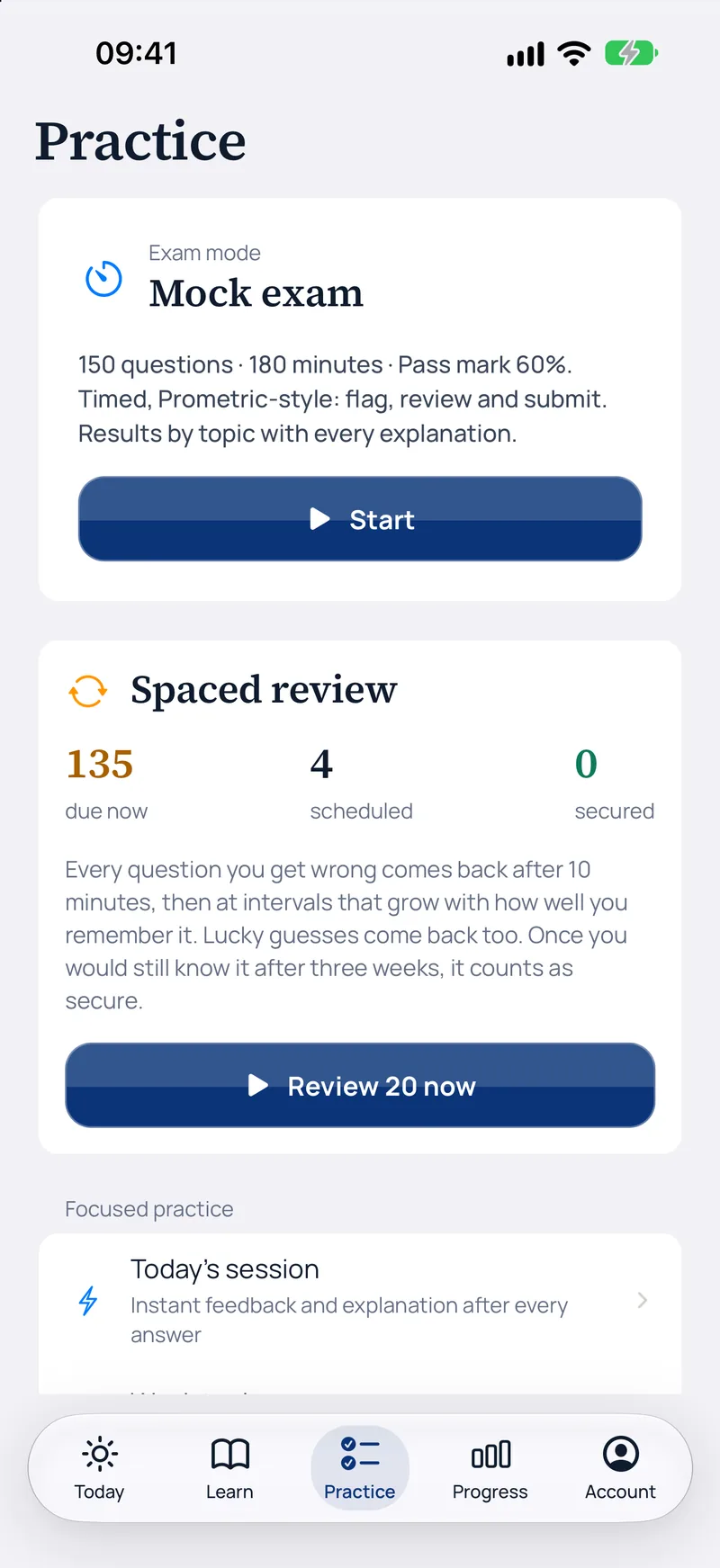
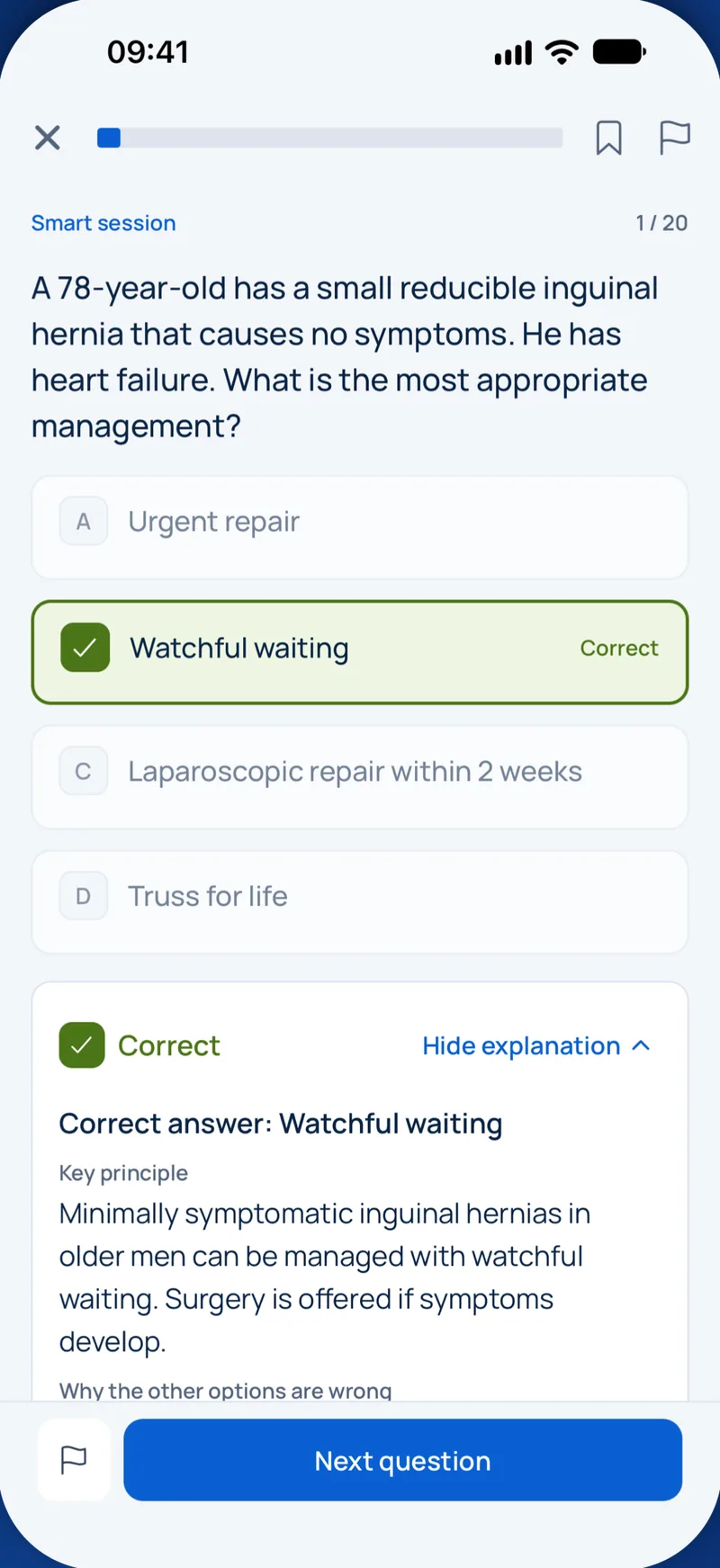
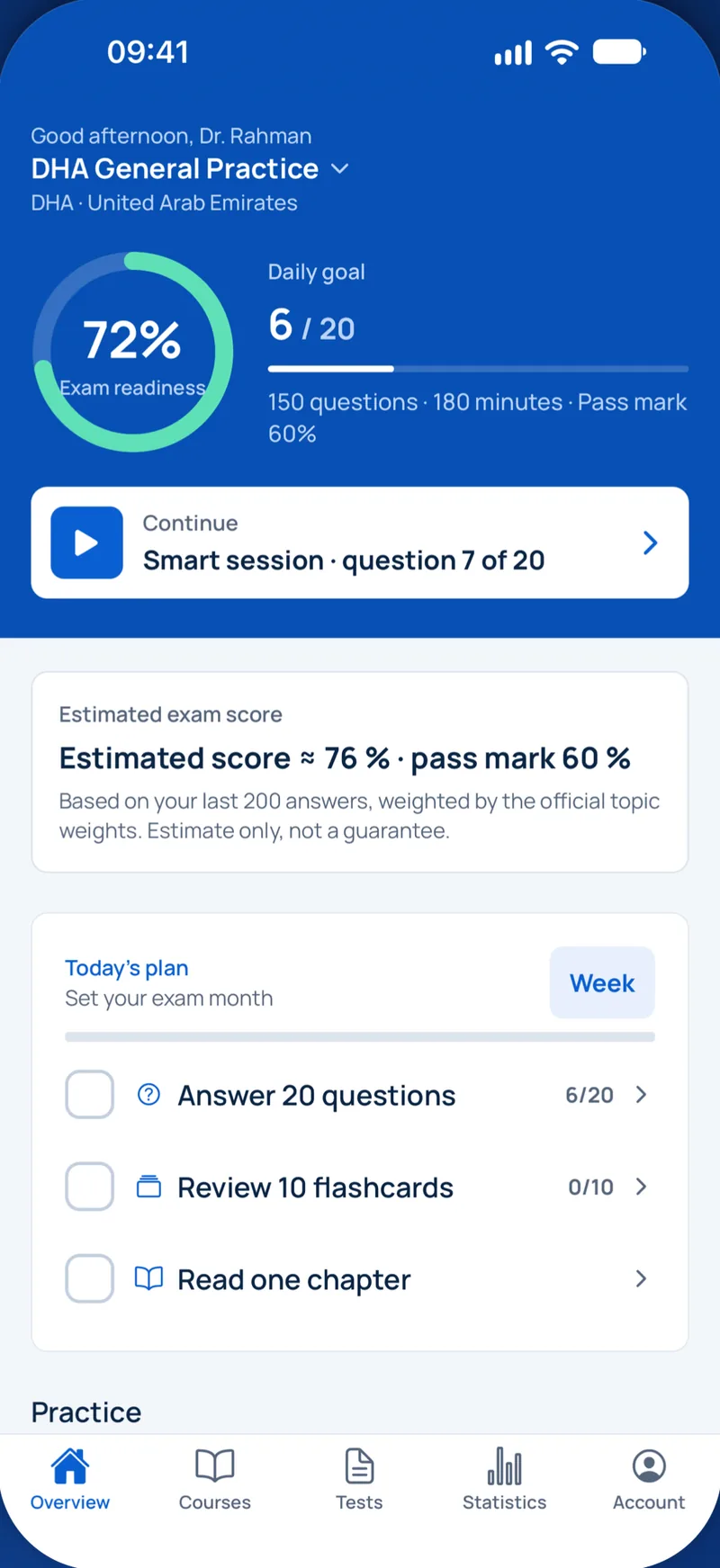
MediFlow Exam Prep supports you with a cardiology question bank including ECG- and imaging-based cases, explanations aligned with current guidelines and mock exams in exam format with timing.
Matching exams and courses
Prepare with question banks and timed mock exams in the format of the respective exam.
- DHADHA Specialist CardiologyView course
- DOHDOH Specialist/Consultant physician CBT (Anesthesia, Dermatology, Internal Medicine, Family Medicine, Pediatrics, ENT, General Surgery, OB/GYN; consultant also Ophthalmology)View course
- SCFHSSCFHS Physician specialty classification exams (Internal Medicine, Family Medicine, Pediatrics, OB/GYN, General Surgery, Anesthesia, Emergency, Psychiatry and others)View course
- DHPQatar specialist physician qualifying exams (34 specialties)View course
Frequently asked questions
Can I work as a Consultant Cardiologist in Dubai with a German Facharzt?
It is possible if your post-specialist experience meets the authority's criteria. The Facharzt für Innere Medizin und Kardiologie is generally assessed as a specialist qualification. Consultant classification usually requires substantial independent experience, often as Oberarzt or in a leading role. We review your documents and estimate the likely classification before you apply.
Does my licence allow me to perform PCI or ablations?
The licence defines your specialty and title. Permission to perform specific procedures such as PCI, TAVI or ablation is normally granted by the hospital as clinical privileges. Facilities typically ask for logbooks, references and evidence of recent independent practice. Keep a detailed record of your procedures; it will be important both for privileges and for the licensing assessment.
Is the European Exam in General Cardiology helpful for Gulf licensing?
It can strengthen your profile, especially when combined with a completed specialist training. It does not replace the specialist qualification itself. How much weight it carries depends on the authority. In any case, preparing for it is useful, because it covers the same guideline-based content that Gulf specialist exams tend to test.
Which topics should I prioritise for the cardiology specialist exam?
Focus on acute coronary syndromes, heart failure, arrhythmias with ECG interpretation, valvular heart disease and cardiomyopathies. Imaging, anticoagulation, lipid management and diabetes-related heart disease are also important. MediFlow Exam Prep contains case-based questions with ECGs and explanations aligned with current guidelines, plus mock exams in exam format.
I trained in internal medicine with a cardiology focus but have no formal cardiology title. What are my options?
Without a recognised cardiology qualification, a licence in internal medicine is usually the realistic route. Your cardiology experience can still be valuable to employers. Depending on the authority, additional training or a later qualification may allow reclassification. We assess which licence suits your documents and career goals.